Bahrain timesheets – Ferrari go fastest as Red Bull suffer’s…read more
Ferrari set the early benchmark as the latest round of Formula 1 testing got underway at the Bahrain International Circuit, delivering a strong and consistent performance while Red Bull endured another frustrating session marked by technical setbacks and limited running.
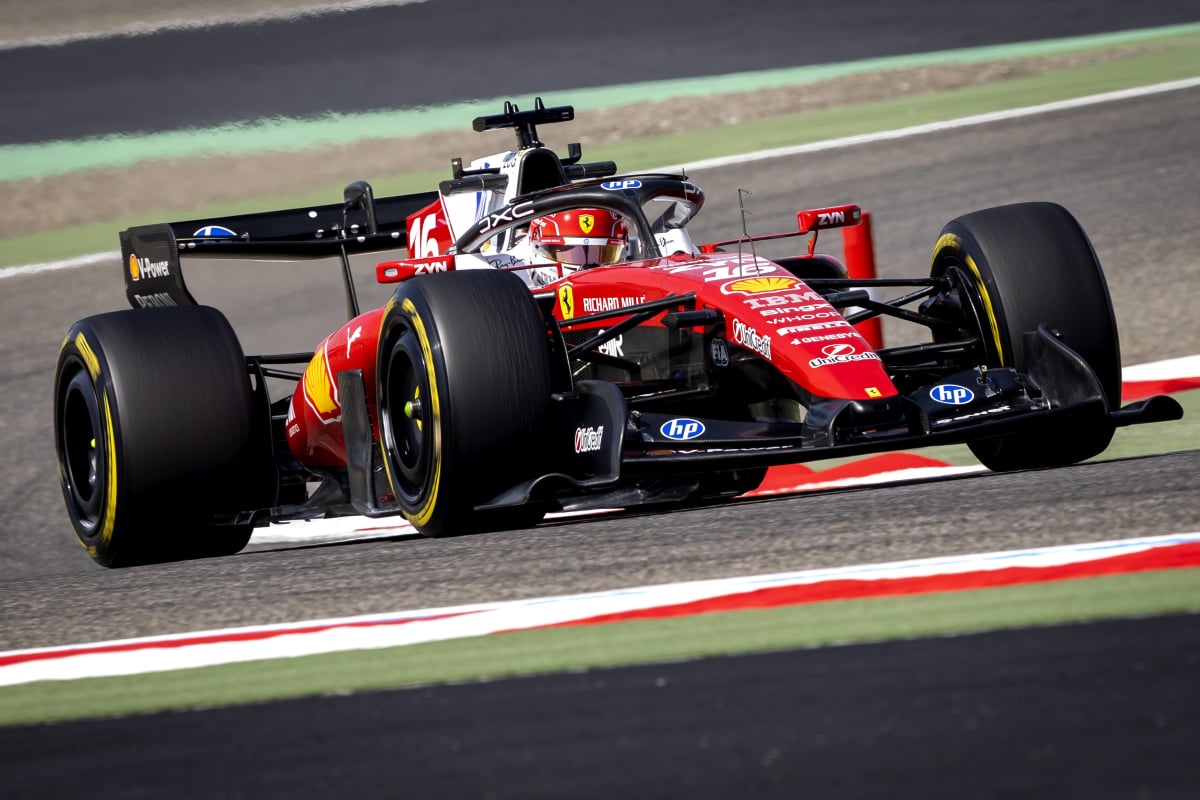
Day one of the new testing week saw Ferrari return to the top of the timing screens thanks to an impressive showing from Charles Leclerc, who combined outright pace with long-run reliability. The Monegasque driver completed a heavy workload and produced the fastest lap of the session, underlining Ferrari’s encouraging early form under the new regulations.
Leclerc logged 70 laps without major trouble and posted a best time of 1:33.739, the quickest of the morning period. Beyond the headline lap, Ferrari’s program appeared smooth and structured, with the car running consistently and showing no obvious reliability concerns. That level of stability allowed the team to gather valuable data across multiple run plans, putting them in a strong position compared to several rivals who struggled for uninterrupted track time.
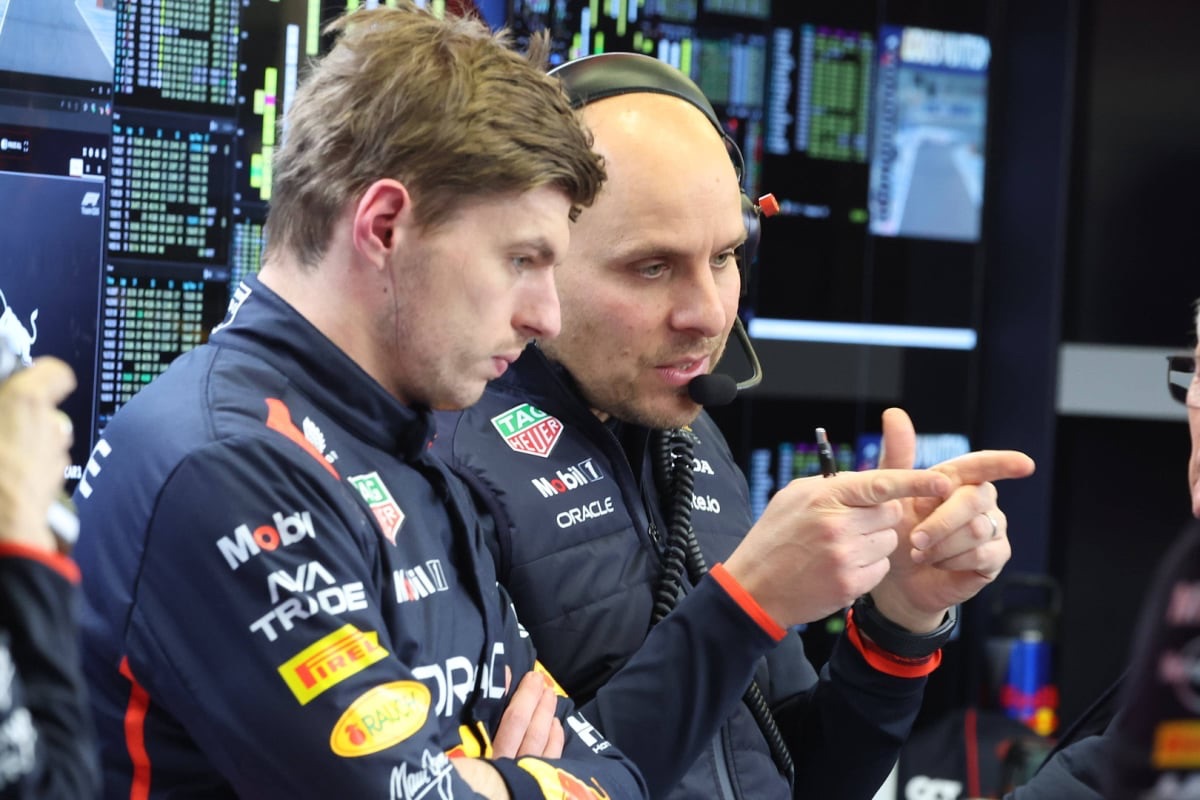
By contrast, it was a difficult start to the week for Red Bull Racing, whose session was disrupted by another mechanical problem on their 2026 challenger, the RB22. Young driver Isack Hadjar was heavily restricted after a water system fault kept the car in the garage for extended periods. As a result, he managed just 13 laps across the morning — one of the lowest totals of the field.
The issue adds to growing reliability worries around Red Bull’s new package. Just last week, the same car suffered a hydraulics leak that also severely limited running. With back-to-back technical problems affecting mileage, the team faces increasing pressure to resolve durability concerns before the season-opening race. Limited laps in testing can significantly impact setup work, systems validation, and driver preparation, making every lost session more costly.
Despite the setbacks, Hadjar still recorded a representative lap of 1:36.188, placing him sixth on the timesheets — but the lack of long-run data will likely be a bigger concern for the Milton Keynes-based squad than outright position.
Second fastest overall behind Leclerc was Lando Norris for McLaren, continuing what has been a quietly productive test period for the Woking outfit. Norris delivered a best lap of 1:34.052 and completed 54 laps, focusing on structured runs rather than headline-grabbing performance attempts. McLaren’s steady approach suggests confidence in their baseline package as they work through correlation and setup programs.
Third on the board was rising star Kimi Antonelli, representing Mercedes. His 1:34.158 was set despite not chasing peak lap time. Instead, Antonelli concentrated on longer race-style simulations using the C3 compound tyre. He was notably the only driver in the session to complete full race simulation runs, indicating Mercedes prioritized endurance data and degradation patterns over short-run speed. He still accumulated a healthy 69 laps in the process.
Further down the order, Alex Albon put in a solid shift for Williams, finishing fourth with 55 laps and a best time of 1:35.690. Pierre Gasly followed closely for Alpine, completing 61 laps and reinforcing a dependable start to testing for the Enstone-based squad.
American outfit Haas F1 Team also enjoyed a productive morning, with Esteban Ocon logging 65 laps and finishing seventh overall. Meanwhile, Fernando Alonso kept mileage building for Aston Martin, though his total was limited to 28 laps — suggesting a more selective or interrupted program.
There was moderate progress as well for Audi F1 Team, where Nico Hulkenberg recorded 49 laps, and for Racing Bulls, whose young prospect Arvid Lindblad was among the busiest drivers on track with 75 laps — one of the highest totals of the session.
New entrant Cadillac F1 Team experienced a slow start to the day after Sergio Perez was initially confined to the garage due to technical work. The Mexican driver eventually joined the action but managed only 24 laps, leaving the team with less data than planned.
With multiple teams splitting priorities between performance runs and durability programs, the opening day’s timesheets offer only a partial picture — but Ferrari’s blend of speed and reliability stands out, while Red Bull’s repeated technical interruptions are quickly becoming one of the key storylines of the test.