F1 Engine War Erupts: Team Boss Warns Mercedes Ban Vote Could Throw Sport Into Chaos
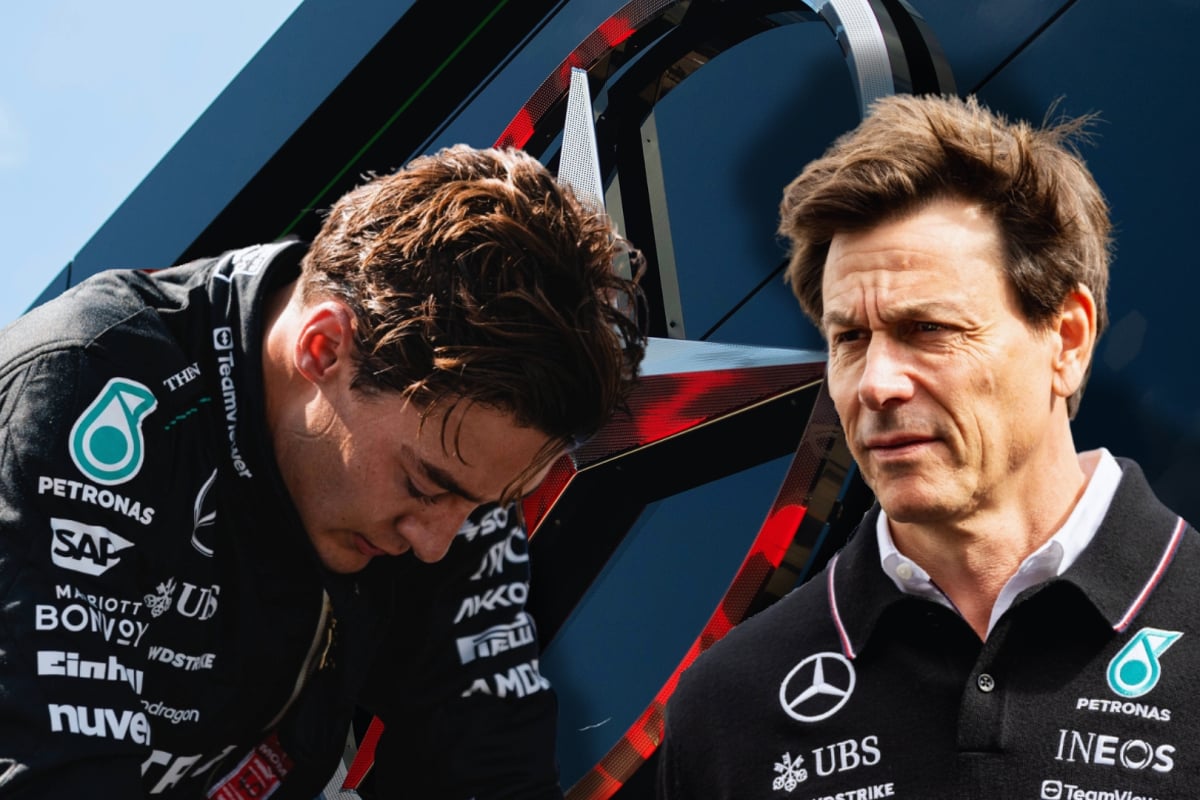
Tensions are rising across the Formula 1 paddock as controversy builds around a proposed vote to outlaw a perceived Mercedes engine advantage — and one team principal has now issued a blunt warning that pushing such a move could unleash serious consequences for the sport.
The dispute centers on Mercedes’ interpretation of the upcoming 2026 power unit regulations, specifically the rules governing geometric compression ratios. While the technical language may sound dry, the competitive implications are anything but — with rival manufacturers increasingly concerned that Mercedes have uncovered a legal performance edge that could translate into a significant on-track advantage.
Under the 2026 regulations, the maximum permitted compression ratio is set at 16:1. However, the measurement is only required to be taken at ambient temperature conditions. Mercedes engineers have reportedly designed their power unit to remain within the 16:1 limit when tested under those required conditions, while allowing the compression ratio to rise as high as approximately 18:1 when the engine operates at higher temperatures during real running.
This interpretation appears to stay within the letter of the rules — but critics argue it stretches the spirit of them.
Competing engine manufacturers — including Red Bull Powertrains, Audi, Honda, and Ferrari — are believed to be deeply unhappy about the situation. Estimates circulating in the paddock suggest the performance gain could be worth roughly a quarter of a second per lap, a margin that can dramatically influence championship battles. As a result, discussions have intensified over whether a formal vote should be held to outlaw or restrict the concept before the new regulations fully take effect.
With pre-season testing underway in Bahrain, the issue has quickly become one of the most talked-about technical flashpoints in the pit lane.
FIA single-seater director Nikolas Tombazis has indicated that the governing body is keen to settle the disagreement swiftly and avoid a prolonged legal confrontation between manufacturers. The preference is to prevent the matter escalating into a courtroom-style dispute that could overshadow the launch of the new engine era.
Williams team principal James Vowles — whose team is set to run Mercedes power units under the new regulations — has strongly defended the legality of Mercedes’ design and cautioned against changing rules through competitor pressure. Speaking to media during testing, Vowles dismissed the idea that he was worried about rival manufacturers successfully forcing a rule change through a vote.
According to Vowles, Mercedes’ solution complies fully with the written regulations, and that fact should end the debate. He emphasized his long history with the German manufacturer, noting that he understands their engineering approach and regulatory discipline after more than two decades working within the Mercedes system.
More importantly, he warned that intervening after a team has produced a legal solution could set a dangerous precedent. In his view, overturning compliant innovation simply because competitors dislike its effectiveness risks destabilizing how Formula 1 governs technical creativity.
Vowles argued that once teams begin voting against rival concepts that meet the rulebook, it becomes difficult to draw the line. Today it could be a compression ratio interpretation — tomorrow it could be another clever design breakthrough. He suggested that this kind of reactive rule-changing could open the door to repeated political battles whenever one competitor outsmarts the others.
The debate highlights a familiar tension within Formula 1: the constant push and pull between innovation and regulation. Engineers are rewarded for finding performance within strict boundaries, yet those same breakthroughs often trigger backlash when they threaten competitive balance.
As the 2026 engine cycle approaches, the sport now faces a critical choice — whether to uphold a strict reading of the rules or move to close what some see as an unintended loophole. Either way, the fallout from this decision could shape not just the next generation of power units, but also how far teams are willing to push the limits of interpretation in the future.