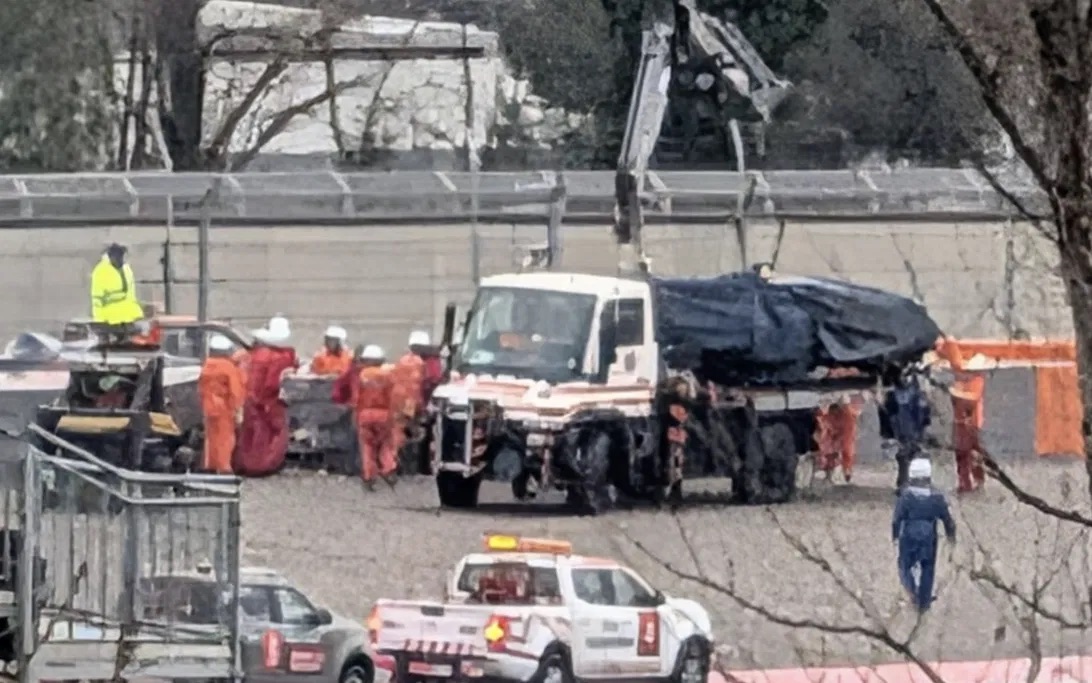
Isack Hadjar Fears Season Is ‘Over’ After Shocking First Red Bull Crash in Barcelona Test
French rookie Isack Hadjar has delivered a brutally honest account of the moment he feared his entire Formula 1 season had collapsed before it even began — after crashing a Red Bull during pre-season testing in Barcelona.
The 21-year-old, newly promoted to a full-time race seat with Red Bull Racing for 2026, endured a nerve-racking introduction to the team’s latest challenger when he lost control at the final corner of the Circuit de Barcelona-Catalunya during a private test session. The outing formed part of preparations for Formula 1’s sweeping 2026 regulation overhaul, which has fundamentally changed car design, aerodynamics, and power units.
For Hadjar, it was meant to be another step in his rapid rise through the ranks following an impressive rookie campaign in 2025. Instead, it became a moment of intense self-doubt.
While pushing to explore the limits of the new car, Hadjar slid off track and hit the barriers — marking his first crash in Red Bull machinery. Though pre-season testing incidents are not uncommon, the psychological weight of crashing one of the grid’s most scrutinised cars was not lost on him.
Rather than immediately focusing on the technical damage or debriefing details, Hadjar admitted his mind went somewhere else entirely. He thought of fellow Frenchman Pierre Gasly — and the difficult chapter that followed Gasly’s own promotion to Red Bull back in 2019. Gasly’s early struggles, including a testing crash and inconsistent performances, ultimately led to his mid-season demotion, a storyline that still looms large in F1 memory.
That comparison hit hard.
Hadjar confessed that in the immediate aftermath of his accident, he turned to social media platform X to gauge public reaction. The response, he said, triggered a wave of anxiety. His raw internal verdict was blunt: “I’m screwed for the whole season.”
It was an emotional reaction, fuelled by the awareness that stepping into a Red Bull seat comes with enormous expectation — and little patience for mistakes.
However, what could have spiralled into lingering self-doubt instead became a reset moment. Hadjar explained that reading the online commentary — both positive and negative — oddly helped him process the crash more quickly. Confronting the noise head-on allowed him to detach from it and refocus on the bigger picture. In his words, it was “honestly” the way he moved on.
The honesty of his reflection has offered a revealing glimpse into the psychological strain faced by young drivers entering elite teams. Red Bull’s environment is notoriously demanding, particularly with reigning world champion Max Verstappen occupying the other side of the garage.
Being team-mate to Verstappen presents both a golden opportunity and an intimidating benchmark. The Dutch star has amassed hundreds of grands prix worth of experience and carries a depth of racecraft knowledge that only years at the front of the field can provide. From tyre management to race strategy and car feedback, Verstappen’s understanding of the sport is vast.
Hadjar openly acknowledged that experience gap. “You can’t buy experience,” he said, recognising that no amount of simulator time can replicate what a seasoned champion learns over hundreds of race weekends. Rather than viewing that disparity as discouraging, he sees it as a resource — a chance to learn directly from one of the sport’s most accomplished drivers.
The broader context of the crash also matters. The 2026 cars represent one of Formula 1’s most dramatic technical resets in decades. New power unit configurations, revised aerodynamic concepts, and different handling characteristics have forced drivers to adapt rapidly. Even veterans have admitted the machines feel unfamiliar and demanding in the early stages.
In such a transitional phase, mistakes are almost inevitable. Testing exists precisely to uncover limits — and occasionally exceed them. Many world champions have endured early crashes during their development years, setbacks that ultimately became footnotes in long and successful careers.
For Hadjar, the Barcelona incident may prove to be exactly that: a learning moment rather than a defining one.
Crashing in high-profile machinery can bruise confidence, particularly when global scrutiny magnifies every error. But resilience is often what separates those who survive at the top level from those who fade. Hadjar’s ability to candidly dissect his own reaction — admitting fear, acknowledging comparison, and then moving forward — suggests a level of self-awareness that could serve him well.
As the 2026 season approaches, observers will watch closely to see how he measures up alongside Verstappen. The pressure will be relentless, the headlines unforgiving. Yet if his response to this early setback is any indication, Hadjar understands that one mistake does not dictate an entire campaign.
Instead of allowing a crash to become prophecy, he has chosen to treat it as preparation — a reminder of both the sport’s intensity and his own capacity to rebound.
In Formula 1, reputations can change in a single corner. But careers are built over many laps.