F1 Champion Slams ‘Ridiculous’ FIA Penalty Ahead of 2026 Season Opener
A controversial Formula 1 penalty dating back to the end of the 2024 season has resurfaced ahead of the 2026 campaign, drawing criticism from former world champion Damon Hill and reigniting debate over how long sporting sanctions should linger in the sport.
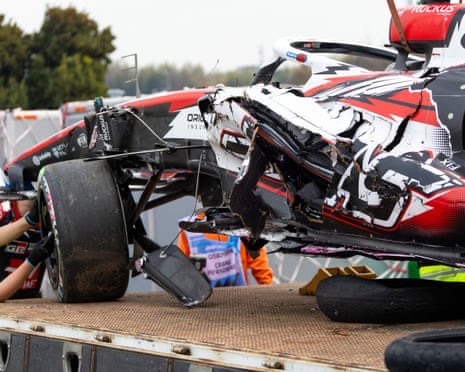
Valtteri Bottas, who is set to make his return to the F1 grid in 2026 after a year away, will begin the new season carrying a five-place grid penalty at the Australian Grand Prix. The punishment stems from an incident nearly two years earlier, when Bottas suffered a dramatic retirement after damaging his front suspension during an ambitious overtaking attempt on Kevin Magnussen.
While the crash itself marked a disappointing end to Bottas’ time with Sauber in 2024, the long-term consequences have proven even more frustrating. Despite sitting out the entire 2025 season, the Finnish driver’s penalty has remained active and will now be enforced at the opening race of his comeback year.
The situation has prompted criticism from 1996 world champion Damon Hill, who took to social media this week after fans noticed the sanction was still on Bottas’ record. Posting on his Instagram story, Hill summed up his view of the matter in blunt fashion, calling the carry-over penalty simply “ridiculous”.
A Rule Change — But Too Late for Bottas
Adding further fuel to the debate is the fact that the FIA has already acknowledged the flaws in its previous approach to unserved penalties. For 2026, the governing body has introduced a revised regulation stating that grid penalties will expire if they are not applied within 12 months of being issued.
The change is designed to prevent drivers from being punished long after the original incident, particularly in cases involving injuries, sabbaticals, or unexpected breaks from the sport. However, while the new rule aims to eliminate similar scenarios in the future, it will not apply retrospectively — leaving Bottas caught in an unfortunate regulatory grey area.
When Bottas’ move to Cadillac for 2026 was confirmed last summer, the FIA clarified its stance on the issue. Under the regulations that were in force at the time of the Magnussen incident, there was no provision to nullify the penalty due to time elapsed or absence from competition.
“Currently, the penalty will stand,” an FIA spokesperson confirmed. “There is no mechanism to retroactively amend a sanction that was applied under the regulations in force at the time.”
An ‘Anomalous’ Situation Acknowledged
While firm in its decision, the FIA has openly admitted that Bottas’ case highlights an anomaly in the old system. The governing body stated that the revised regulation for 2026 was specifically introduced to prevent similar situations from occurring again, acknowledging that the previous framework allowed penalties to linger indefinitely under certain circumstances.
For Bottas, though, the acknowledgment offers little comfort. His return to Formula 1 — and debut with Cadillac — will begin under a cloud, as he faces an immediate sporting disadvantage before the lights even go out in Melbourne.
The penalty could prove costly in what is expected to be a tightly contested midfield, particularly with 2026 ushering in sweeping technical changes and a reset of competitive order across the grid.
A Broader Debate
Hill’s reaction reflects a broader sentiment within the F1 community, where many fans and pundits question whether it is fair or logical for penalties to outlast entire seasons. Critics argue that sanctions should be timely and relevant, rather than resurfacing long after the context of the original incident has faded.
While the FIA’s rule change suggests lessons have been learned, Bottas’ case stands as a reminder of how rigid regulation can sometimes clash with common sense — a point that, in the eyes of at least one world champion, remains hard to justify.
As the 2026 season approaches, all eyes will now be on how Bottas responds when he finally lines up on the grid again — penalty or not.