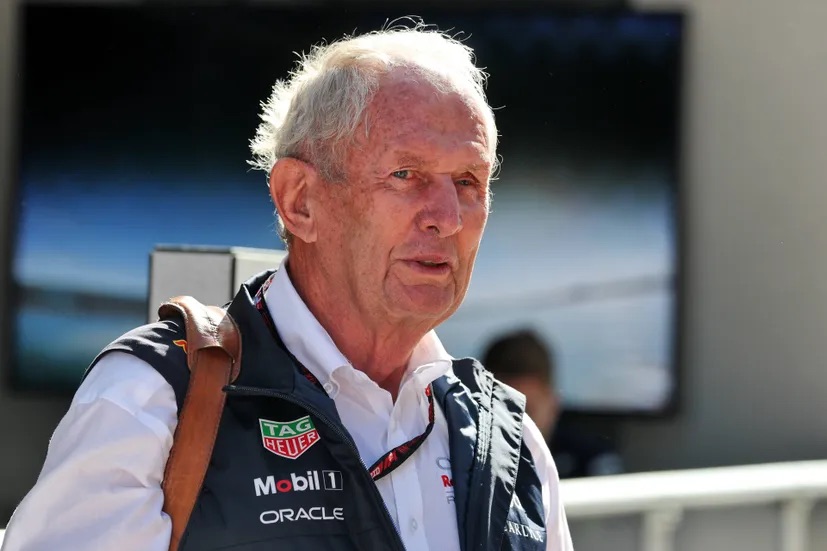
F1 Champion Reacts to Helmut Marko’s Surprise Red Bull Departure as Team Enters New Era
The Formula 1 paddock has been left reeling by the shock departure of Helmut Marko from Red Bull Racing, marking the end of a two-decade era that helped shape one of the most successful teams in modern F1 history. The Austrian’s exit came just days after Max Verstappen failed in his attempt to secure a fifth consecutive world championship, adding further intrigue to an already turbulent period for the Milton Keynes-based outfit.
Marko, who joined Red Bull at the very beginning of its Formula 1 journey, played a central role in the team’s rise to dominance. As motorsport advisor, he was instrumental in developing Red Bull’s famed junior driver programme, identifying and nurturing talents who would go on to become race winners and world champions. Despite speculation that his departure may have been forced, Marko was quick to dismiss such claims, insisting that the decision to step away was entirely his own.
Reaction to the news has been widespread, with figures from across the sport weighing in on the significance of Marko’s exit. Among them was the 1997 Formula 1 world champion, who admitted he was taken aback by the announcement. Speaking in an interview with a betting site, the former champion said the move came as a surprise, particularly given the long-standing perception of internal power struggles at Red Bull.
“Helmut Marko leaving Red Bull was a big shock,” he said. “We were all under the impression that there was some kind of power play between Christian Horner and Marko. But now they’re both out, so clearly that wasn’t the case. The whole team is rebranding. Since Dietrich Mateschitz passed away, it was always going to become a different organisation. The old guard was bound to move on at some point.”
Those comments highlight a growing belief within the paddock that Red Bull’s recent changes are part of a broader transformation rather than isolated incidents. The death of company founder Dietrich Mateschitz marked a turning point for the energy drink giant, and its Formula 1 operation has since undergone significant restructuring at senior level.
Marko’s departure is the latest in a series of high-profile exits that have reshaped the team’s leadership. Over the past year alone, Red Bull has lost three figures who were fundamental to its sustained success. Legendary designer Adrian Newey was the first to leave, making a shock move to Aston Martin after years of masterminding championship-winning cars. That was followed by the dismissal of long-serving team principal Christian Horner during the summer, a move that sent shockwaves through the sport.
With Marko now also gone, Red Bull’s once-familiar leadership structure has been completely dismantled. Together, Newey, Horner and Marko were widely viewed as the pillars of the team’s dominance, overseeing multiple constructors’ and drivers’ championships and establishing Red Bull as a benchmark in Formula 1.
In the wake of Marko’s exit, Red Bull has begun to formalise its new management setup. Alistair David Rew has been registered with Companies House as a statutory director of Red Bull Racing, joining current team boss Laurent Mekies. Rew, a 62-year-old British finance expert and experienced accountant, brings a strong background in motorsport and automotive finance, suggesting a renewed focus on financial governance and long-term stability as the team prepares for future challenges.
Mekies, who took over leadership responsibilities following Horner’s departure, is now tasked with guiding Red Bull through a period of transition both on and off the track. With sweeping regulation changes on the horizon and the team embarking on the ambitious project of running its own power unit programme, the timing of these leadership changes could prove critical.
While Verstappen remains a central figure in Red Bull’s future plans, the loss of several influential voices raises questions about how the team will adapt in the coming seasons. For many observers, Marko’s exit symbolises the definitive end of an era — one defined by bold decisions, ruthless competitiveness and extraordinary success.
As Red Bull looks ahead, the challenge will be to preserve its winning culture while embracing a new identity. The departure of the old guard may have been inevitable, but how effectively the next generation of leadership can build on that legacy will determine whether Red Bull remains at the forefront of Formula 1 in the years to come.