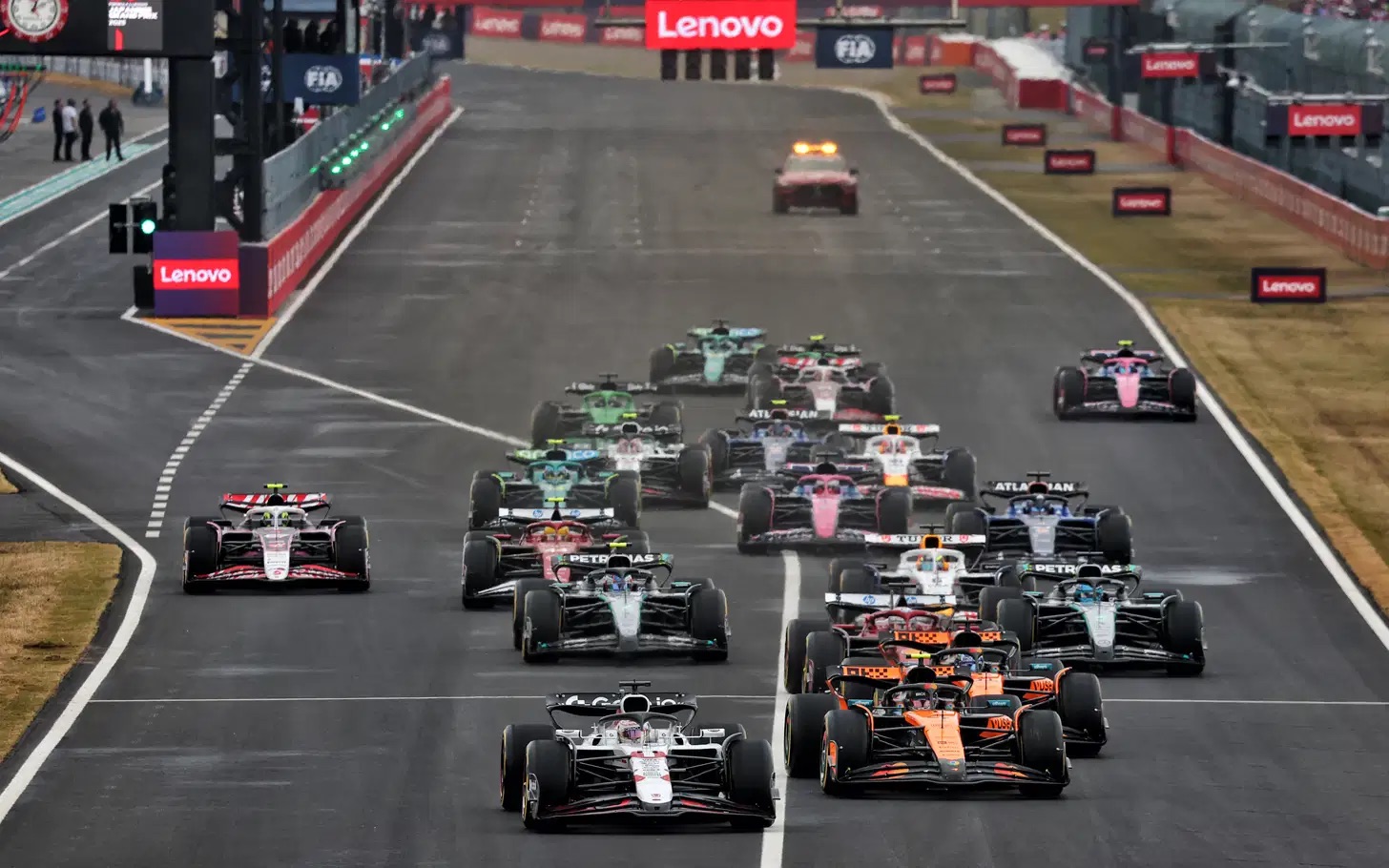
The 2019 Japanese Grand Prix weekend remains one of the most dramatic examples of how extreme weather can disrupt Formula 1, after Super Typhoon Hagibis forced officials to make unprecedented changes to the schedule at Suzuka Circuit.
As the powerful storm approached Japan in October 2019, concerns quickly escalated among race organisers and the FIA. Hagibis was widely forecast to be the most severe tropical cyclone to hit the country in six decades, bringing with it dangerous winds, torrential rainfall, and widespread risk to life and infrastructure. With the safety of fans, drivers, and staff at stake, a decisive call was made to cancel all track activities scheduled for Saturday, October 12.
The impact of the typhoon was immense. Wind speeds at Suzuka were expected to reach around 90 km/h, while the storm itself spanned an enormous 1,400 kilometres. At its peak, gusts were predicted to climb as high as 270 km/h. Under such extreme conditions, continuing with any on-track action was simply not an option. Officials also raised serious concerns about potential flooding in key access areas, including tunnels, and whether emergency services—particularly the medical helicopter—would be able to operate effectively if an incident occurred.
In response, Formula 1 and the FIA released a joint statement confirming that the cancellation was made “in the interest of safety for the spectators, competitors and everyone at the Suzuka Circuit.” The move, while disruptive, was widely supported across the paddock given the severity of the threat.
With Saturday’s programme completely wiped out, organisers were forced to compress the weekend schedule significantly. Qualifying, which traditionally takes place on Saturday afternoon, was rescheduled to Sunday morning at 10:00 local time—just a few hours before the race itself, which remained set for 14:10. Meanwhile, the third free practice session was abandoned altogether, leaving teams with only the two Friday sessions to gather data and fine-tune their setups.
This created a unique and demanding scenario for teams and drivers alike. Without the benefit of final practice, engineers had limited time to analyse performance and make adjustments before qualifying. The condensed timetable also meant parc fermé conditions came into effect shortly after qualifying, leaving minimal opportunity to react to changing track conditions or strategic insights.
Although rare, this was not the first time Suzuka had faced disruption due to typhoons. Similar situations occurred in 2004 and 2010, when qualifying sessions were also postponed until race day. However, the 2019 edition stood out due to the scale of the storm and the complete shutdown of Saturday activities, which added an extra layer of complexity for all involved.
Beyond the race weekend, Typhoon Hagibis caused devastating consequences across Japan. The storm led to widespread flooding and destruction, ultimately claiming 139 lives and causing damage estimated at over $17 billion. Hundreds of thousands of households were affected, with more than 270,000 homes losing power at the height of the crisis. Some regions recorded rainfall totals of up to 76 centimetres, further compounding the disaster.
Despite the chaos, the race itself went ahead as planned on Sunday afternoon once conditions improved. Valtteri Bottas delivered a commanding performance to take victory, capitalising on the unusual circumstances and a reshuffled weekend structure. His win effectively capped off a challenging but well-managed event for Formula 1, reinforcing the importance of flexibility and safety in the face of unpredictable natural forces.
In hindsight, the decision to delay qualifying rather than cancel it outright or rely on practice results proved to be the right one. It ensured a fair and competitive grid while maintaining the integrity of the sport. Above all, the events of the 2019 Japanese Grand Prix served as a powerful reminder that, even in a highly controlled environment like Formula 1, nature can still dictate the course of events.