F1 Latest weather forecast for first Bahrain pre-season…read more
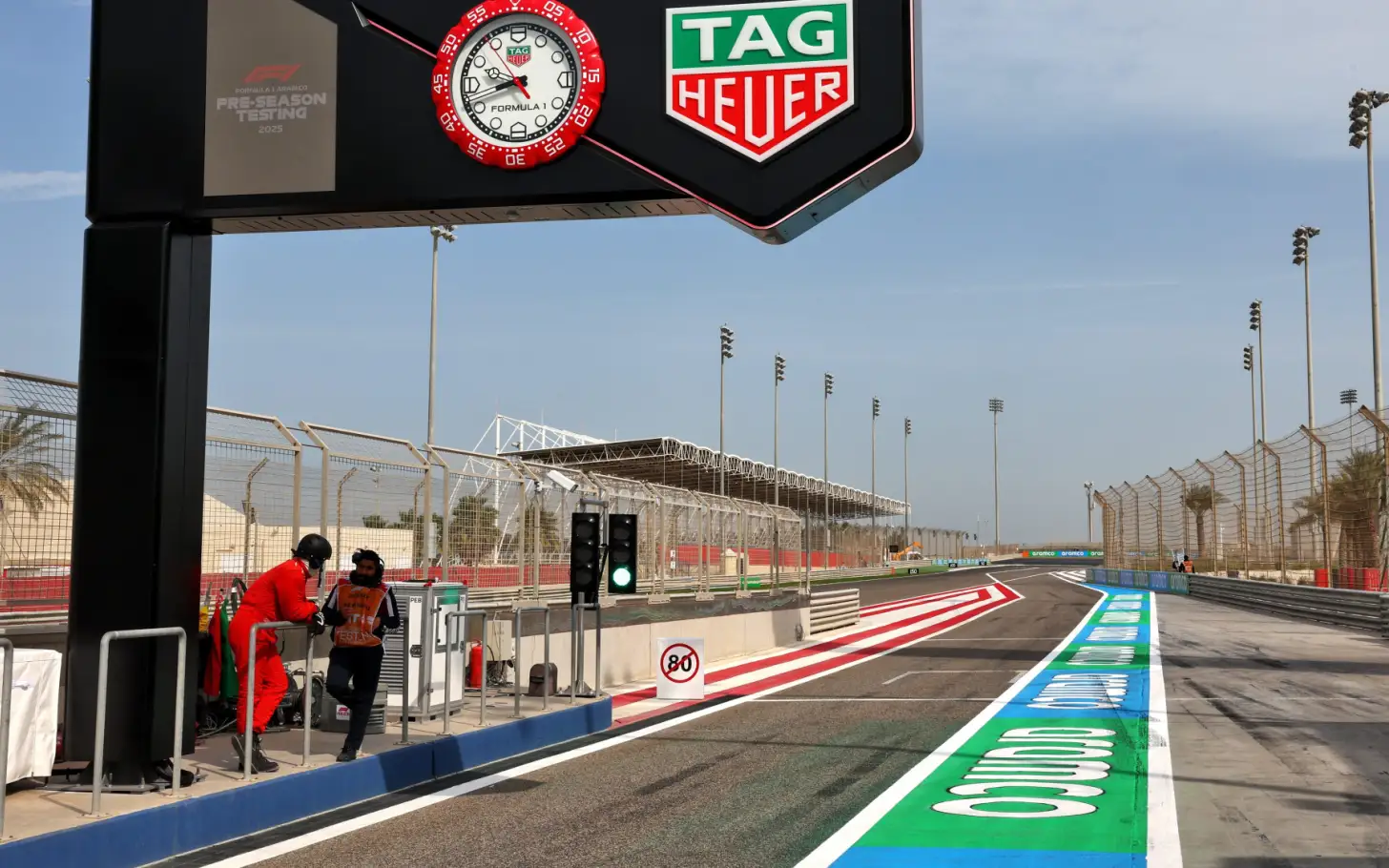
Formula 1’s 11 teams are set to benefit from highly favourable weather conditions during the opening official pre-season test at the Bahrain International Circuit, with forecasts pointing to warm temperatures, clear skies and uninterrupted track running across all three days.
The test, scheduled from Wednesday 11 February through Friday 13 February, is expected to take place under stable and predictable weather — an ideal scenario for teams eager to gather early performance data and validate their new-season packages. Bahrain is known for its intense heat for much of the year, but February typically delivers some of the most comfortable and consistent conditions on the calendar, making it a reliable venue for winter testing.
Current projections show daytime temperatures steadily climbing into the mid-20s Celsius, generally ranging between 24 and 26 degrees during peak afternoon running. Evening and early morning sessions are likely to be slightly cooler, with overnight lows hovering near 19 degrees. This relatively narrow temperature spread should help teams produce consistent comparisons across long runs and setup experiments.
Sunshine is expected to dominate throughout the test window, with dry air and minimal cloud cover ensuring uninterrupted track time. Meteorologists indicate that while some high-altitude veil clouds may drift across the sky at intervals, they will be thin and patchy, unlikely to significantly reduce sunlight or alter track temperatures. As a result, teams should experience steady surface conditions that are well suited for tyre evaluation and aerodynamic correlation work.
Rain — often the biggest unknown factor in winter testing — is not currently forecast at any point during the three-day session. The absence of precipitation removes a major variable and should allow teams to execute planned run programmes without weather-related delays or compromises. For engineers and strategists, this level of predictability is especially valuable when assessing new components and gathering baseline data for the upcoming campaign.
Wind could be the one environmental factor worth monitoring. Forecasts suggest moderate to occasionally strong breezes coming from the east to southeast, which is typical for the Sakhir region. While not expected to reach disruptive levels, gusts can affect car behaviour, particularly on high-speed straights and during braking phases. Teams will likely keep a close eye on wind speed and direction when analysing aerodynamic performance and balance, as crosswinds can slightly distort sensor readings and driver feedback.
Another familiar regional feature — airborne desert dust — may also be present in the atmosphere. This fine particulate matter, often carried at higher altitudes, can give the sky a slightly hazy appearance even on otherwise sunny days. However, current expectations are that most of this dust will remain suspended well above ground level. That means visibility and air quality at track level should remain largely unaffected, with little to no operational impact on teams or drivers.
From a performance perspective, the combination of warm but not extreme heat, stable sunlight and low humidity should help produce repeatable tyre behaviour and consistent lap times. Such conditions are particularly useful during early-season testing, when teams are trying to separate genuine performance gains from environmental noise. Reliable weather also supports more accurate fuel-load comparisons and long-run degradation studies.
In summary, the outlook for the first Bahrain pre-season test is overwhelmingly positive. With sunshine, dry conditions and steady temperatures expected throughout, teams should be able to complete extensive run plans and collect meaningful data. The consistent weather profile offers exactly the kind of controlled environment engineers hope for when evaluating new cars, systems and upgrades — providing a strong analytical foundation as preparations begin for the 2026 Formula 1 season.