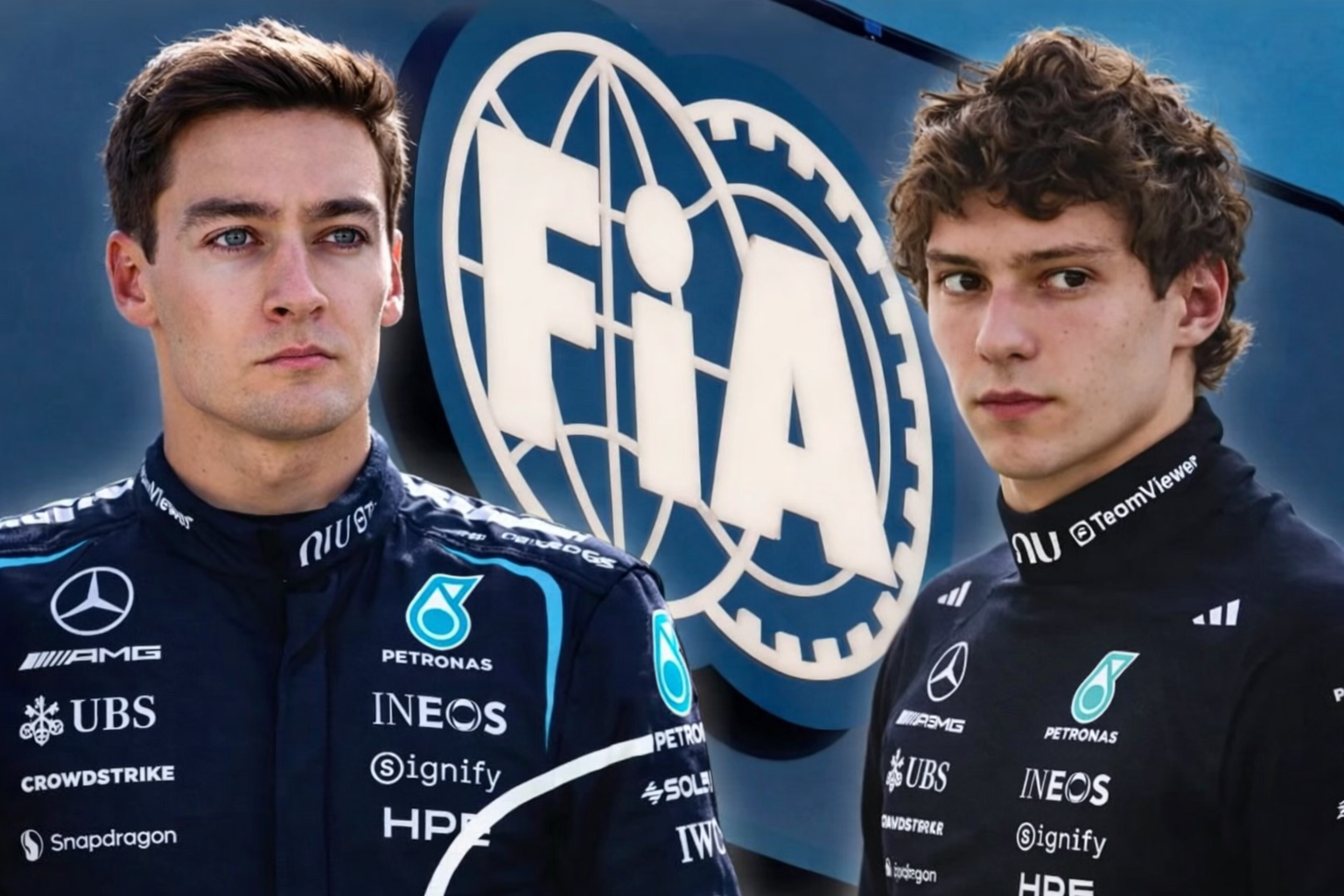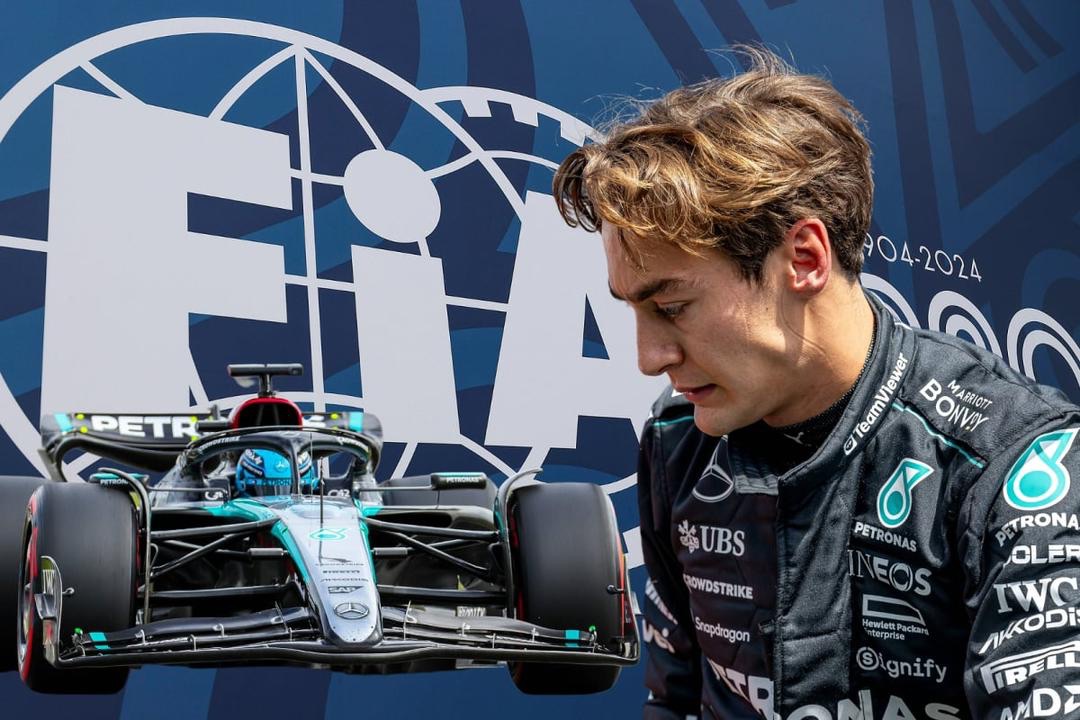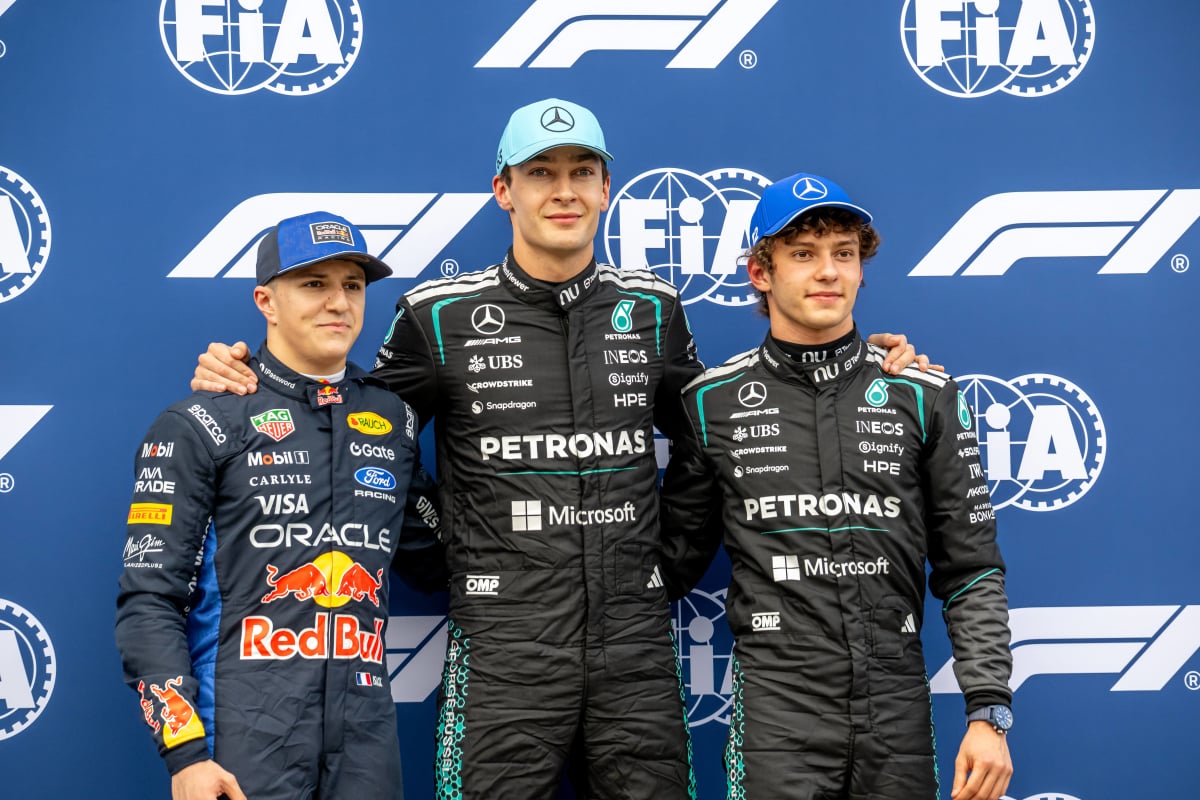
The governing body of Formula One, the FIA (Fédération Internationale de l’Automobile), has delivered a late ruling regarding a penalty involving the Mercedes team following a series of events during qualifying for the 2026 Australian Grand Prix. The decision came after one of the team’s cars was involved in an incident that raised safety concerns and prompted an official investigation by race stewards.
Mercedes had an impressive performance during qualifying at the Albert Park Circuit in Melbourne, demonstrating strong pace at the opening race weekend of the 2026 Formula One season. Their drivers, George Russell and rookie Kimi Antonelli, showed remarkable speed as the team began the campaign under new technical regulations. Expectations were already high for Mercedes, as many observers believed the team had successfully adapted to the new chassis and power-unit rules introduced for the season.
George Russell in particular delivered an exceptional lap during qualifying, securing pole position and confirming Mercedes’ competitiveness. His performance put him at the top of the timesheets and strengthened the belief that he could be a serious contender for the drivers’ championship in the new season. The British driver’s lap time placed him comfortably ahead of several rivals, highlighting the strength of the Mercedes car.
The team’s positive momentum continued when Antonelli also produced a strong qualifying performance. The young Italian driver managed to finish second fastest, meaning Mercedes locked out the entire front row of the starting grid for the Australian Grand Prix. Achieving both first and second place in qualifying was a significant boost for the team and suggested they could dominate the race on Sunday.
However, the celebration within the Mercedes garage was short-lived after the FIA announced that Antonelli and representatives from the team had been summoned by race stewards to answer questions about incidents that occurred during the qualifying session. The investigation centered around two potential rule breaches involving the Mercedes car.
One of the main issues occurred when Antonelli exited the pit garage during qualifying with cooling equipment still attached to the car. These cooling fans are typically used by teams to regulate the temperature of the car’s internal components while it is stationary in the garage. Normally, mechanics remove the devices before the driver leaves the pit lane. In this case, however, the equipment remained attached when the car was released back onto the track.
As Antonelli accelerated away from the pit area and navigated the early corners of the circuit, parts of the cooling apparatus detached from the car. The loose equipment scattered across the track, creating debris that posed a potential hazard to other drivers.
One section of the equipment bounced onto the racing surface, while another fragment landed near the gravel area. A following car, driven by McLaren’s Lando Norris, struck one of the pieces, causing damage to the front wing of his vehicle. The impact also spread additional debris across the circuit, forcing race control to temporarily halt the session so track marshals could clear the debris.
The FIA launched an investigation to determine whether Mercedes had violated safety regulations by releasing the car in an unsafe condition. According to the sport’s rules, teams must ensure that all equipment is removed from a car before it leaves the garage and enters the track. Failure to do so can result in penalties ranging from fines to grid position penalties depending on the severity of the incident.
During the hearing, Mercedes explained that the unusual situation was partly caused by earlier damage sustained by Antonelli’s car in a previous session. The mechanics had been forced to carry out urgent repair work in a limited amount of time in order to get the car ready for qualifying. Because of the rushed preparations, the team’s normal workflow was disrupted, and the crew member responsible for removing the cooling fans was temporarily occupied with other tasks.
The team also stated that neither the driver nor the crew realized the equipment had not been removed when the car left the garage. Race control only noticed the issue once the car was already on track and the equipment began to detach.
After reviewing video footage, team radio communications, and the explanations provided by Mercedes, the FIA stewards concluded that the car had indeed been released in an unsafe condition because it left the garage with external equipment still attached. However, they also considered the circumstances surrounding the incident, including the fact that it appeared to be a procedural mistake rather than an intentional attempt to gain an advantage.
As a result, the stewards decided not to impose a sporting penalty that would affect Antonelli’s qualifying position or the race starting grid. Instead, the FIA opted for a financial punishment directed at the team. Mercedes was fined €7,500 for the error.
This decision allowed the Mercedes drivers to retain their front-row positions for the race, meaning Russell would start from pole position while Antonelli would line up alongside him in second place. Despite the fine, the team avoided a more damaging outcome that could have compromised their chances in the race.
The incident nonetheless served as a reminder of how small operational mistakes can have significant consequences in Formula One. Teams must manage complex procedures under intense time pressure during race weekends, and even minor oversights can lead to investigations or penalties.
For Mercedes, the situation was a mixture of relief and frustration. On one hand, they escaped a grid penalty that might have cost them their dominant starting positions. On the other hand, the error highlighted a lapse in operational discipline that could have been avoided.
With the FIA verdict delivered and the penalty limited to a financial fine, Mercedes could refocus on preparing for the race itself. Their strong qualifying performance suggested they had the pace to compete for victory, and the team would now aim to convert their front-row lockout into a successful result at the season-opening Australian Grand Prix.
In the end, the FIA’s ruling allowed Mercedes to maintain their competitive advantage on the grid while reinforcing the importance of strict safety procedures in Formula One. The outcome ensured that the championship’s opening race would begin with both Mercedes cars leading the field, setting the stage for what could be an exciting battle at the front of the pack.