The Fédération Internationale de l’Automobile has confirmed it will hold a series of meetings to review Formula 1’s controversial 2026 regulations following a frightening crash involving Oliver Bearman at the Japanese Grand Prix.
Bearman, driving for Haas F1 Team, was fortunate to escape serious injury after a high-speed incident that raised fresh concerns about the sport’s new power unit rules. The crash occurred as he chased Franco Colapinto, who was running ahead in his Alpine F1 Team car.
Under normal circumstances, both drivers would have been travelling at similar speeds. However, the 2026 regulations—particularly those relating to energy harvesting—created a dangerous speed differential. Colapinto was harvesting energy as he approached Spoon Curve, significantly reducing his speed, while Bearman, who was not harvesting at that moment, closed in rapidly.
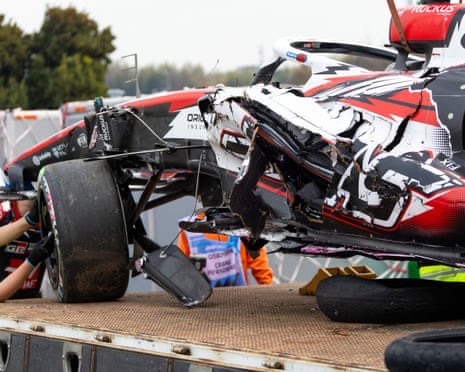
The closing speed difference is believed to have been as much as 50km/h. With little time to react, Bearman was forced to take evasive action, veering onto the grass to avoid a collision. From that point, he lost control entirely, becoming a passenger as his car skidded across the run-off area before slamming into the tyre barriers with an impact measured at approximately 50G.
Despite the severity of the crash, Bearman was able to climb out of the wreckage and was later taken to the medical centre for precautionary checks. Thankfully, X-rays confirmed that he had not sustained any fractures, and he was discharged shortly afterwards with only minor injuries.
The incident has reignited criticism from drivers, particularly from Grand Prix Drivers’ Association (GPDA) director Carlos Sainz. Sainz expressed frustration after the race, revealing that drivers had already warned both Formula 1 and the FIA about the risks associated with the new regulations.
He pointed out that while Bearman was lucky to crash at a circuit with ample run-off, similar incidents at street tracks such as Baku, Singapore, or Las Vegas could have far more serious consequences due to the proximity of walls. Sainz stressed that the current racing conditions are “not OK” and urged governing bodies to listen more closely to drivers rather than other stakeholders.
In response, the FIA issued an official statement acknowledging the role that high closing speeds may have played in the crash. The governing body emphasized that the 2026 regulations were always intended to be adaptable, with several adjustable parameters—especially concerning energy management—designed to be refined based on real-world data.
The FIA also confirmed that discussions involving teams, power unit manufacturers, drivers, and Formula One Management have been ongoing since the introduction of the new rules. As part of this process, a structured review had already been planned after the opening races of the season.
A series of meetings is now scheduled for April, where stakeholders will assess how the regulations are performing and determine whether any changes are necessary. Particular attention is expected to focus on energy deployment and harvesting systems, which appear to have contributed to the dangerous speed discrepancies seen in Japan.
While the FIA reiterated that safety remains its top priority, it cautioned that any modifications would require thorough simulation and analysis before implementation. For now, the governing body has urged patience, stating that it is too early to speculate on specific regulatory changes, with further updates to be communicated in due course.