The Fédération Internationale de l’Automobile has issued a detailed statement following the frightening high-speed crash involving Oliver Bearman at the Japanese Grand Prix, aiming to clarify its current stance on safety concerns linked to the 2026 Formula 1 regulations.
Bearman’s heavy accident unfolded on Lap 21 of the race at Suzuka, one of the most challenging and technical circuits on the calendar. The young driver was chasing down Franco Colapinto when the incident occurred, with a significant difference in speed between the two cars playing a crucial role. While Colapinto was harvesting electrical energy as part of his race strategy, Bearman was deploying his battery power, creating a sharp closing speed as they approached the fast and unforgiving Spoon Curve.
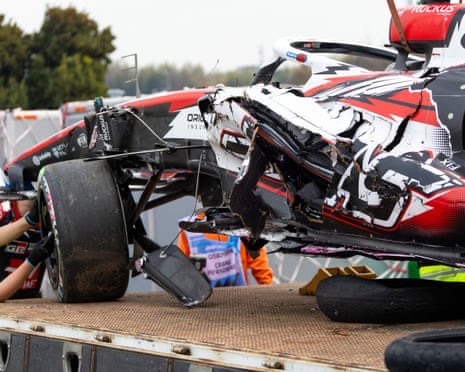
As Bearman rapidly gained on the Alpine driver, the situation escalated quickly. He struck a brake marker board before losing control and hitting the barrier broadside in a violent 50G impact. The force of the crash immediately raised concerns among teams, officials, and fans, given both the speed and angle of the collision.
Despite the severity of the incident, Bearman was able to climb out of his car without assistance — a testament to the strength of modern Formula 1 safety systems. However, he was clearly in discomfort, limping away from the wreckage while holding his right leg and ankle. He was promptly taken to the track’s medical centre for further evaluation.
Medical examinations, including X-rays, confirmed that Bearman had escaped without any fractures. Doctors reported that he sustained significant bruising but avoided more serious injury — an outcome many described as fortunate given the magnitude of the crash. The closing speed at the moment of impact was estimated to be around 45 km/h (29.7 mph), highlighting the dangerous dynamics created by differing energy strategies on track.
In the aftermath of the race, concerns about safety quickly surfaced within the paddock. Carlos Sainz, who serves as a director of the Grand Prix Drivers’ Association (GPDA), publicly criticised the governing body’s handling of the situation. He suggested that drivers had repeatedly warned about the risks associated with large speed differentials during races, but felt those concerns had not been fully addressed. According to Sainz, too much emphasis had been placed on adjusting power usage in qualifying rather than tackling race-day safety issues.
Responding to these criticisms, the FIA released a statement stressing that the 2026 regulations were always intended to be adaptable. The governing body explained that several adjustable parameters were deliberately built into the rules — particularly regarding energy management systems — to allow for fine-tuning as more real-world data becomes available.
The FIA further noted that all key stakeholders, including teams, power unit manufacturers, drivers, and Formula One Management, had agreed in advance to conduct a comprehensive review after the opening races of the season. This phased approach is designed to ensure that any changes are informed by evidence and analysis, rather than being made in reaction to isolated incidents.
As part of this process, multiple meetings have already been scheduled for April. These discussions will bring together representatives from across the sport to assess how the new regulations are performing, with a strong focus on whether energy deployment differences are creating unsafe racing conditions. Bearman’s crash is expected to be a central topic in these talks.
However, the FIA made it clear that immediate rule changes should not be expected. It emphasised that any adjustments — particularly those involving complex hybrid systems and energy deployment — must undergo thorough simulation and detailed technical analysis before being implemented. The organisation warned that speculation about potential changes at this stage would be premature.
Reaffirming its commitment to driver safety, the FIA concluded by stating that safety remains a fundamental priority in Formula 1. It pledged to continue working closely with all stakeholders to find the right balance between performance, competition, and protection for drivers.
With further updates expected after the upcoming review meetings, the spotlight will remain firmly on how Formula 1 responds to the concerns raised by Bearman’s dramatic crash — and whether it leads to meaningful refinements in the evolving 2026 regulations.