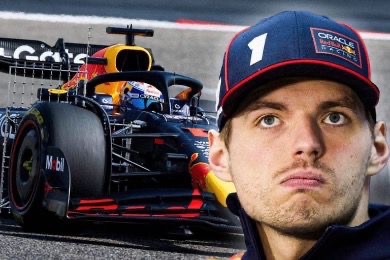
Ford Acknowledges Anxiety as Red Bull’s New 2026 F1 Power Unit Nears First Track Test
Red Bull’s bold step into Formula 1’s next power unit era is edging closer to its first major moment of truth, with Ford openly admitting there is a sense of apprehension ahead of the project’s initial on-track outing in Barcelona.
From 2026, Red Bull will compete using an engine designed and built in-house by Red Bull Powertrains, supported by Ford, ending one of the most successful partnerships in modern F1 history with Honda. That collaboration delivered four consecutive drivers’ championships and multiple constructors’ titles, making the decision to move on both ambitious and risky.
Ford Performance global director Mark Rushbrook has stressed that development is progressing as planned, but conceded that no amount of preparation can fully remove uncertainty until the power unit is run in a real Formula 1 car.
The 2026 regulations represent one of the biggest technical shake-ups the sport has ever seen. The new power units will feature a dramatically increased electrical element, with roughly half of the total output coming from the MGU-K. Alongside this, F1 will introduce 100% sustainable fuels, while energy recovery, efficiency, and software control will play a far greater role than ever before.
Rather than a gradual evolution, teams face a complete reset. Even established manufacturers such as Mercedes, Ferrari, and Honda are effectively starting from scratch, which makes Red Bull’s first-ever fully self-produced engine a particularly daunting challenge.
Mercedes team principal Toto Wolff previously likened Red Bull’s task to “climbing Mount Everest,” a comparison Rushbrook does not reject. While confident in the groundwork laid so far, he accepts that the real evaluation begins only when the car hits the circuit.
“We are where we expected to be at this stage,” Rushbrook explained in comments to Autosport. “But the reality is that everything truly comes together for the first time when the engine is installed in the car and running on track.”
That moment is set to arrive during private winter testing in Barcelona, scheduled for January. Although the sessions will take place behind closed doors, they will provide the first genuine insight into how the Red Bull-Ford power unit performs as a complete system.
Rushbrook admitted that nervousness is unavoidable, regardless of how successful testing has been in controlled environments.
“You can learn a lot from simulations, dyno testing, and laboratory work,” he said. “But until you see the car running on a real circuit, you haven’t encountered every possible variable.”
The development strategy adopted by Red Bull Powertrains and Ford has been deliberately structured. Engineers initially focused on achieving performance targets before turning their attention to reliability. Once stability was improved, performance development resumed, creating a continuous cycle of refinement.
In recent months, the emphasis has shifted toward drivability — a crucial factor under the 2026 rules. With the increased reliance on electrical deployment and complex energy management systems, how smoothly and predictably the power is delivered to the driver will be vital.
“It’s not just about outright power,” Rushbrook explained. “You have to consider performance, reliability, and then drivability. Some of that work happens in simulation, some in the lab, and some with drivers in the simulator. That’s really where the focus is now.”
The human element will be especially important. Drivers must adapt to new braking characteristics, energy harvesting demands, and throttle responses, all of which will differ significantly from current-generation cars. A poorly balanced power unit could cost valuable tenths of a second, regardless of headline output figures.
Despite meeting their own internal benchmarks, one major unknown remains: how Red Bull-Ford’s progress compares to that of rival manufacturers.
Rushbrook acknowledged that while the regulations clearly define what is theoretically achievable, no team truly knows how close others are to those limits.
“Everyone understands the maximum potential allowed by the rules,” he said. “After that, success comes down to how efficiently you can reach that level in the real world.”
As Formula 1 prepares for a new era built around sustainability, electrical power, and innovation, Red Bull’s engine gamble stands as one of the most fascinating storylines heading into 2026. The upcoming Barcelona test may be private, but its implications could shape the competitive order for years to come.