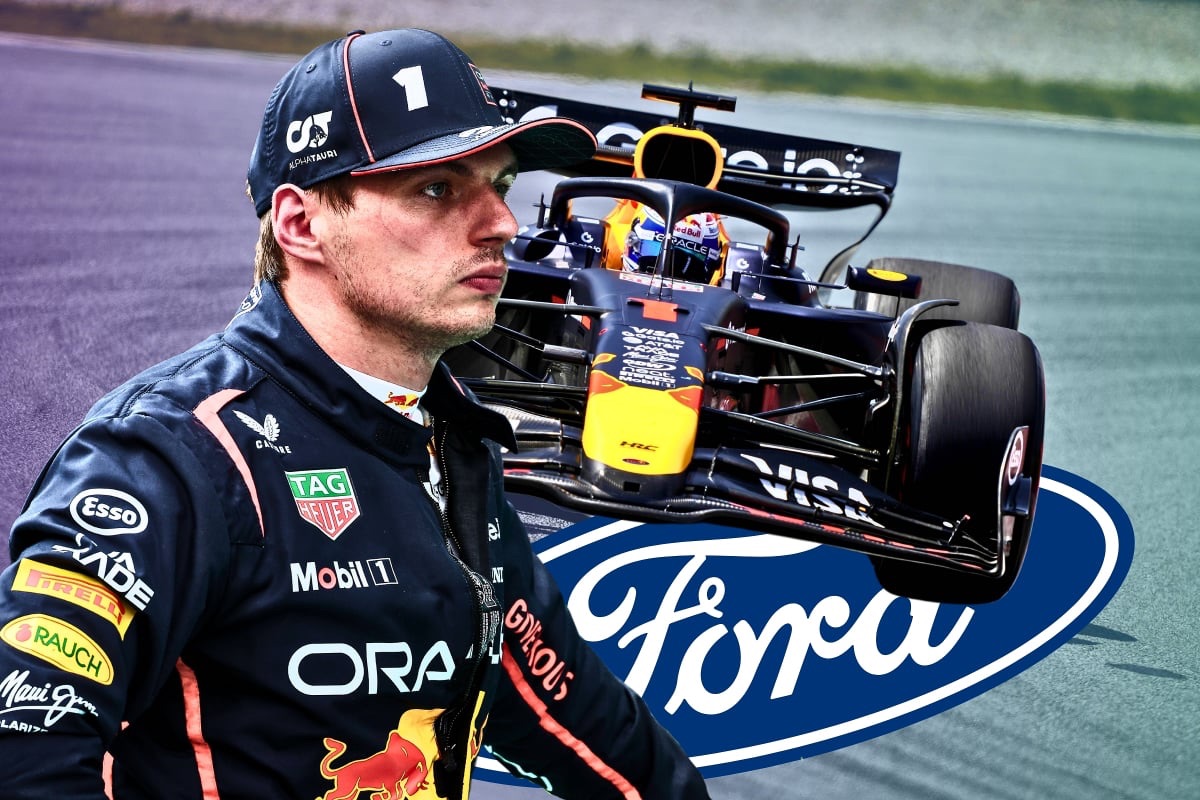
Ford Breaks Silence on Red Bull’s 2026 Gamble as Engine Debut Sparks Quiet Anxiety
Ford has openly acknowledged a sense of nervous anticipation as it prepares for its long-awaited return to Formula 1, partnering with Red Bull ahead of a major regulation overhaul in 2026. While confidence remains high within the project, the American manufacturer admits that the true test will only come when the new power unit finally hits the track.
The curtain fell on the current era of Formula 1 at the season-ending Abu Dhabi Grand Prix, a race that also marked the conclusion of Red Bull’s highly successful partnership with Honda. After years of championship-winning dominance together, the Japanese manufacturer has shifted its focus and will supply engines exclusively to Aston Martin from 2026 onwards.
Honda’s initial decision to leave Formula 1 after the 2021 season forced Red Bull into a race against time. The Milton Keynes-based team struck a temporary agreement to continue running Honda power units while it searched for a long-term solution. That stopgap ultimately evolved into the creation of Red Bull Powertrains, a bold in-house project designed to secure the team’s future under the next set of F1 regulations.
From 2026, Red Bull Powertrains will receive technical backing from Ford, bringing one of the most iconic automotive brands back to Formula 1 after a long absence. The partnership is ambitious, coming at a moment when the sport is undergoing sweeping changes to engine architecture, electrical output, and sustainability targets. With so many unknowns, questions naturally surround how competitive Red Bull will be when the new era begins.
Those questions will begin to receive answers later this month when Red Bull and Ford conduct their first on-track test. The initial shakedown is scheduled to take place during a private pre-season test in Barcelona, where Red Bull’s 2026 driver pairing, Max Verstappen and rookie Isack Hadjar, will provide early feedback on the new car and power unit. The sessions, held behind closed doors at the Circuit de Barcelona-Catalunya, represent a crucial milestone in the project’s development.
With the countdown to the test now measured in weeks rather than months, Ford Performance Director Mark Rushbrook has offered a candid assessment of the mood inside the company. Speaking to Motorsport.com, Rushbrook admitted that some nerves are inevitable when an entirely new engine is about to run for the first time.
He explained that nervousness and anticipation go hand in hand whenever a new car or power unit reaches the track. According to Rushbrook, Ford’s simulation tools and laboratory facilities have played a vital role in developing the hardware and its calibration. Advanced computer modelling and extensive bench testing have allowed engineers to evaluate countless scenarios long before the engine ever fires up in real conditions.
However, Rushbrook stressed that no matter how advanced modern technology becomes, it can never replicate everything that happens on a live racetrack. Only when the car runs in the real world do engineers discover the issues, behaviours, and interactions that simulations cannot fully predict. The unknowns, he said, are simply part of Formula 1.
Despite those uncertainties, Rushbrook insisted that Red Bull and Ford have already achieved the objectives they set for themselves at this stage of development. From Ford’s perspective, the programme is progressing as planned, and there is confidence that the foundations are solid.
What complicates matters is the secrecy surrounding rival manufacturers. Ferrari, Mercedes, and Honda are all working in parallel on their own 2026 power units, but little is known about how each project compares. With no public benchmarks and no shared data, even the most experienced engineers are effectively operating in the dark.
As a result, no one can say with certainty where Red Bull and Ford will stand in the competitive order once the new season begins in March. Early testing may provide hints, but true performance levels often remain hidden until the cars line up for the first race.
For Red Bull, the stakes are enormous. After years of success powered by Honda, the move to an in-house engine programme supported by Ford represents one of the biggest risks in the team’s history. For Ford, it is a return to Formula 1 under intense scrutiny, with expectations fuelled by Red Bull’s recent dominance.
As the first test approaches, excitement and anxiety exist side by side. The real answers are coming — and once the cars roll out in Barcelona, speculation will give way to reality.