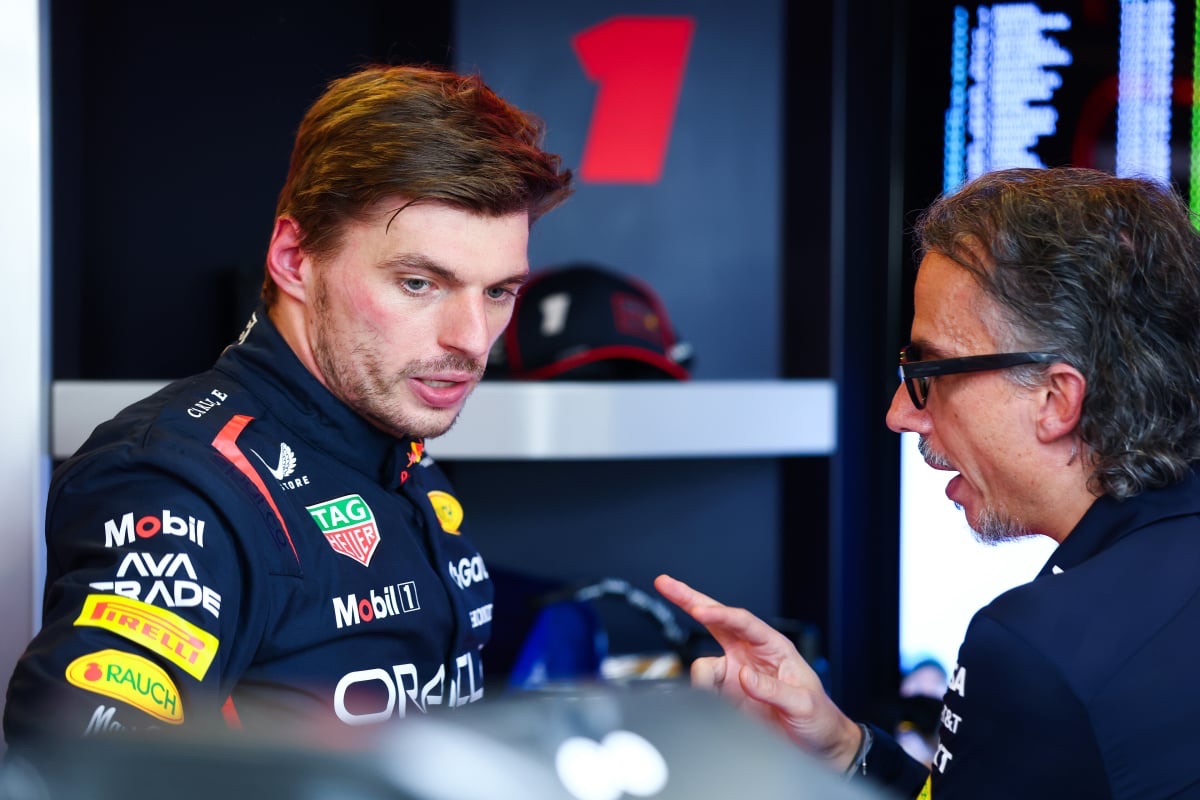
“We’ll Find the Next One”: Ford’s Defiant Message as Max Verstappen’s Red Bull Future Hangs in the Balance
Ford Racing has sent a clear, unflinching message to the Formula 1 paddock: Max Verstappen may be a once-in-a-generation superstar, but Red Bull’s future — and Ford’s commitment to the sport — does not hinge on one driver alone.
As Formula 1 edges closer to its seismic 2026 regulation overhaul, Verstappen’s long-term future at Red Bull continues to dominate headlines. The Dutchman, already a four-time world champion, has been inseparable from Red Bull since his debut with the senior team in 2016. Together, they have defined an era. But with sweeping technical changes coming and major personnel shifts already underway, the certainty that once surrounded the partnership has begun to crack.
From 2026, Red Bull will enter a bold new chapter, producing its own power units in partnership with Ford Racing. It is one of the most ambitious projects in the team’s history — and one that arrives amid unprecedented change. Christian Horner and Helmut Marko, the long-standing pillars of Red Bull’s leadership structure, are no longer at the helm. Adrian Newey, the design mastermind behind multiple championship-winning cars, has departed. Sporting director Jonathan Wheatley left earlier to begin a new journey with Sauber. In their place stands Laurent Mekies, tasked with steering Red Bull through its most uncertain era yet.
Against that backdrop, Verstappen’s next move feels pivotal. Insiders widely believe the reigning champion is keeping his options open, waiting to see which team emerges strongest under the 2026 rules before committing beyond 2027. Red Bull, Mercedes, and Aston Martin are all circling in a high-stakes game of technical poker — and Verstappen holds the strongest hand.
Yet Ford Racing global director Mark Rushbrook has made it clear that Verstappen’s presence, while hugely valued, is not a deal-breaker.
“He’s a generational talent,” Rushbrook explained, acknowledging Verstappen’s extraordinary impact. “Of course, having a champion driving a Red Bull–Ford car matters. But our belief goes beyond one individual. We believe in the power unit, we believe in the engineers, and we believe in the organisation.”
Rushbrook stressed that while Verstappen’s ability to extract every last fraction of performance makes him special, Ford’s F1 ambitions are rooted in something more enduring than star power.
“Max is important,” he continued, “but not to the point where we’d say, ‘If he leaves, we leave too.’ That’s not how we see it. We have confidence in the team, and we know there will always be top drivers coming through.”
It’s a defiant stance — and one that underlines Ford’s long-term vision for Formula 1. The American manufacturer is not entering the sport for a short-term headline or a single championship push. Instead, it sees Red Bull Powertrains-Ford as a platform for sustained success, regardless of which name is on the cockpit.
Still, the questions around Verstappen refuse to fade. If Red Bull’s 2026 car fails to deliver a genuine title challenge, speculation will intensify. Mercedes are widely rumoured to be best positioned for the new regulations, and Verstappen has been linked with a potential switch to Brackley for more than two seasons. Aston Martin, meanwhile, now armed with Adrian Newey’s genius and long-term ambition, are also believed to be monitoring the situation closely with an eye on 2027.
For Verstappen, the decision may come down to timing and trust. Can Red Bull — under new leadership and with a brand-new power unit — convince him that they can still give him the tools to win? Or will the lure of a fresh challenge, and a potentially faster car elsewhere, prove too strong?
What is certain is that 2026 represents a crossroads. It will be Red Bull’s first season without Horner or Marko, a symbolic break from the past. Success would validate their bold reset. Struggles would only fuel talk of an impending Verstappen exit.
Yet Ford’s message is unmistakable: Red Bull’s future does not end if Max Verstappen’s chapter closes. In a sport defined by constant evolution, Ford believes champions will always emerge — even if the current king eventually chooses to move on.