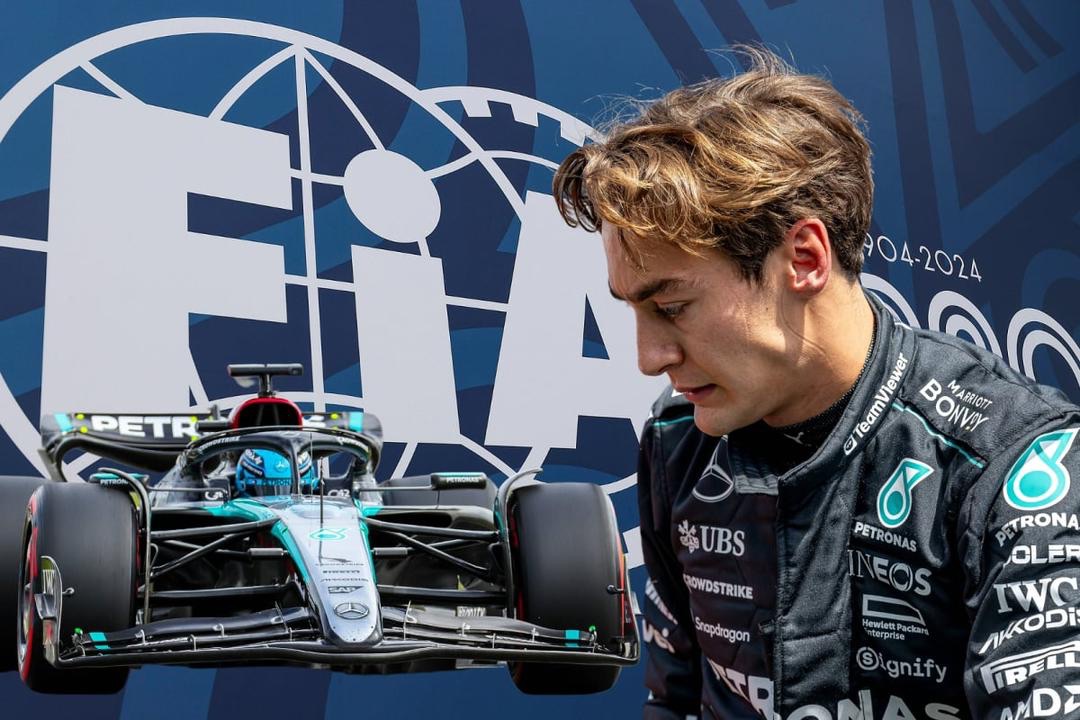
The start of the 2026 Formula 1 season has already sparked debate among drivers and teams, with Mercedes driver George Russell openly criticizing what he described as a “selfish” attitude from one team regarding a controversial rule about race starts. His comments came after an intense opening race at the Australian Grand Prix, where the sport began operating under a fresh set of regulations tied to a new power-unit era.
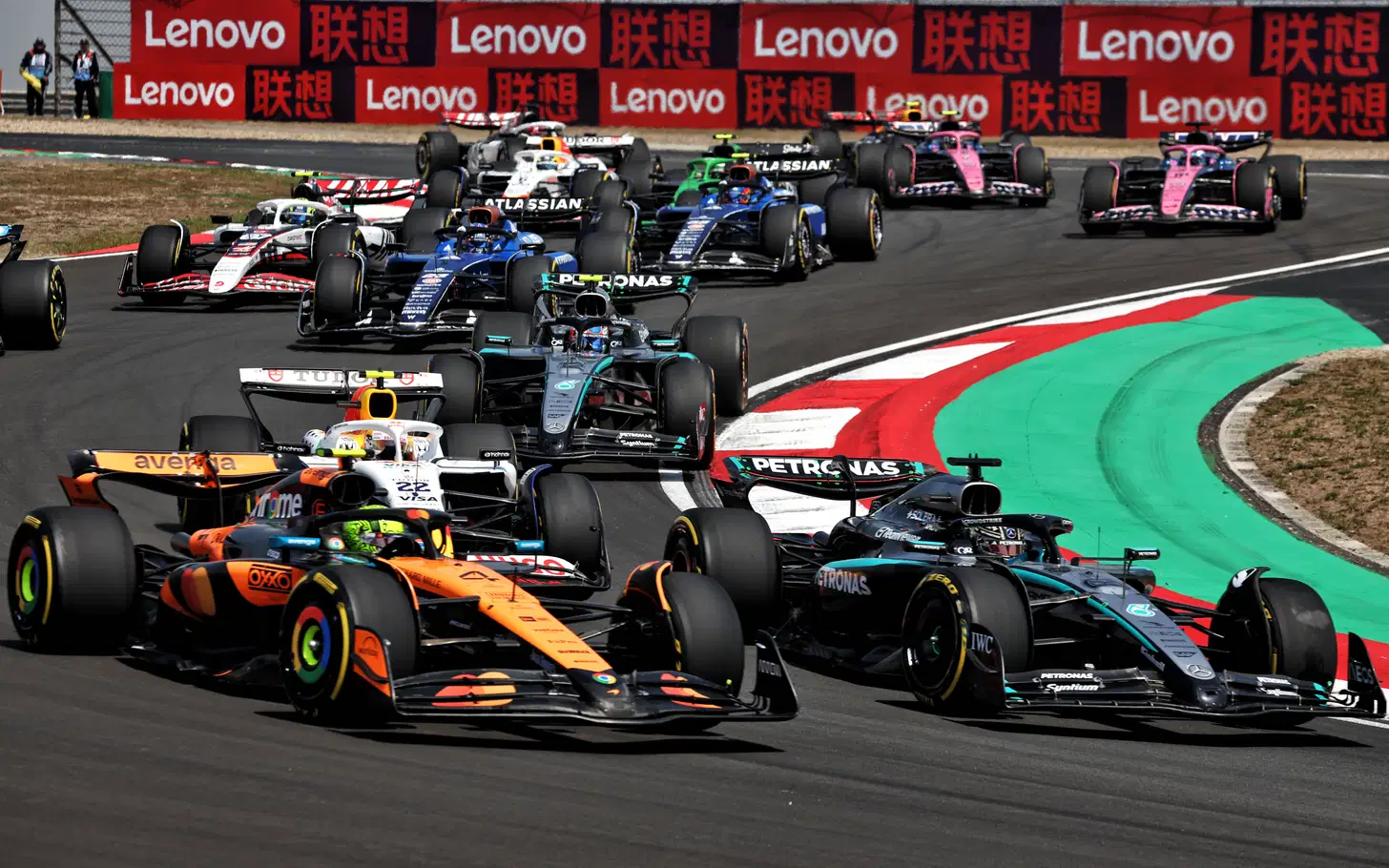
The Australian race marked the first competitive outing under the new technical framework that governs Formula 1’s power units for the upcoming cycle. With teams still adjusting to the changes, the opening laps of the race demonstrated just how unpredictable the new system could be. Russell began the race in a strong position, lining up on pole. However, despite his advantage at the start, he quickly found himself under pressure when Ferrari’s Charles Leclerc made an aggressive move from fourth on the grid to take the lead by the first corner.
Leclerc’s remarkable launch highlighted the importance of start performance under the new regulations, which have changed how power units and energy deployment behave when the race begins. While some teams appear comfortable adapting to the updated procedures, others have struggled to optimize their systems. These differences have fueled debate in the paddock about whether additional rule adjustments are necessary to ensure fair competition and driver safety.
Following the race, Russell expressed frustration with the position taken by one rival team regarding a proposed modification to the rules surrounding race starts. According to him, most teams recognized that a small tweak could help improve consistency and prevent issues at the beginning of races. However, one team reportedly refused to support the proposal, blocking the potential change.
Russell did not hide his displeasure at the situation. He argued that the stance taken by the opposing team was driven purely by self-interest rather than by a desire to improve the sport as a whole. In his view, if a majority of teams believe a rule adjustment could benefit the championship, it should be considered seriously instead of being obstructed for competitive advantage.
The Mercedes driver described the resistance to the proposed rule tweak as unnecessary and somewhat unreasonable. He suggested that the refusal to cooperate was based on narrow thinking, pointing out that Formula 1 teams often have to make compromises for the broader good of the sport. When a single team blocks such efforts simply because the current situation favors them, Russell believes it undermines the collaborative spirit needed to maintain a fair and balanced championship.
Russell also hinted that the issue is not just about technical details but about the philosophy teams adopt when dealing with regulatory changes. In Formula 1, teams frequently push for rules that maximize their own performance advantages. While this competitive mindset is expected, Russell argued that there are moments when the interests of the sport should take priority.
The debate over race-start regulations comes at a time when Formula 1 is undergoing one of the biggest technical transformations in its history. The 2026 rules introduce significant modifications to the power-unit architecture, including increased electrical energy deployment and revised engine configurations. These changes are intended to make the sport more sustainable while also maintaining high performance levels.
However, whenever new technical rules are introduced, unexpected challenges can arise. Teams must interpret the regulations differently as they search for performance gains, and this can lead to disparities in how cars behave on track. Race starts, in particular, are extremely sensitive to power-unit performance and energy management. Even a small difference in how power is delivered can dramatically influence the outcome of the opening moments of a race.
Russell’s comments therefore reflect broader concerns within the paddock about how smoothly the new regulations will function during the early phase of the season. Some teams believe adjustments may be required once more data is gathered from real race conditions. Others prefer to maintain the current rules until there is clear evidence that changes are necessary.
The Mercedes driver emphasized that he was not calling for a radical overhaul of the regulations. Instead, he suggested that a minor modification could help prevent certain inconsistencies without significantly altering the competitive landscape. In his opinion, refusing to consider such a change simply because it might benefit other teams is a short-sighted approach.
Another aspect of Russell’s argument centers on the collaborative decision-making process within Formula 1. Changes to sporting or technical regulations typically require approval from a majority of teams, as well as from governing bodies such as the FIA. Because of this system, even a single team can sometimes slow down or prevent proposed rule adjustments if the voting thresholds are not met.
Russell implied that this dynamic can occasionally allow teams to prioritize their own competitive advantages over the health of the sport. He suggested that when teams adopt this mindset, it becomes more difficult to address issues quickly, especially during the early stages of a new regulatory era.
Despite his criticism, Russell acknowledged that disagreements among teams are a normal part of Formula 1. The sport has always been characterized by intense rivalry not only on the track but also in the political and technical discussions that shape its rules. Teams invest enormous resources into developing their cars, so it is understandable that they may resist changes that could weaken their performance.
Nevertheless, Russell maintained that balance is important. In situations where a rule tweak could benefit the majority of competitors or improve the racing spectacle, he believes teams should be willing to compromise. From his perspective, maintaining the integrity and competitiveness of Formula 1 ultimately serves everyone involved, including the teams themselves.
The conversation sparked by Russell’s remarks highlights the complexities that accompany the introduction of new regulations in Formula 1. As the 2026 season continues, teams will gather more data and gain a clearer understanding of how the updated power-unit rules affect race performance. If issues persist, further discussions about potential adjustments are likely to take place among teams and governing bodies.
For now, Russell’s outspoken comments have added another layer of intrigue to the early stages of the championship. His criticism underscores the tension that can arise when teams disagree about how the sport should evolve. While the debate over race-start rules may seem like a minor technical matter, it reflects the broader challenge of balancing competition with cooperation in one of the world’s most technologically advanced sporting series.