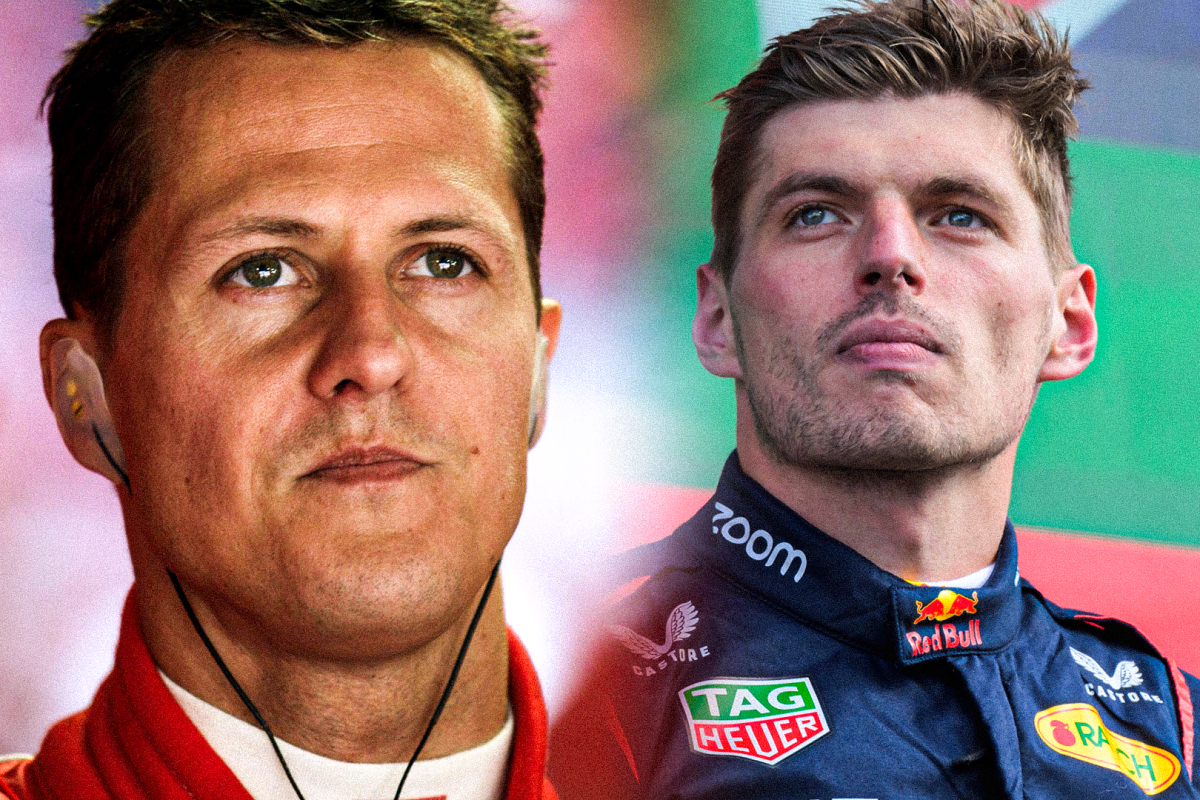
Iconic F1 Figure Says Max Verstappen Carries the ‘Michael Schumacher Gene’
Former Formula 1 driver Ralf Schumacher has drawn a striking comparison between Max Verstappen and his legendary brother Michael Schumacher, claiming the reigning Red Bull star possesses the same rare qualities that defined one of the greatest careers the sport has ever seen.
Schumacher, himself a six-time grand prix winner, believes Verstappen’s success goes far beyond raw speed or statistics. According to the German, the four-time world champion has developed a leadership aura and competitive instinct that mirrors the traits which helped Michael Schumacher dominate Formula 1 for more than a decade.
Michael Schumacher remains one of the most decorated drivers in F1 history. The seven-time world champion is still second only to Lewis Hamilton in total race wins, podium finishes and pole positions, and alongside Hamilton, he stands alone as a seven-time title holder. For many fans and insiders, Schumacher set the benchmark for excellence, work ethic and team leadership in modern Formula 1.
While Verstappen has not yet reached those towering numerical milestones, his achievements at just 28 years old already place him firmly among the sport’s elite. The Dutchman has secured four world championships and currently sits third on the all-time list of Formula 1 race winners. His rapid rise and sustained dominance have led many to question just how far he could climb in the record books if he remains in the sport long term.
Verstappen already holds an impressive collection of records. He became the youngest race winner in Formula 1 history and later rewrote the record books by winning 10 consecutive grands prix in a single season. His ability to extract maximum performance from any car has been a defining feature of his career, often leaving teammates struggling to match his pace.
Speaking to Sport1, Ralf Schumacher explained why he sees a clear connection between Verstappen and his brother. He pointed to Verstappen’s capacity to elevate both himself and the entire team around him. “Max is someone who can get an extremely lot out of a car,” Schumacher said, highlighting how Verstappen consistently outperformed teammates such as Yuki Tsunoda and Liam Lawson in comparable machinery.
However, Schumacher stressed that Verstappen’s evolution has gone beyond individual brilliance. He believes the Red Bull driver has developed the same commanding presence that once surrounded Michael Schumacher at Ferrari. “He gained this added bonus, this ability and aura that Michael also had: to unite, lead and inspire a team around him,” Schumacher explained. “Having people who would walk through fire for you is crucial. Max now has this Michael gene too.”
This leadership quality, Schumacher suggested, is what separates great drivers from truly legendary ones. Michael Schumacher was renowned not just for his driving skill, but for his relentless drive to improve every detail of the team, forging fierce loyalty and trust in the process. Ralf believes Verstappen is now following a similar path at Red Bull, becoming the undisputed focal point of the team’s success.
Despite his current dominance, Verstappen’s long-term future in Formula 1 remains uncertain. Unlike Schumacher, Hamilton or Fernando Alonso, Verstappen has been open about his desire not to race well into his 40s. The Dutchman has repeatedly stated that he does not envision himself staying in Formula 1 for decades, particularly if the sport’s demanding schedule continues to expand.
Outside of Formula 1, Verstappen has numerous interests that could shape his future. He is deeply involved in sim racing, has expressed a strong passion for GT racing, and has openly stated his ambition to compete in the iconic 24 Hours of Le Mans one day. These interests suggest that even if he steps away from Formula 1, his racing career may be far from over.
Verstappen’s personal life has also evolved significantly. Earlier this year, he welcomed his first child with partner Kelly Piquet, adding another important dimension to his life beyond the paddock. Family considerations, combined with the physical and mental demands of a 24-race calendar, could influence how long he chooses to remain at the pinnacle of the sport.
In a recent end-of-season interview with Viaplay, Verstappen was candid about his limits. “I don’t see myself driving in Formula 1 until I’m 44, let alone with 24 races per season,” he said. “Even being in F1 at 34 would be too much.” His comments underline a mindset focused on balance rather than chasing records at all costs.
Ultimately, Verstappen’s Formula 1 longevity may depend on whether he continues to fight for championships. Few expect the fiercely competitive Dutchman to be content running in the midfield. For now, however, with four titles already secured and praise comparing him to Michael Schumacher, Max Verstappen’s place among Formula 1’s greats is becoming increasingly difficult to dispute.