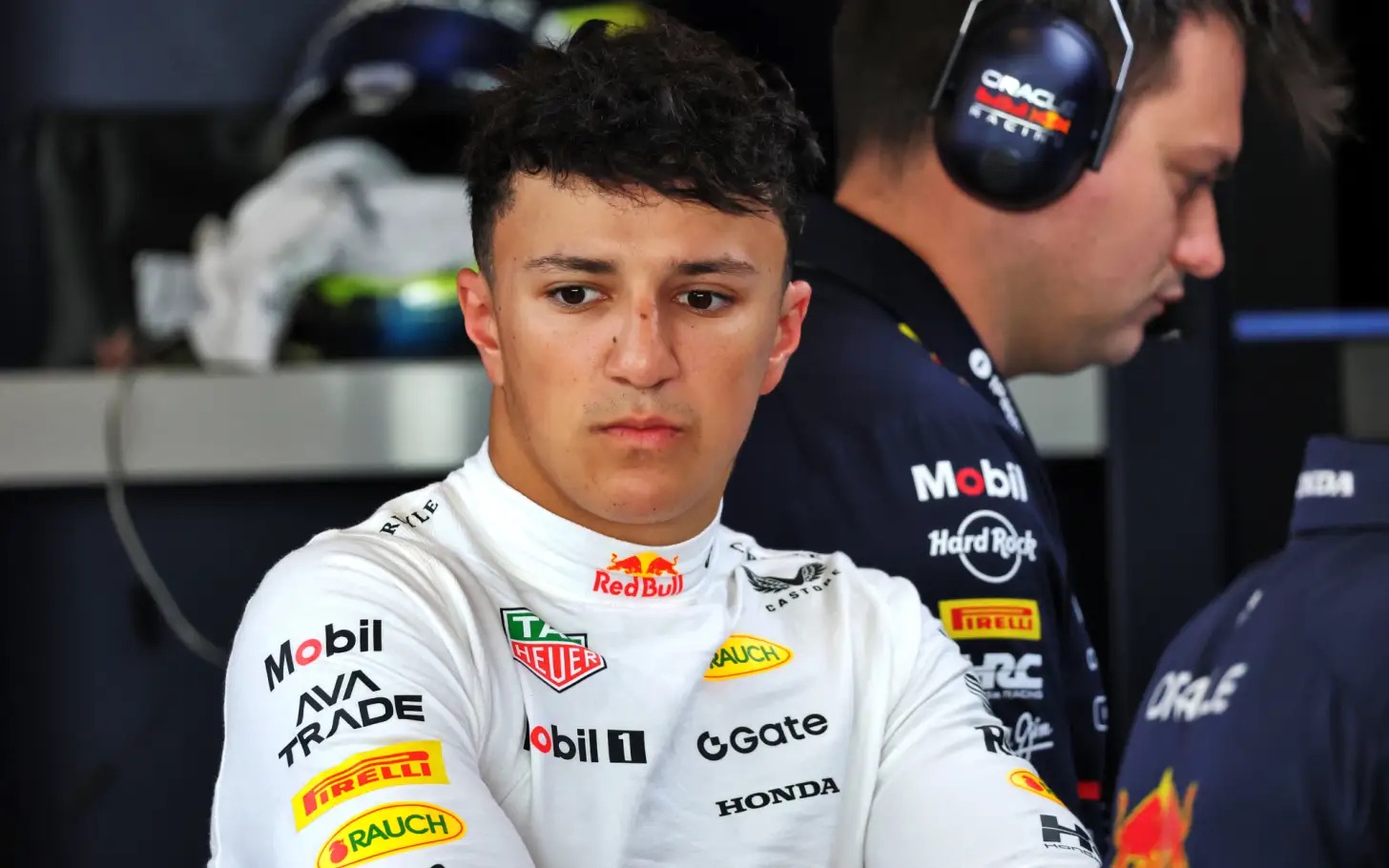
Isack Hadjar issued fierce Red Bull warning: ‘That won’t be t…read more
Isack Hadjar has been handed a clear and uncompromising warning ahead of his move to Red Bull Racing, with concerns raised over whether his fiery temperament will be acceptable in one of Formula 1’s most demanding environments.
The Frenchman is set to join Red Bull for the 2026 season, partnering four-time world champion Max Verstappen after an impressive rookie campaign that quickly established him as one of the most exciting young drivers on the grid. However, while his speed and racecraft have drawn widespread praise, questions remain about his ability to control his emotions when things do not go according to plan.
Throughout his junior career and into Formula 1, Hadjar has become known for wearing his heart on his sleeve. His radio messages, particularly during moments of frustration, have often been raw and unfiltered, revealing a driver who reacts intensely to setbacks such as strategy calls, traffic, or on-track incidents. Earlier this year, Hadjar openly acknowledged that he still vents his anger while driving, admitting that he continues to “shout and insult” inside the cockpit, even if he has learned to avoid broadcasting those moments over team radio.
While some fans view that passion as evidence of his commitment and competitive fire, former Formula 1 driver Anthony Davidson has cautioned that such behaviour may not be welcomed at Red Bull, especially alongside Verstappen. Speaking to Sky F1, Davidson made it clear that emotional outbursts could become a serious issue for Hadjar if left unchecked.
“I think he’s going to have to learn how to not explode,” Davidson said. “He’s going to have to work on that, going up against Max next year in the Red Bull team.”
Davidson was quick to acknowledge Hadjar’s performances over the course of the season, describing his campaign as “brilliant” and highlighting the talent that earned him promotion to one of the sport’s top teams. However, he also pointed out that there have been numerous occasions where adversity triggered visible frustration from the young driver.
“We’ve seen he’s driven a brilliant season this year,” Davidson continued. “But there have been many moments from this season where things haven’t gone his way, and he absolutely erupted inside the car. That won’t be tolerated inside the team at Red Bull.”
Red Bull has a reputation for demanding composure and professionalism, particularly from drivers operating under the pressure of fighting at the front of the grid. While the team has historically allowed strong personalities to flourish, emotional volatility has often been viewed as a weakness, especially when it risks undermining communication or focus during critical moments of a race weekend.
Davidson suggested that while Hadjar’s outbursts might make for compelling television, Red Bull’s internal standards are far less forgiving. “It’s very entertaining, it’s going to be box office,” he added, hinting that the Frenchman’s passion could provide drama, but also acknowledging the potential for friction within the team.
Hadjar’s promotion comes at a time when France has been searching for its next Formula 1 star. Since Alain Prost’s dominance in the 1980s, French drivers have struggled to achieve consistent success at the very top of the sport. Hadjar’s rapid rise has naturally led to comparisons with Prost, particularly given his intelligence behind the wheel and his ability to extract performance under pressure.
However, when asked about those comparisons, Davidson was keen to highlight the differences between the two. “He’s definitely more edgy than Alain Prost,” he said. “There’s definitely more of an edge to him in how cutting he can be and how kind of emotional he can be.”
Prost, famously nicknamed “The Professor,” was renowned for his calm, calculated approach and emotional restraint, traits that helped him secure four world titles. Hadjar, by contrast, represents a more modern archetype: fiercely competitive, expressive, and unafraid to show frustration when circumstances turn against him.
As Hadjar prepares to step into one of the toughest roles in Formula 1, the challenge will be about more than raw pace. Partnering Verstappen means being measured relentlessly, not only on lap time but also on mentality, consistency, and how effectively he integrates into a team built around a dominant champion.
Red Bull’s history shows little patience for drivers who struggle to adapt to its culture and expectations. For Hadjar, learning to channel his emotions productively could prove just as important as his ability to deliver results on track. If he can strike that balance, his passion may become an asset rather than a liability. If not, the warning from Davidson suggests that Red Bull will not hesitate to demand change.