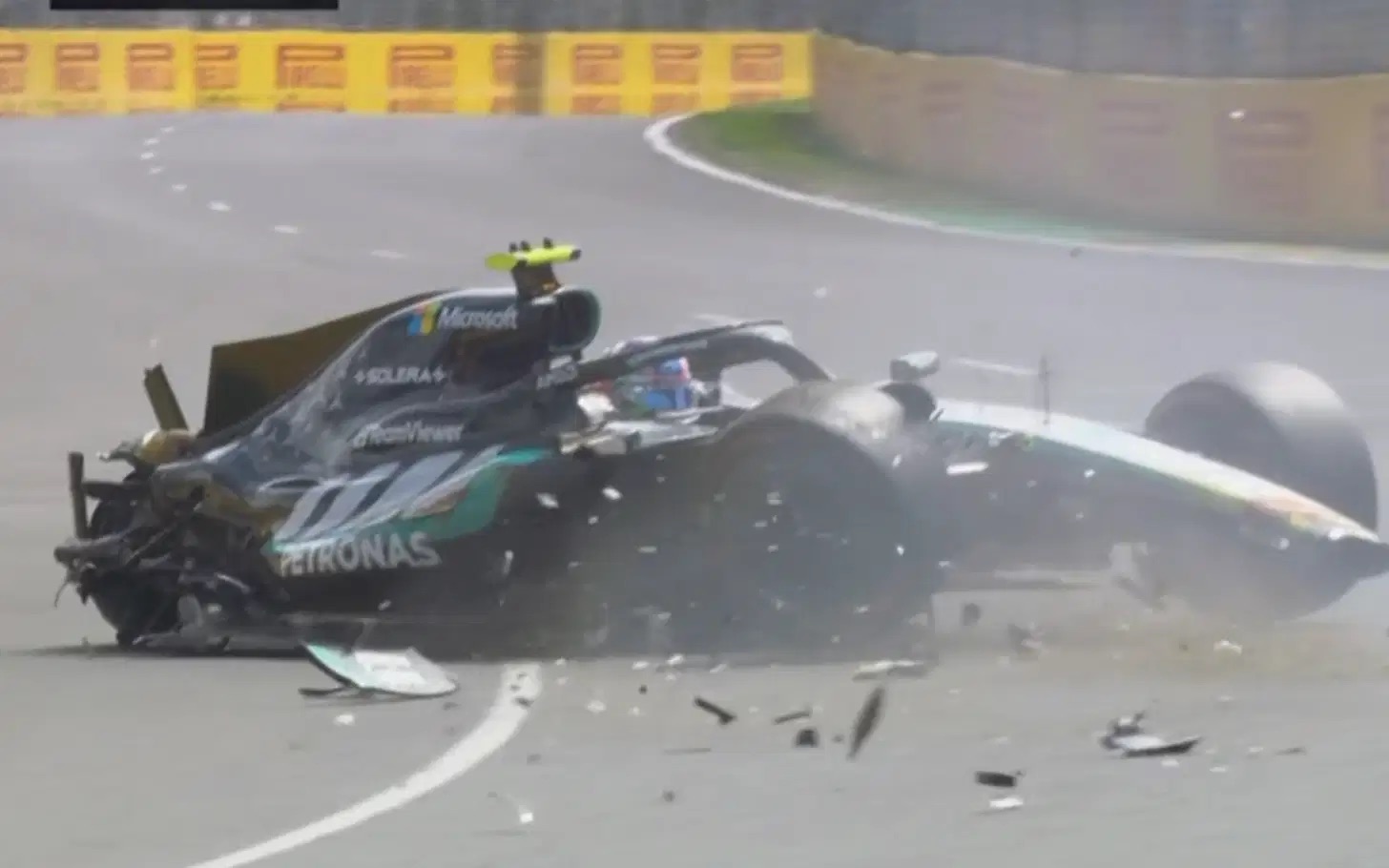
During the third and final practice session (FP3) ahead of the Australian Grand Prix in Melbourne, Mercedes rookie Kimi Antonelli experienced a dramatic and frightening crash that momentarily halted proceedings. The incident occurred during a disrupted practice session and led to the second red flag of the hour, forcing track officials to pause the session while safety teams responded. Despite the severity of the accident, the young Italian driver fortunately appeared to escape without injury and was able to exit the car on his own.
The crash happened at the Albert Park Circuit, a temporary street track known for its high-speed corners and limited run-off areas. Antonelli lost control of his Mercedes W17 shortly after passing through the opening corner. As he exited Turn 1, his car drifted onto the exit kerb, which destabilized the vehicle and sent it sliding toward the outside barrier at Turn 2. The car struck the wall heavily, producing a violent impact that brought the session to an abrupt halt and raised immediate concerns among teams and spectators.
Following the collision, race control deployed the red flag to suspend the session while marshals attended to the damaged car and ensured the circuit was safe. The medical car was also dispatched, indicating the seriousness of the incident. Data later suggested that the crash generated forces exceeding 25G, a level that can be physically demanding even for trained Formula 1 drivers. Fortunately, Antonelli appeared unharmed, managing to climb out of the wrecked Mercedes without assistance and make his way back toward the pit lane.
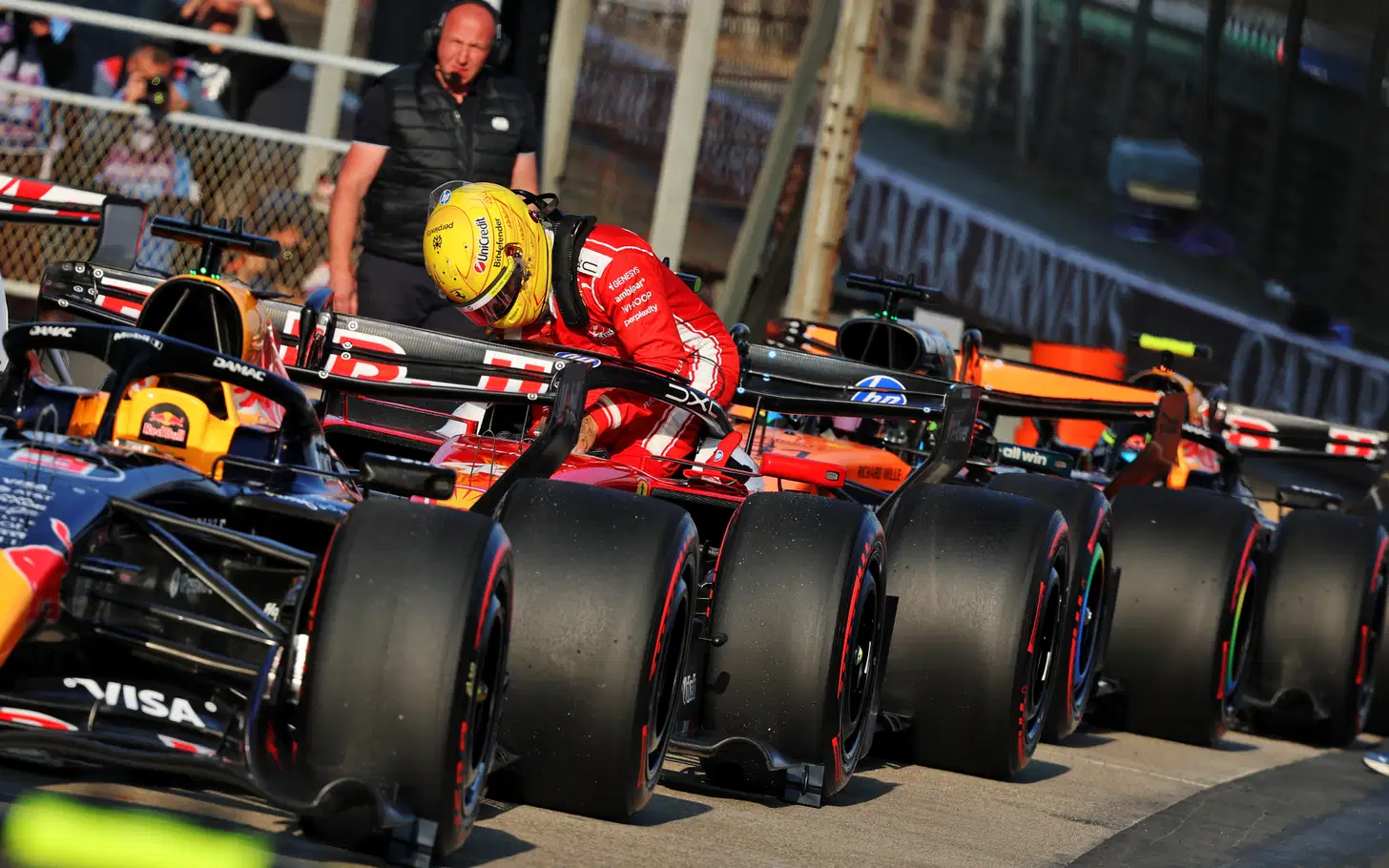
Before the accident occurred, Antonelli had been showing competitive pace. At the time of the crash, he was running fourth on the timing sheets, demonstrating strong performance during the session. Only three drivers were ahead of him: Ferrari driver Charles Leclerc, McLaren’s Oscar Piastri, and Ferrari’s Lewis Hamilton. This indicated that Antonelli and Mercedes had been in contention for a promising qualifying performance later in the day.
However, the significant damage sustained by the Mercedes W17 raised doubts about whether the team would be able to repair the car in time for the qualifying session. Formula 1 cars are highly complex machines, and heavy crashes often require extensive rebuild work, including potential replacement of major components such as suspension, bodywork, and structural elements. The Mercedes mechanics were therefore expected to face a challenging and time-sensitive task to prepare the car for the next competitive session.
The FP3 session itself had already experienced disruptions even before Antonelli’s accident. Earlier in the hour, another red flag had been triggered when Carlos Sainz’s Williams stopped near the entry to the pit lane due to a mechanical issue. This earlier interruption reduced the available running time for teams and drivers, making preparation for qualifying more difficult. As a result, the session became increasingly hectic, with teams attempting to maximize their limited track time once the session resumed.
In addition to the interruptions during the session, the start of FP3 had already been delayed by approximately 20 minutes. This delay occurred because repairs were required at Turn 5 following an incident during the Formula 3 sprint race earlier in the day. Track officials had to ensure that the circuit barriers and surrounding infrastructure were properly repaired and safe before allowing Formula 1 cars onto the track.
Once running eventually began, several teams quickly demonstrated strong pace. Ferrari and Mercedes appeared particularly competitive, while local favorite Oscar Piastri continued to impress in front of the Australian crowd. Drivers pushed hard to gather data and set competitive lap times ahead of qualifying, which added intensity to the session. However, the limited time and frequent interruptions meant that many drivers were unable to complete their usual preparation programs.
The session resumed briefly after Antonelli’s crash, though only a few minutes remained on the clock. During this short window, Mercedes driver George Russell delivered a remarkable lap time, finishing the session at the top of the leaderboard. His performance placed him significantly ahead of rivals from Ferrari, underlining the strong potential of the Mercedes car heading into qualifying for the Australian Grand Prix.
Russell’s dominant lap came despite the chaotic nature of the practice session, which had been affected by multiple stoppages and changing track conditions. With just a few minutes available after the final restart, drivers had limited opportunities to improve their times. Russell took advantage of this brief window to produce a standout performance that suggested Mercedes could be a major contender during the race weekend.
Antonelli’s crash, however, remained one of the most dramatic moments of the session. The impact not only brought his running to an immediate end but also raised uncertainty about his participation in the upcoming qualifying session. The Mercedes team faced the urgent task of assessing the damage and determining whether the car could be repaired quickly enough to return to the track.
Despite the severity of the crash, the most important outcome was that Antonelli appeared physically unharmed. In Formula 1, where speeds often exceed 300 km/h, crashes can carry significant risks. Modern safety features such as the halo device, advanced crash structures, and strict safety regulations have greatly improved driver protection, allowing drivers to walk away from incidents that might have been far more dangerous in previous eras.
Overall, the FP3 session in Melbourne proved to be dramatic and unpredictable. With multiple red flags, mechanical issues, and Antonelli’s heavy crash, teams had far less preparation time than usual ahead of qualifying. While Russell emerged as the fastest driver of the session, much of the focus remained on the condition of Antonelli’s car and whether Mercedes would be able to repair it in time for the next phase of the race weekend.