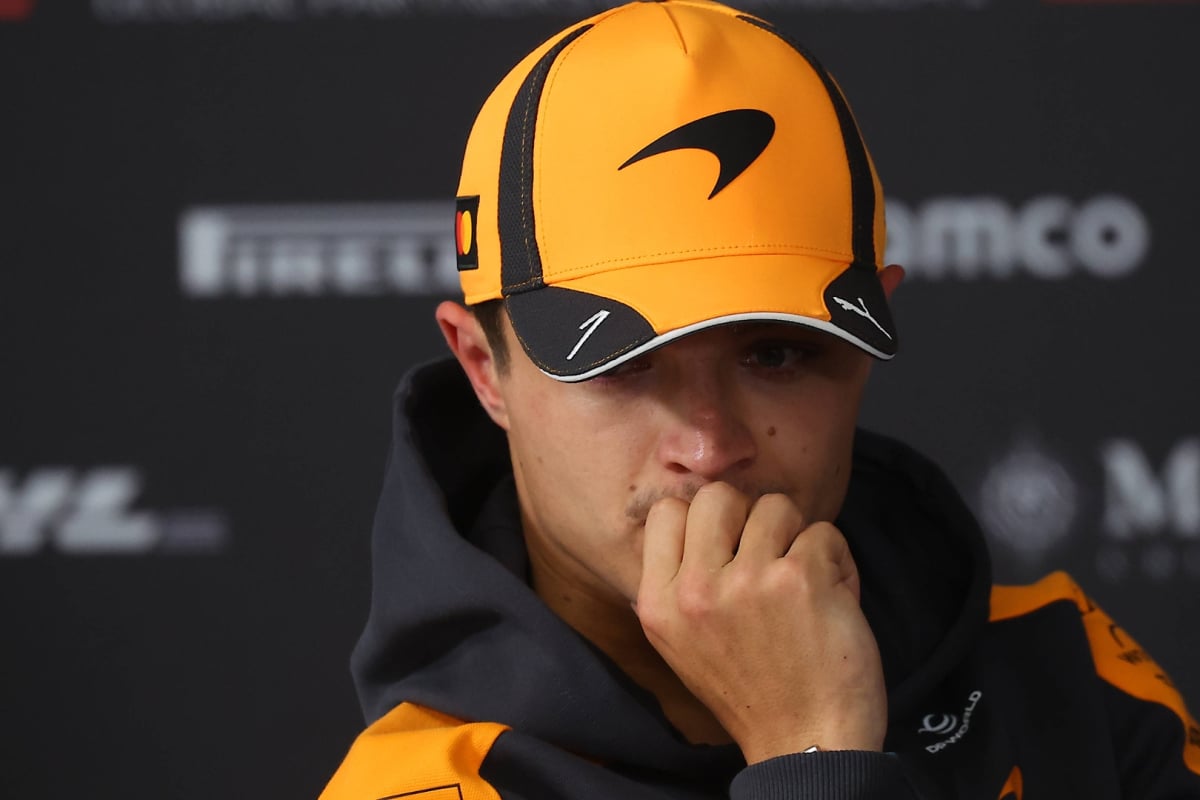
Lando Norris Under Fire After Dramatic U-Turn in Explosive 2026 F1 Rules Dispute
Reigning world champion Lando Norris has found himself at the centre of a growing Formula 1 storm after dramatically shifting his stance on the sport’s upcoming 2026 regulations — a reversal that has triggered fierce criticism from within the paddock.
The debate over the new 2026 cars has intensified in recent weeks, with several drivers voicing concerns about the direction the sport is taking under the leadership of Stefano Domenicali. At the heart of the controversy are sweeping technical changes designed to reshape Formula 1’s future, particularly through revised power unit regulations aimed at attracting new manufacturers and keeping existing ones committed.
Among the loudest critics has been three-time world champion Max Verstappen. The Dutchman did not hold back in his assessment, comparing the feel of the 2026 machinery to Formula E and questioning whether the sport was drifting too far from its traditional DNA. His blunt remarks quickly sent shockwaves through the grid and sparked divided reactions from fans and fellow drivers alike.
Initially, Norris appeared unimpressed by Verstappen’s complaints. In a pointed response, the McLaren star suggested that if certain drivers were unhappy with the sport’s direction, they were free to “go find something else to do.” The comment was widely interpreted as a cheeky but firm defense of the sport’s evolution — and a subtle rebuke of Verstappen’s criticism.
However, in a surprising twist, Norris later softened his stance. Speaking candidly to the media, he admitted that his earlier comments were not entirely reflective of his true feelings. He explained that he deliberately avoided criticising the cars at the season’s outset and instead wanted to observe how the debate unfolded.
“I just didn’t want to come out to the media and complain to everyone on the first weekend back,” Norris said. “It’s been quite amusing seeing the reactions. It’s made a lot of people comment and say a lot of things. I just wanted to see everyone’s reaction.”
The remarks effectively marked a U-turn. Norris went on to acknowledge that he shared many of Verstappen’s concerns about the complexity and direction of the new regulations — a shift that did not go unnoticed.
The backlash was swift. Veteran Swiss journalist Roger Benoit delivered a scathing assessment in Blick, accusing Norris of putting on what he described as a “performance.” Benoit criticised the McLaren driver for appearing to mock Verstappen before ultimately aligning with him, calling the reversal unnecessary and poorly handled.
In his column, Benoit also reminded readers why the 2026 regulations were introduced in the first place. He pointed out that the highly complex new rules were largely shaped to secure the long-term commitment of major manufacturers. German automotive giant Audi is set to enter Formula 1 under the new engine formula, while Honda had previously indicated it could withdraw without regulatory changes that aligned with its sustainability goals.
According to Benoit, criticising a framework that ensured the sport’s manufacturer stability overlooks the broader strategic picture. His frustration appeared aimed not only at Norris’ change of heart but also at what he perceives as growing public grandstanding from drivers over technical matters.
The episode highlights the tension simmering beneath Formula 1’s transformation. While the 2026 regulations promise lighter, more electrified power units and revised aerodynamics, concerns remain about drivability, sound, and overall spectacle.
For Norris, the controversy presents a delicate balancing act. As the sport’s reigning champion and one of its most marketable stars, his words carry weight. Whether his revised position reflects genuine reconsideration or calculated diplomacy, the fallout underscores how politically charged Formula 1’s regulatory future has become.
With the 2026 era fast approaching, one thing is clear: the battle over the sport’s direction is no longer confined to engineers and executives — it is playing out loudly on the grid itself.