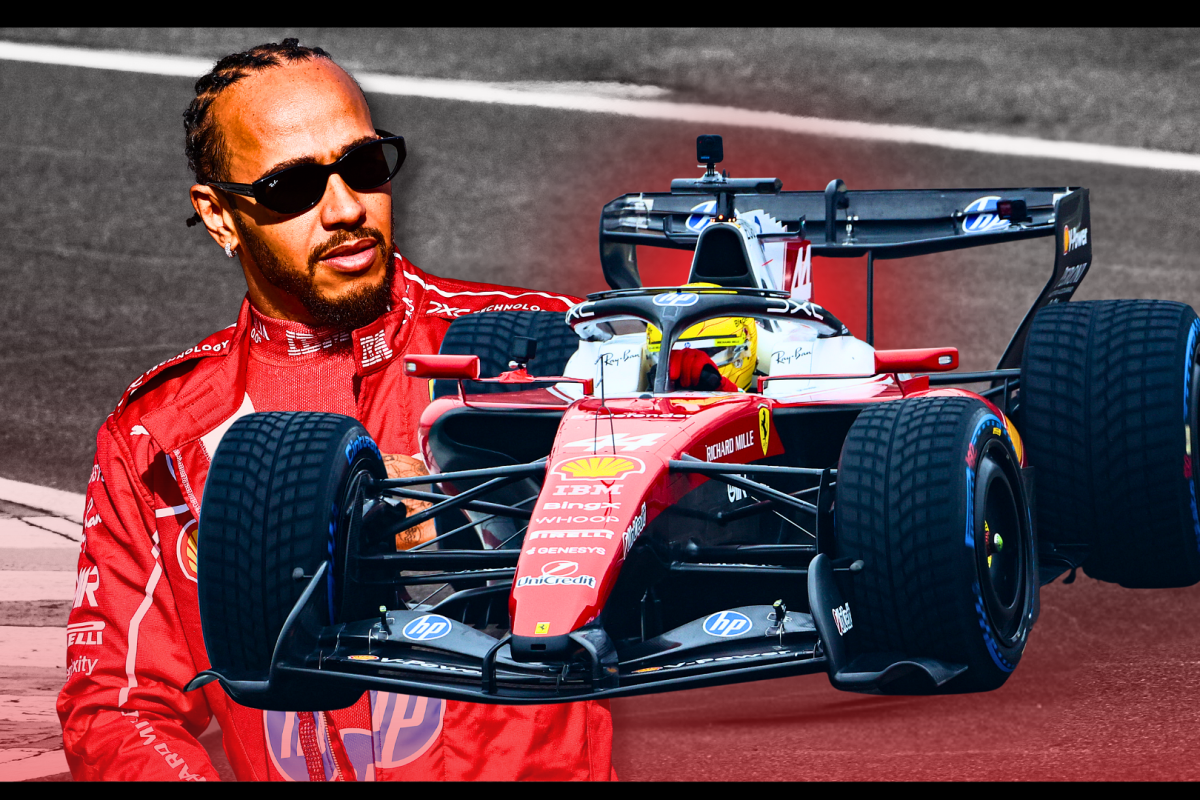
Australian Grand Prix Twist: Lewis Hamilton and Scuderia Ferrari Face Rising Pressure After Major McLaren Engine Boost
Lewis Hamilton’s new chapter with Ferrari may have begun with optimism after pre-season testing in Bahrain, but fresh developments suggest the competitive picture could look very different when Formula 1 arrives in Melbourne. While Ferrari appeared to set the benchmark during testing, Mercedes-powered rivals — particularly McLaren — are poised to close the gap thanks to a significant power unit upgrade.
Ferrari’s performance in Bahrain drew widespread praise. Charles Leclerc topped the timesheets with a 1:31.992 lap, reinforcing the belief that the SF-26 is a genuine contender. Beyond pure speed, Ferrari’s technical creativity also grabbed attention. Their rotational rear wing concept sparked discussion throughout the paddock, hinting at aerodynamic gains that could pay dividends over a race distance.
Equally impressive were the team’s practice starts. Both Hamilton and Leclerc demonstrated lightning-fast getaways, with the Ferrari reacting sharply off the line while other cars were still building turbo pressure. It was a visual statement of intent — Ferrari looked sharp, prepared, and potentially ahead of the curve.
However, the phrase “it’s only testing” continues to hover over the Scuderia’s encouraging form. Historically, lap times in Bahrain can be misleading, as teams often disguise their true performance levels by running heavier fuel loads or conservative engine modes. One major question mark surrounds Mercedes and how much pace they may have deliberately concealed during the sessions.
Now, attention has shifted to a key development involving Mercedes’ power unit strategy. Reports indicate that during testing, Mercedes ran different engine specifications across its teams. Customer outfits — McLaren, Alpine, and Williams — were supplied with established and reliable versions of the power unit to ensure they could complete their testing programmes without setbacks.
Meanwhile, the Mercedes works team focused on evaluating the latest evolution of its engine. The reason lies in the impending homologation deadline on March 1, when manufacturers must submit their finalized power unit designs to the FIA for approval. Once that process is complete, introducing substantial performance upgrades becomes extremely difficult without regulatory permission.
By trialling the newest specification during testing, Mercedes ensured their latest development would be ready before the freeze. Although the performance difference between the old and new versions may not be dramatic, even small improvements in efficiency and power delivery can translate into valuable tenths of a second per lap.
Crucially, once the season officially begins, Formula 1 regulations require customer teams to receive the same engine specification as the works squad. That means McLaren, Alpine, and Williams will all benefit from Mercedes’ updated power unit at Albert Park.
For Hamilton and Ferrari, this could significantly alter the early-season landscape. If Mercedes and its customer teams arrive in Melbourne with enhanced performance, the testing hierarchy may quickly be reshuffled. Ferrari’s apparent advantage in Bahrain might not hold under race conditions against improved rivals.
McLaren, in particular, could emerge as a serious threat. Oscar Piastri finished roughly one second behind Leclerc’s headline time on the final day of testing. On paper, that gap appears substantial. Yet it is widely believed that neither McLaren nor Mercedes were operating at full capacity. With the new power unit installed, the deficit could narrow considerably.
Mercedes themselves are also tipped to gain from a clever interpretation of engine regulations. The team has reportedly optimized its geometric compression ratio — a parameter measured at ambient temperatures under FIA checks. While fully legal in static tests, the engine is said to achieve a higher compression ratio, up to 18:1, when operating at elevated temperatures during real-world running. This could offer additional performance once the car is up to race pace.
Although Formula 1’s engine manufacturers are expected to discuss potential adjustments to how compression ratios are assessed, any rule change would not take effect until after the summer break. That leaves a substantial portion of the season where Mercedes-powered teams could exploit the current framework.
All of this places added pressure on Ferrari as they prepare for the Australian Grand Prix. Hamilton’s high-profile switch to the Italian outfit has amplified expectations. A strong start would validate Ferrari’s winter progress and reinforce their status as championship contenders. Conversely, if Mercedes or McLaren seize the initiative, momentum could swing early in the campaign.
Testing suggested Ferrari had the edge, but Melbourne may tell a different story. With upgraded engines powering multiple competitors and regulatory nuances potentially favoring Mercedes, the fight at the front appears far tighter than initial lap times indicated.
As Formula 1 heads to Albert Park, one thing is clear: the early narrative of Ferrari dominance may soon be challenged. Hamilton’s quest for success in red could face its first serious obstacle — not just from Mercedes, but from a resurgent McLaren armed with fresh horsepower and renewed ambition.