Hamilton and Ferrari Face Fresh 2026 F1 Threat as Horner’s ‘Frankenstein’ Warning Resurfaces
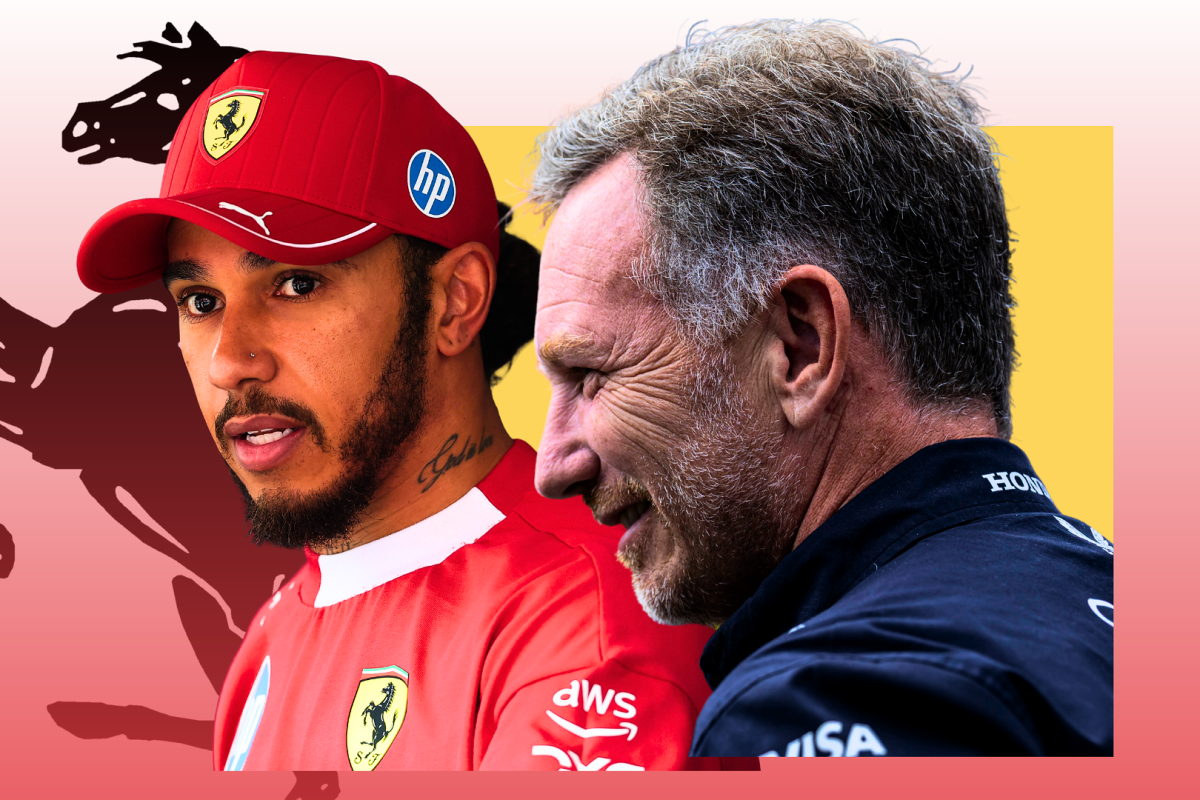
Lewis Hamilton and Ferrari have been dealt a renewed warning ahead of the 2026 Formula 1 season, as past concerns voiced by former Red Bull team principal Christian Horner re-emerge at a pivotal time for the sport.
Ferrari may have concluded pre-season testing in Bahrain at the top of the timesheets, with Charles Leclerc posting an impressive 1:31.992 lap, but uncertainty still clouds the true competitive order. While the Scuderia’s pace sparked optimism inside the paddock, seasoned observers remain cautious. Testing performances often mask reality, as teams experiment with fuel loads, power modes, and development components without revealing their full potential.
For Hamilton, embarking on a new era with Scuderia Ferrari, expectations are sky-high. The seven-time world champion’s switch has intensified scrutiny on Ferrari’s preparations for the sweeping 2026 regulation changes. Early indications suggest the Italian team has embraced bold innovation, unveiling striking aerodynamic concepts — including a rotational rear wing design that immediately drew attention in Bahrain.
Yet, despite Ferrari’s encouraging form, doubts linger. The phrase “it’s only testing” continues to echo across the grid. Mercedes, widely regarded as a strong contender under the upcoming power unit regulations, are suspected of keeping their true pace hidden. Given their historical strength in hybrid-era engine development, many insiders believe the Silver Arrows could unleash a far more competitive package once the season officially begins.
Adding to Ferrari’s concerns is the growing threat from McLaren. The British outfit, powered by Mercedes engines, has steadily climbed back toward the front of the field in recent seasons. Should Mercedes deliver a dominant power unit for 2026, McLaren would benefit directly, potentially transforming them into genuine title challengers. The idea of a customer team mounting a championship bid adds further unpredictability to the competitive landscape.
Against this backdrop, Horner’s earlier warnings about the 2026 regulations have resurfaced. Before his departure from Red Bull Racing in 2025, Horner reportedly expressed serious reservations about the new technical framework. He cautioned that the next generation of cars risked becoming a “Frankenstein” creation — an uneasy combination of complex hybrid systems and restrictive aerodynamic rules that might compromise performance and spectacle.
Horner’s concerns centered on the balance between internal combustion power and increased electrical output. The 2026 rules place greater emphasis on sustainable energy and electrification, significantly altering the power unit philosophy. According to Horner’s earlier assessment, teams could face challenges producing cars that are both competitive and manageable, with weight distribution and energy deployment strategies playing an outsized role.
At the time, some dismissed his comments as resistance from a dominant team wary of change. However, as teams dig deeper into the realities of the new regulations, those warnings now appear more relevant. Engineers across the paddock are tasked with achieving harmony between downforce, drag reduction, and energy recovery systems — a complex equation that may produce unexpected performance gaps.
For Hamilton, the stakes could not be higher. After a difficult spell in recent seasons, his move to Ferrari was designed to reignite his championship ambitions. Bahrain’s testing pace hinted at promise, but translating that into race-winning dominance will require consistency and reliability under a completely new regulatory framework.
If Mercedes has indeed been holding back — and if McLaren capitalizes on customer engine advantages — Ferrari’s early optimism could quickly turn into a fierce development battle. Meanwhile, Horner’s “Frankenstein” prophecy looms as a reminder that even the most carefully designed projects can produce unintended consequences.
As Formula 1 prepares to enter its bold new chapter, one certainty remains: testing headlines rarely tell the full story. Hamilton and Ferrari may have drawn first blood in Bahrain, but the real fight for 2026 supremacy is only just beginning.