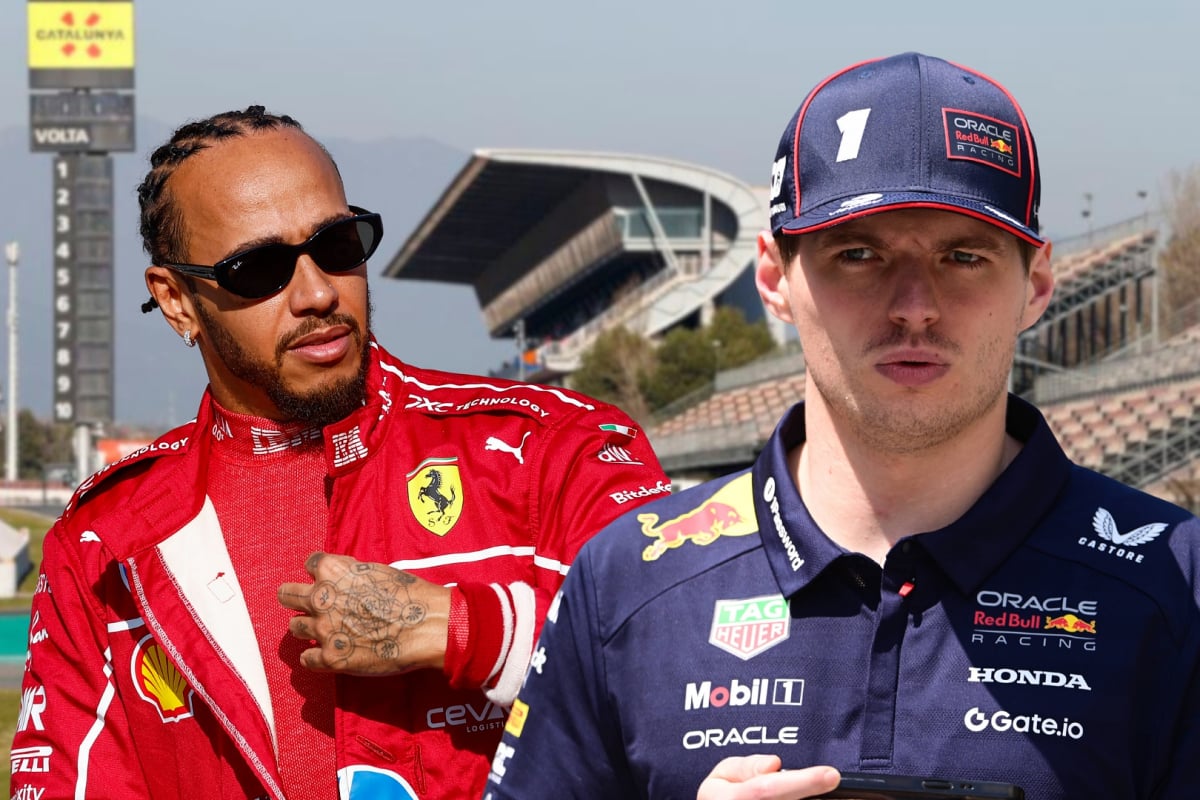
Hamilton Flies in Ferrari as Verstappen Slams ‘Worst Ever’ New F1 Cars
Lewis Hamilton laid down an early marker in Bahrain after a stunning display for Ferrari during the second day of pre-season testing, while reigning world champion Max Verstappen intensified his criticism of Formula 1’s new-generation machinery.
The seven-time world champion, Lewis Hamilton, enjoyed a seamless and productive day at the wheel of Ferrari’s 2026 challenger, the SF-26. Running in both the morning and afternoon sessions, Hamilton racked up significant mileage and appeared increasingly comfortable with his new surroundings following his high-profile switch from Mercedes.
While his headline lap times were impressive, it was Hamilton’s race-start simulations that truly caught attention in the paddock. The Ferrari repeatedly launched cleanly off the line, showing sharp traction and minimal wheelspin — an area that can prove decisive when races are often won or lost in the opening metres. If those lightning getaways translate into competitive race weekends, Ferrari could have found a crucial advantage under the sweeping 2026 regulations.
Early signs suggest the SF-26 is a well-balanced package. The car looked composed through high-speed corners and stable under braking, offering Hamilton the confidence to push. After several seasons of chasing the dominant force of Red Bull Racing, Ferrari appear determined to reassert themselves at the front of the grid.
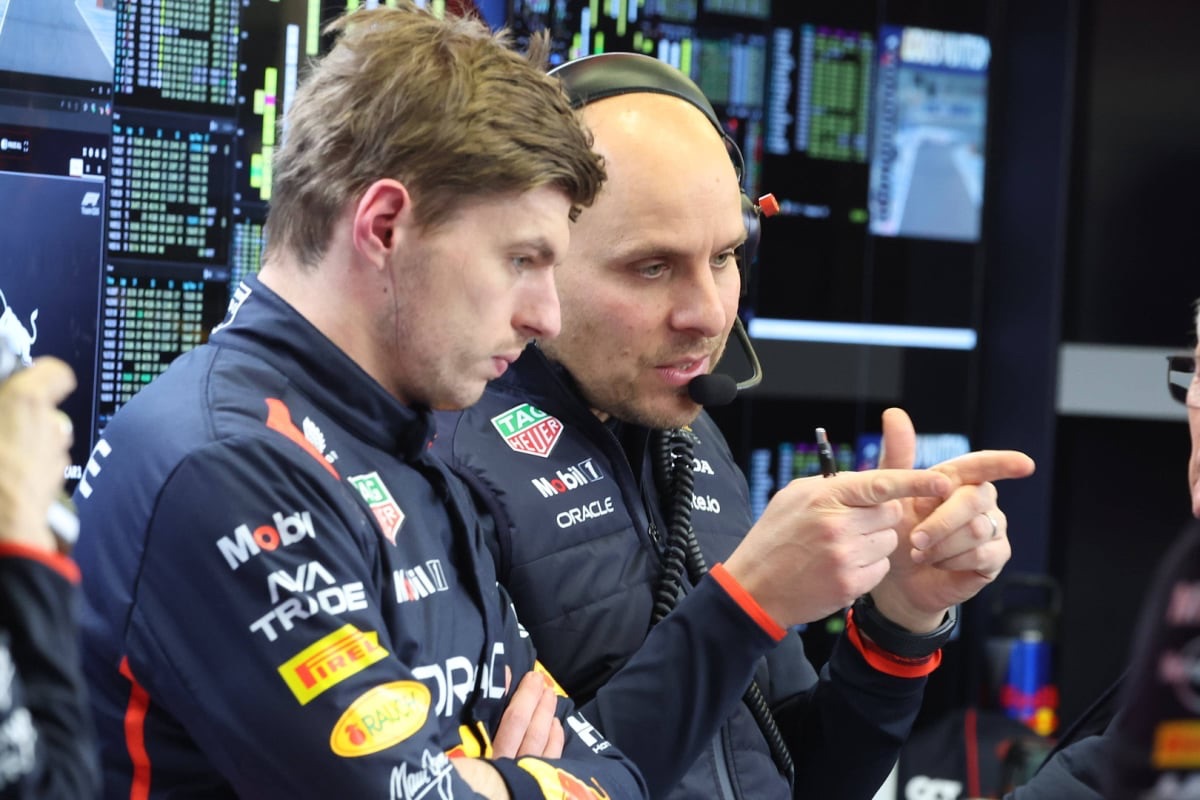
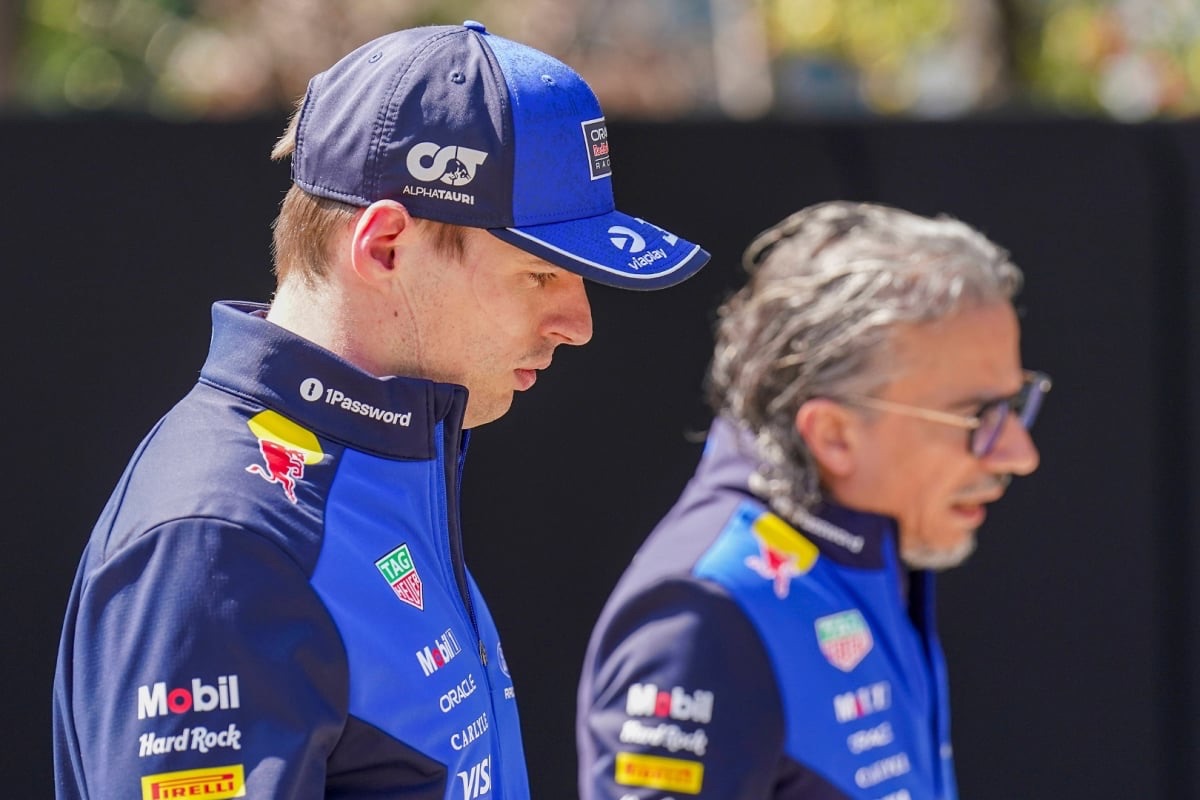
In sharp contrast to Hamilton’s upbeat momentum, Verstappen painted a far gloomier picture of Formula 1’s new era. The four-time champion has been outspoken about his dislike of the 2026 cars, describing them as the least enjoyable he has experienced in his career.
The core of Verstappen’s frustration lies with the revised power unit regulations. The new engines significantly increase electrical power, placing greater emphasis on energy recovery and battery management. Drivers must carefully balance deployment and harvesting throughout a lap, with techniques such as lifting and coasting expected to become commonplace — particularly during qualifying sessions.
According to Verstappen, the heavy focus on energy management detracts from the pure racing element that defines Formula 1. Rather than attacking every corner at the limit, drivers may need to sacrifice outright speed in certain phases to ensure sufficient battery charge later in the lap. Some fear this could even produce slower lap times in qualifying, as competitors prioritise regeneration over flat-out performance.
Despite the concerns, Formula 1’s governing bodies maintain that the 2026 changes are vital for the sport’s future. The regulations are designed to enhance sustainability, increase hybrid efficiency, and align the championship more closely with modern automotive technology.
Nevertheless, the contrast between Hamilton’s optimism and Verstappen’s dissatisfaction highlights a broader debate within the sport. For Hamilton, the new chapter at Ferrari appears to have reignited his competitive spark, with early testing suggesting he could once again be a serious contender for the title. For Verstappen, however, the transition represents an unwelcome shift away from the aggressive driving style that has underpinned his recent dominance.
Testing results should always be interpreted cautiously, as teams run varying fuel loads and engine modes. Yet confidence and momentum are invaluable commodities in Formula 1. If Ferrari’s promising pace proves genuine, Hamilton’s fresh start could quickly evolve into a championship charge — setting up a fascinating battle with a reigning champion who remains unconvinced by the sport’s new direction.