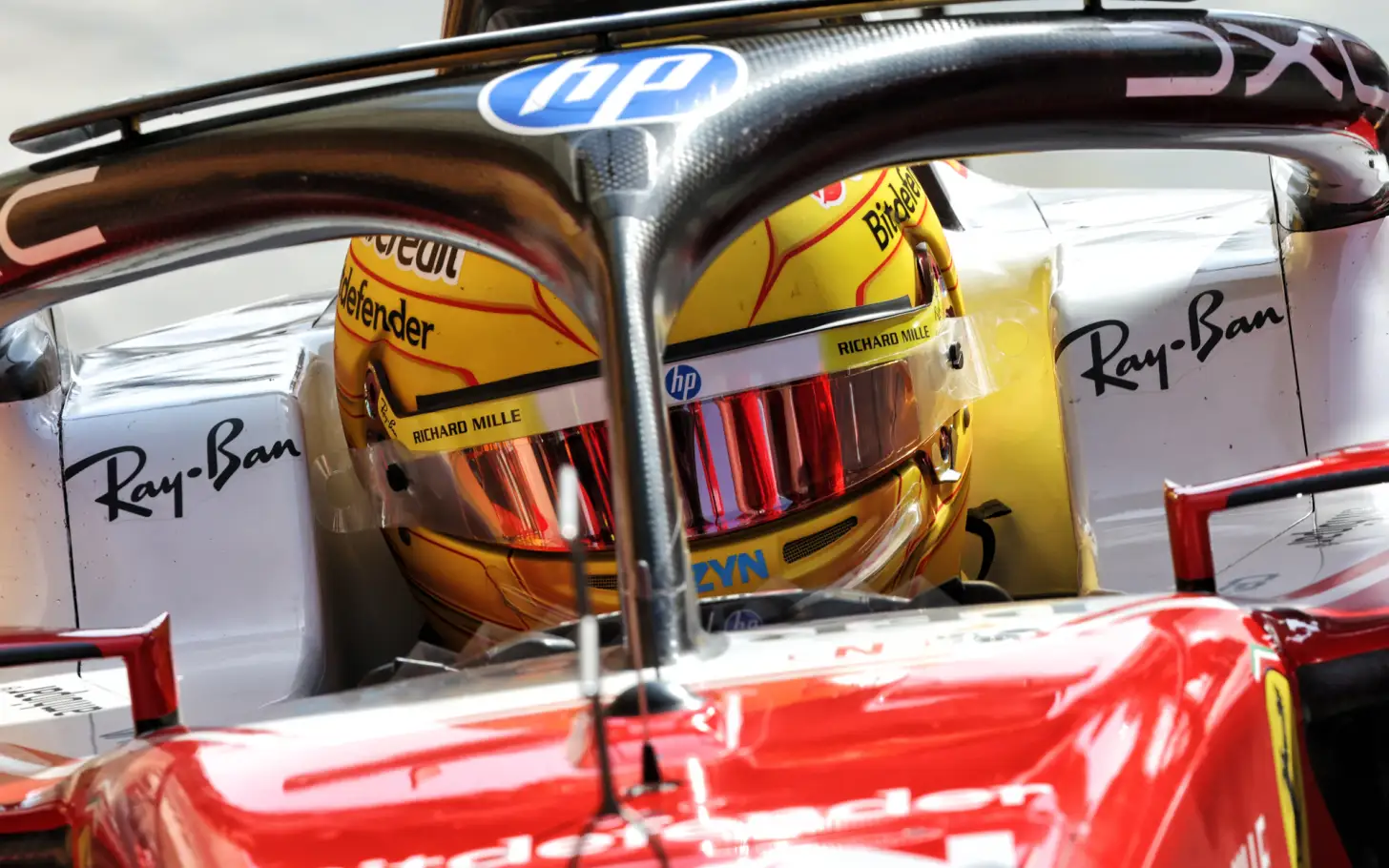
Lewis Hamilton sounds alarm over ‘ridiculously complex’ D…read more
Lewis Hamilton has raised concerns about the growing technical complexity of Formula 1’s new power unit regulations, warning that the systems behind modern energy management are becoming so intricate that most fans will struggle to understand how they work. According to the Ferrari driver, the level of detail involved is so high that it would take “a degree” to fully grasp the concepts engineers are now dealing with.
Speaking after completing four hours of running during the opening morning of the first official pre-season test at the Bahrain International Circuit, the seven-time world champion shared his early impressions of the new-generation cars and engines. While he described the cars as more enjoyable to drive overall, he stressed that the underlying technology — particularly energy deployment and recovery — has reached a level of complication that goes far beyond what spectators typically see on track.
Hamilton explained that recent technical briefings with engineers highlighted just how layered the new systems are. With Formula 1’s latest power units designed around a roughly even split between electrical energy and traditional internal combustion output, teams must now balance performance and efficiency with far greater precision. That shift has transformed how lap time is extracted and how drivers must think about managing energy over a stint.
He suggested that although fans may notice differences in speed and behavior, the deeper operational logic will largely remain opaque to the public. The software strategies, deployment maps, and adaptive learning tools embedded in the cars add multiple layers that are not easily explained in simple terms. From his perspective, the sport risks drifting into territory where only highly trained specialists can fully follow what is happening beneath the surface.
Despite that warning, Hamilton clarified that from inside the cockpit, the driver’s practical job is not necessarily harder on a lap-by-lap basis. He said that once behind the wheel, the procedures for managing the systems feel relatively straightforward. The steering wheel controls and automated processes help drivers execute the required targets without needing to manually calculate energy flow corner by corner.
However, he noted that race conditions could present a different challenge compared to testing. Over longer runs, variables such as tire wear, traffic, and unexpected moments can interfere with how the automated systems interpret a driver’s style and inputs. That is where the new adaptive software tools come into play — and where complications can arise.
Hamilton described how some of the new energy management programs are designed to learn from a driver’s behavior over time. After completing laps, the system can analyze driving patterns and adjust deployment strategies accordingly. In theory, this allows the car to optimize performance based on how the driver brakes, accelerates, and carries speed through corners.
But he also pointed out that mistakes can disrupt that learning process. For example, if a driver locks up, runs wide, or takes an unusual line that increases the distance traveled, the system’s calculations may be thrown off. Because the algorithms rely on consistent reference data, irregular laps can reduce the accuracy of the automated adjustments. That means drivers and engineers must work together closely to refine how the tools respond to real-world situations.
Hamilton emphasized that this learning phase is happening across the grid, not just within Ferrari. Every team is dealing with the same regulatory framework and similar technical hurdles. As a result, no single competitor has a fully mature understanding yet, and much of the early part of the season could involve ongoing interpretation and refinement of these systems.
Overall, while encouraged by how the new cars feel to drive, Hamilton’s main message was clear: Formula 1’s technology is advancing at such a rapid pace that its inner workings are becoming increasingly difficult for outsiders to follow. Even though the racing may remain exciting on track, the engineering story behind it is growing more complex than ever.