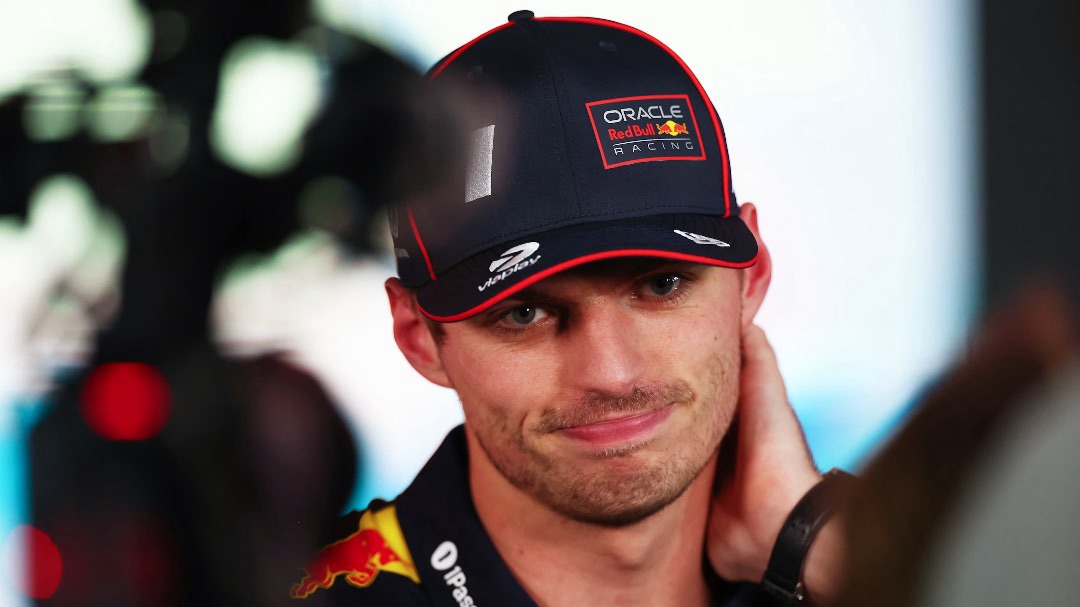
Max Verstappen Demands Tighter Social Media Controls After Vicious Abuse Aimed at Kimi Antonelli
Max Verstappen has strongly condemned the toxic wave of online harassment directed at young Mercedes driver Kimi Antonelli following the Qatar Grand Prix, calling for urgent reforms across social media platforms. The reigning world champion expressed deep concern over the scale and intensity of the backlash, insisting that the issue goes beyond Formula 1 and has become a broader societal problem.
Antonelli, who is still in the early stages of his F1 career, became the target of disturbing criticism and even death threats after a late-race mistake in Qatar. The error occurred during the closing laps when Antonelli misjudged a moment of instability, which inadvertently opened the door for Lando Norris to claim fourth place. Though it was a simple misstep under pressure, the reaction online spiraled rapidly and aggressively, with fans lashing out long before the full context of the incident was understood.
Complicating matters further were comments made in real time by Verstappen’s race engineer Gianpiero Lambiase and Red Bull advisor Helmut Marko. Based solely on the initial world feed broadcast, which made it appear as though Antonelli had deliberately moved aside for Norris, both men voiced frustration. However, this perception shifted once better footage surfaced. Replays clearly showed that Antonelli suffered two severe snaps of oversteer, losing control momentarily—hardly a deliberate gesture.
Verstappen emphasized that the root of the misunderstanding lay in the broadcast, not in the reactions of individuals. “The problem was the initial footage,” he explained tomedia. “At first it looked like Kimi simply pulled over. That’s all anyone saw. But once the replay came out, you could clearly see he had two massive moments where the car stepped out. Anyone who saw only the first clip would have assumed the worst.”
According to Verstappen, Lambiase’s frustration made sense given the limited information available at the time. The world feed only showed a brief angle that misrepresented what had happened. He noted that Marko found himself in the same situation, making statements before the complete replay had been reviewed. As soon as both men saw the accurate footage, they issued apologies—Lambiase immediately, and Marko shortly after, retracting his earlier remarks.
Red Bull as a team also released a formal statement acknowledging that Antonelli had simply made an error under pressure and clarifying that there was no ill intent. But despite these clarifications, the damage online had already intensified. Antonelli’s mistake became ammunition for trolls who launched hateful comments and threats in a manner Verstappen described as “completely unacceptable.”
The Dutch driver drew a clear line between genuine criticism and the violent rhetoric Antonelli received. While he believes people are entitled to opinions, he argued that social media has created an environment where anonymity encourages reckless, harmful behavior. “What people say on social media—that’s the real issue,” Verstappen stated. “You can’t just allow people to trash someone’s life because they hide behind accounts without real names or identification. It’s unregulated, and that’s where the danger begins.”
He stressed that Helmut Marko’s initial remarks had nothing to do with the hate campaign that followed, insisting that the online attacks stemmed from deeper problems with how social platforms operate. In Verstappen’s view, the ease with which people can open anonymous accounts enables abuse without accountability. He urged platforms to introduce stricter controls, verification processes, and protective mechanisms to shield athletes, especially young ones like Antonelli, from unwarranted harm.
Verstappen also revealed that as soon as he realized what Antonelli was facing, he personally reached out to the Italian driver and to Mercedes team principal Toto Wolff. “I was in the car and hadn’t seen anything,” he explained. “When I finally saw what was happening online, I contacted Kimi and Toto immediately. It was obvious he was being targeted unfairly.”
The three-time champion expressed disappointment that a young talent still finding his footing in the sport had to endure such hostility. He stressed that mistakes are part of racing, particularly for newcomers, and that the F1 community should be nurturing young drivers—not leaving them to be torn apart online whenever something goes wrong.
“What happened to Kimi is exactly the kind of situation that shows why action is needed,” Verstappen said. “A driver makes a mistake, the broadcast shows misleading footage, and suddenly thousands of people think it’s acceptable to attack him. That can’t continue.”
He called on fans, teams, and officials to recognize the human side of the sport. F1 drivers, although high-profile public figures, are still individuals experiencing immense pressure. The relentless negativity on social media can easily spiral into real psychological harm.
As the season approaches its final race in Abu Dhabi, Verstappen hopes that Antonelli receives the support he needs to move past the incident. More importantly, he hopes the sport as a whole will take steps toward advocating for safer digital spaces, making it clear that online abuse has no place in Formula 1—or anywhere else.