Max Verstappen handed Michael Schumacher G…read more
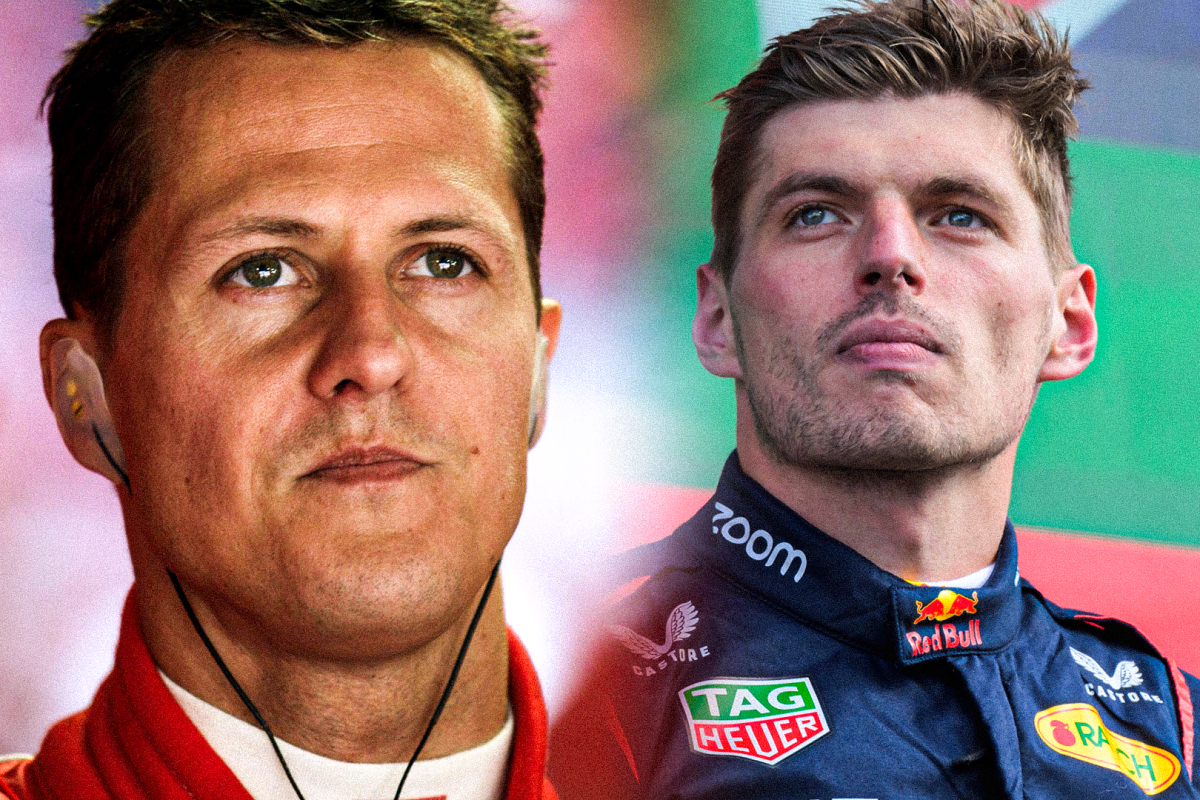
Max Verstappen has been handed one of the highest compliments imaginable in Formula 1, with Ralf Schumacher claiming the Red Bull star possesses the same rare “gene” and commanding aura that once defined his brother, seven-time world champion Michael Schumacher.
Reflecting on Verstappen’s turbulent 2025 campaign, the former F1 driver praised the Dutchman’s decisiveness and leadership, insisting that his influence went far beyond raw speed. According to Schumacher, Verstappen did not simply drive Red Bull forward last season — he carried the team through chaos, uncertainty, and internal upheaval, much like Michael Schumacher famously did during Ferrari’s golden era.
The 2025 season was anything but straightforward for Verstappen. Red Bull, a team long associated with stability and dominance, was rocked by major changes behind the scenes. Christian Horner, who had served as team principal since the outfit’s inception, was dismissed mid-season after the British Grand Prix. His departure sent shockwaves through the paddock and left Red Bull scrambling to regain its footing.
Laurent Mekies was drafted in to replace Horner, but the transition period proved painful. Red Bull struggled for consistency during the European leg of the calendar, hampered not only by the leadership reshuffle but also by a car that was no longer the class of the field. McLaren seized the moment, with Lando Norris and Oscar Piastri applying relentless pressure as Red Bull slipped from its usual position of control.
It was not until a crucial technical breakthrough arrived at Monza — in the form of a new floor — that Red Bull began to resemble its former self. From that point on, Verstappen’s performances surged, and the familiar sense of inevitability returned. Despite a ferocious late-season charge, however, the Dutchman ultimately fell just two points short of securing a record-equalling fifth consecutive drivers’ championship.
For Ralf Schumacher, the roots of Red Bull’s struggles were clear. Speaking to F1 Insider, he suggested that Horner’s exit came too late, allowing instability to linger far longer than it should have.
“You could clearly see what happened at Red Bull,” Schumacher explained. “Helmut Marko said it himself — the decision to part ways with Christian Horner was made too late. That led to chaos within the team for a long time, and only once the car improved significantly did Max have the tools to start winning again.”
Yet amid the disorder, Verstappen emerged as Red Bull’s anchor. As Mekies settled into his new role and the upgraded car unlocked its potential, Verstappen delivered a breathtaking second half of the season. He claimed victory in seven of the final nine races, dragging Red Bull back into title contention and igniting belief that the seemingly impossible comeback could be achieved.
Schumacher believes this was no coincidence. To him, Verstappen’s impact mirrors that of Michael Schumacher during Ferrari’s dominant run from 2000 to 2004, when the German legend led the Scuderia to five consecutive drivers’ and constructors’ championships.
“What emerged from that period at Red Bull is quite remarkable,” Schumacher said. “The team grew into a real unit again, particularly with Laurent Mekies and the group of engineers working closely around Verstappen.”
While Verstappen’s ability to extract extraordinary performance from a difficult car has long been admired — especially when compared to teammates such as Yuki Tsunoda or Liam Lawson — Schumacher was keen to stress that Red Bull’s resurgence was still a collective achievement.
“It was a great team performance,” he added. “But Max changed something fundamental. He brings an extra layer — a presence, a belief — that transforms the environment around him.”
That, Schumacher insists, is where the parallels with his brother become undeniable.
“Max has that same skill and that same aura Michael had,” he said. “He can unite people, lead them, and pull an entire team in one direction. When a driver reaches that level, people will walk through fire for him. That’s decisive.”
In Schumacher’s view, Verstappen is no longer just a generational talent behind the wheel. He has evolved into a true leader — one capable of shaping teams, inspiring loyalty, and elevating everyone around him.
“Verstappen now has that Michael gene,” Schumacher concluded.
In a sport where greatness is often measured in statistics alone, such praise places Verstappen in rare company. And while the 2025 title narrowly slipped from his grasp, the message from one of Formula 1’s most famous families is clear: Max Verstappen’s legacy is being defined by far more than championships alone.