Red Bull’s 2026 Power Gamble: Is Max Verstappen Facing His Biggest F1 Threat Yet?
As Formula 1 accelerates toward its radical 2026 reset, Red Bull Racing is preparing for what could be the most defining chapter in its modern history. The reigning powerhouse of the Verstappen era will not only be adapting to sweeping new technical regulations but will also be doing something it has never done before: running its own power unit.
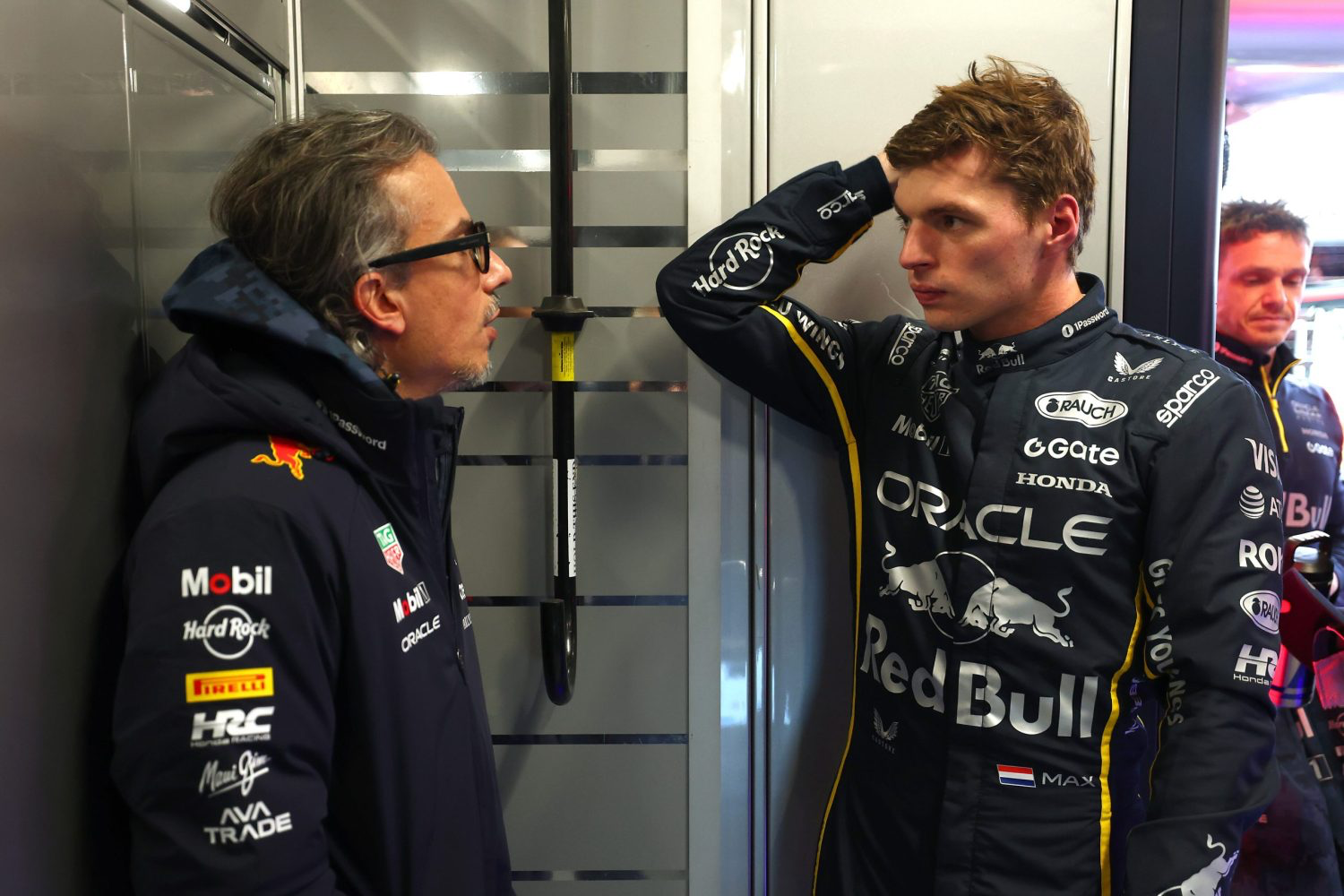
For Max Verstappen, a driver accustomed to setting the benchmark rather than chasing it, the looming question is unavoidable — could Red Bull’s bold engine gamble finally put him on the back foot?
A New Era, A New Risk
The 2026 season introduces one of the biggest regulatory shake-ups the sport has ever seen. Power units will feature a dramatic 50/50 split between internal combustion and electrical power, placing greater emphasis on energy recovery systems while retaining a familiar—but not identical—V6 turbo hybrid architecture.
Unlike Mercedes, Ferrari, and Renault, Red Bull does not have decades of engine-building heritage. Its new power unit program, developed through Red Bull Powertrains in partnership with Ford, represents a huge leap into the unknown. While every manufacturer will be starting afresh under the new rules, Red Bull faces the additional challenge of doing so as a first-time engine constructor.
That reality has already been acknowledged internally.
Red Bull’s Honest Admission
Earlier this year, Red Bull chief engineer Paul Monaghan offered a refreshingly candid assessment of the situation. He admitted that the team could face a “small disadvantage” compared to established manufacturers, particularly when it comes to the internal combustion engine.
The issue is subtle but potentially significant. While the 2026 regulations overhaul the hybrid element of the power unit, the combustion engine itself has not been completely reinvented. That means manufacturers like Mercedes and Ferrari are building upon decades of accumulated knowledge — something Red Bull simply cannot replicate overnight.
For Verstappen, whose driving brilliance has often compensated for marginal deficits, even a slight shortfall could prove costly in a tightly packed grid.
Ford’s Confidence — With a Hint of Anxiety
Red Bull is not facing this challenge alone. Its partnership with Ford brings technical expertise, financial backing, and credibility to the project. Ford’s global director, Mark Rushbrook, has moved to calm fears that Red Bull will fall significantly behind when the new engines hit the track.
Speaking to Autosport, Rushbrook acknowledged the concern but played down its scale. According to him, any disadvantage is likely to be minimal. While rival manufacturers possess years of experience, the 2026 rules represent a fresh puzzle for everyone involved.
Crucially, Rushbrook highlighted that Red Bull Powertrains has recruited heavily from across the F1 paddock, assembling a group of seasoned engineers from multiple successful programs. In his view, that collective experience could neutralize the advantage held by traditional engine suppliers.
Even if Red Bull does trail slightly in combustion performance, Rushbrook believes the team can compensate elsewhere — whether through superior chassis integration, energy management, or overall vehicle performance.
Nervousness Behind the Scenes
Despite the confident tone, Rushbrook did not pretend the project is risk-free. He openly admitted that a degree of nervousness remains — a natural response whenever a brand-new engine and car take to the circuit for the first time.
According to him, simulations, dyno testing, and factory confidence can only go so far. The true verdict will arrive when the car runs in real-world conditions, under the unforgiving spotlight of Formula 1 competition.
That uncertainty is perhaps the most unsettling element for Verstappen and Red Bull fans alike. Until the lights go out on the first race of 2026, no one will know whether Red Bull’s power unit gamble has paid off — or backfired.
Should Verstappen Be Worried?
For now, there is no panic. Red Bull remains one of the best-run teams in Formula 1, with an unmatched record of maximizing regulations. Verstappen’s talent, adaptability, and relentless drive give him a fighting chance even if the car isn’t perfect.
But for the first time in years, Red Bull is not entering a new era as the clear favorite. The margin for error in 2026 will be razor-thin, and even a “slight” disadvantage could be the difference between championships and frustration.
As Formula 1 stands on the brink of a new age, Red Bull’s engine project represents both its greatest opportunity and its greatest risk. For Max Verstappen, the road to future titles may soon depend not just on his brilliance behind the wheel — but on whether Red Bull’s bold power play can truly go the distance.