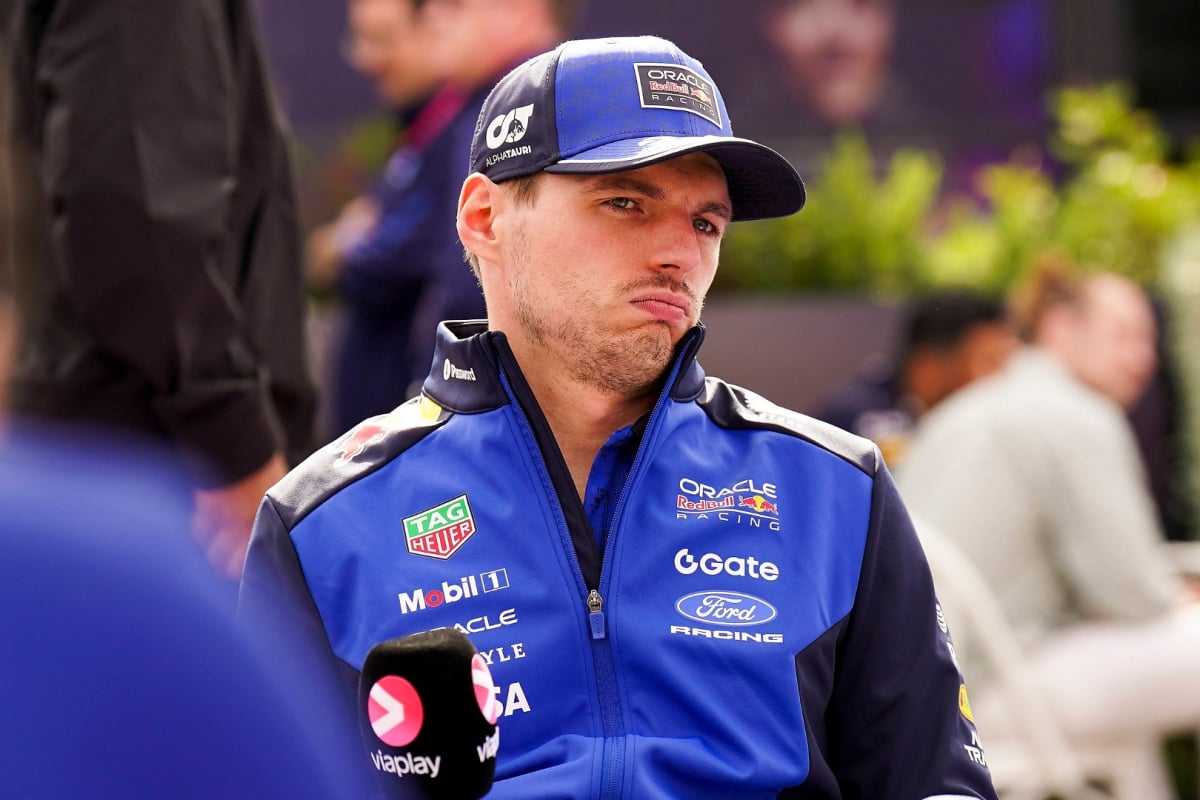
Max Verstappen shot down by F1 chief after Controversial…read more
Max Verstappen has found himself at the center of a growing debate over the controversial 2026 Formula 1 regulations after his strong criticism of the new generation of cars was firmly rejected by Formula 1’s chief executive, Stefano Domenicali. The disagreement highlights a widening divide between drivers and the sport’s leadership just one race into the new era.
The opening round of the 2026 season at the Albert Park Circuit in Melbourne gave drivers their first real opportunity to evaluate the performance and handling of the radically redesigned cars under full race conditions. However, early reactions from several competitors suggest that the new regulations have not been universally welcomed.
Among the most outspoken critics has been Verstappen, the reigning champion, who has repeatedly voiced concerns about the direction the sport has taken. The Dutch driver struggled throughout the weekend and suffered an early elimination in the first phase of qualifying (Q1), a disappointing result that appeared to amplify his frustrations with the machinery.
Following his exit, Verstappen admitted that the experience left him mentally exhausted and disappointed. He went as far as suggesting that the characteristics of the new cars were making the sport less enjoyable for drivers. According to him, the heavy focus on energy management has taken away some of the raw, aggressive style of driving that once defined Formula 1.
After Sunday’s race, Verstappen urged the sport’s governing body, the Fédération Internationale de l’Automobile (FIA), and the commercial rights holder, Formula One, to take driver concerns seriously and consider adjustments to the regulations.
He was not alone in his criticism. Several other drivers echoed similar frustrations, including Lando Norris, Carlos Sainz Jr., and Oliver Bearman. While opinions varied in tone, many competitors agreed that the new energy management demands significantly alter the way races are driven.
The new 2026 technical regulations introduced a major shift in how power units operate. With an even split between combustion engine output and electrical energy, drivers are required to carefully manage battery usage throughout each lap. This means they cannot push flat out for extended periods, instead adopting strategies such as lifting off the throttle early and coasting into braking zones in order to regenerate energy.
For traditionalists, this represents a dramatic departure from the classic Formula 1 driving style, which prioritizes late braking, maximum acceleration, and constant high-speed pressure.
Some drivers argued that this change has made racing feel less natural. In Melbourne, complaints surfaced that the system creates an experience that feels overly calculated or even artificial. The boost modes and energy deployment strategies were compared by some competitors to mechanics found in racing video games rather than authentic motorsport.
Despite the criticism, Domenicali responded firmly when asked about the growing complaints. Speaking ahead of the Australian Grand Prix weekend, the Italian executive made it clear that he believes drivers should be careful about publicly attacking the sport.
According to Domenicali, Formula 1 remains a global spectacle that continues to grow and evolve, and he suggested that negative comments about the sport can undermine the progress being made.
While acknowledging that driver feedback is important, he stressed that change is an inevitable part of the sport’s evolution. In his view, the new regulations simply represent another phase in Formula 1’s long history of technical innovation.
Domenicali also argued that adapting to new technology is part of what separates the best drivers from the rest of the field. If the cars require a different driving approach, then the most skilled competitors will ultimately be those who learn to master the new systems most effectively.
Still, the early reaction from drivers suggests that the transition may not be entirely smooth.
During the race weekend in Melbourne, opinions about the new racing style were mixed. Lewis Hamilton offered a more optimistic perspective, describing the race as enjoyable despite the unusual strategies required by the new cars. Others were far less enthusiastic.
Norris described the race as chaotic due to the constant shifts in energy management and the unusual racing patterns that resulted from it. Verstappen, meanwhile, appeared deeply frustrated in his post-race interviews, emphasizing that the need to constantly manage battery levels prevents drivers from pushing the car to its absolute limit.
For a competitor known for his aggressive and fearless driving style, this limitation has proven particularly difficult to accept.
Verstappen insisted that he still loves racing, but warned that the current direction could reduce the enjoyment for both drivers and fans if adjustments are not made. He expressed hope that the FIA and Formula 1 leadership would remain open to dialogue and potentially introduce improvements during the season.
While officials have indicated they are willing to listen, it remains unclear whether any immediate changes will be implemented.
With only one race completed in the new era, the debate over the 2026 regulations is likely to continue as teams and drivers gain more experience with the cars. As the season unfolds, the sport’s leadership will face increasing pressure to balance technological innovation with the thrilling wheel-to-wheel racing that Formula 1 fans expect.