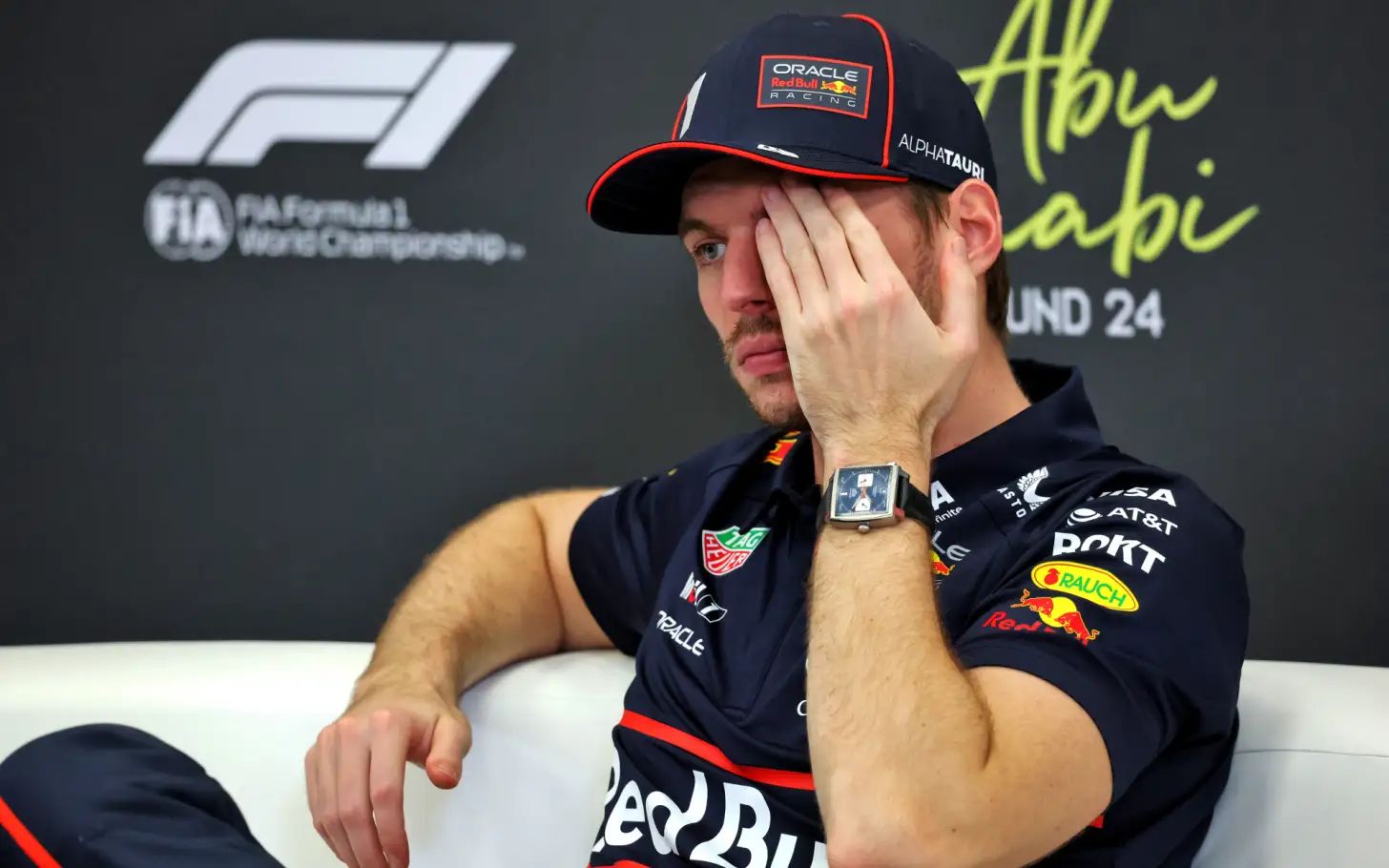
Max Verstappen Could Leave Red Bull as Team Faces Growing Uncertainty
Max Verstappen may no longer hold the Formula 1 world championship crown, but his standing within the sport remains unquestioned. Across the paddock, he is still widely regarded as the most complete and naturally gifted driver of his generation. However, being recognised as the best is not the same as being satisfied. Verstappen is a fierce competitor, and titles matter deeply to him—even if he rarely shows frustration publicly.
History offers a reminder of how hollow talent alone can feel without championships. Fernando Alonso’s career is often cited as an example: despite being considered one of F1’s all-time greats, he retired from his title-winning years with just two world championships. Verstappen will be determined not to follow a similar path.
Importantly, Verstappen did not lose the championship because he was outperformed by Lando Norris on pure driving ability. Instead, the decisive factor was machinery. McLaren produced the superior car, while Red Bull fell behind. In modern Formula 1, even the most exceptional drivers cannot consistently overcome a significant performance deficit.
Elite drivers rarely remain loyal to underperforming teams when better opportunities exist—and Verstappen certainly has options. His talent alone would make him a prized asset for almost any team on the grid. That reality poses a serious problem for Red Bull, particularly as the signs ahead of the 2026 regulation overhaul appear increasingly worrying.
A Team Moving Backwards
Red Bull’s decline did not happen overnight. From early 2024, their era of near-total dominance began to unravel. Once a team that could realistically expect victory at almost every race with Verstappen, Red Bull gradually slipped back into the pack.
Verstappen himself has masked many of the team’s weaknesses. His ability to extract results beyond the car’s true potential has kept Red Bull competitive, but this has also hidden deeper structural issues. Evidence of those problems can be seen clearly on the other side of the garage.
Sergio Perez, who finished second in the championship in 2023, endured a dramatic collapse in form throughout 2024, struggling to even reach the top ten before ultimately losing his seat. His replacements, Liam Lawson and Yuki Tsunoda, also found life at Red Bull brutally unforgiving, failing to make a meaningful impact.
Without Verstappen’s extraordinary performances, Red Bull would likely be battling Ferrari for fourth place rather than remaining in the title conversation. That alone raises uncomfortable questions about the team’s true competitiveness.
A Mass Departure of Key Figures
Beyond on-track performance, Red Bull has suffered a significant loss of leadership and technical expertise in a remarkably short period. Former team principal Christian Horner is no longer at the helm. Legendary designer Adrian Newey has departed, as has highly respected engineer Rob Marshall, who moved to McLaren.
Sporting director Jonathan Wheatley also left, and most recently, long-time advisor Helmut Marko stepped away from his role. Together, these figures formed the backbone of Red Bull’s championship-winning structure.
Replacing such experience is not simply a matter of hiring new personnel. Building trust, efficiency, and cohesion within a Formula 1 team takes years—not months. While Red Bull may eventually stabilise, the immediate future looks uncertain, especially when compared to rivals with more settled operations.
The 2026 Engine Gamble
Personnel changes are only part of the concern. Red Bull faces an even greater challenge with its power unit programme. Honda, the manufacturer behind all four of Verstappen’s world titles, is leaving Red Bull to partner Aston Martin from 2026.
In response, Red Bull will produce its own engines through Red Bull PowerTrains, with technical oversight from Ford. While Ford is an iconic name in motorsport, its recent Formula 1 history offers little reassurance.
Ford’s success largely belongs to the past. Although the brand ranks third in F1 wins behind Ferrari and Mercedes, the vast majority of those victories occurred before the 1980s. Only one Ford-powered car has won a race this century—Giancarlo Fisichella’s Jordan at the 2003 Brazilian Grand Prix. The last Ford-powered world champion was Michael Schumacher in 1994.
Ford’s last full factory involvement came with Jaguar Racing between 2000 and 2004, a project widely considered disappointing despite heavy investment. Former engineers from that era have frequently cited slow decision-making and excessive bureaucracy as major weaknesses.
Expecting Red Bull PowerTrains, supported by Ford, to immediately produce the class-leading engine under radically new regulations in 2026 is an enormous gamble—particularly for a team already heading in the wrong direction.
Verstappen’s Future in Doubt
For Verstappen, the equation is simple. He wants to win, and he wants to win consistently. If Red Bull cannot guarantee a competitive car and a clear long-term vision, his loyalty may be tested.
With rival teams strengthening and Red Bull facing technical, organisational, and strategic uncertainty, the possibility of Verstappen becoming part of a wider exodus is no longer unthinkable. If the sport’s best driver senses that Red Bull’s golden era is over, he may decide that his future lies elsewhere.