Max Verstappen’s Damage Assessed After Rare Red Bull Misjudgement.
Max Verstappen endured a difficult and uncharacteristic setback during the Sprint Qualifying session (SQ3) ahead of the Qatar Grand Prix, after he ran off the track and caused notable harm to his Red Bull’s underside. The incident not only impacted his grid position for the Sprint race but also raised concerns within the paddock about the extent of the damage and its potential effect on his championship battle.
For the first time this season, Verstappen was out-qualified by his Red Bull teammate, managing only sixth place for the Sprint grid. While Yuki Tsunoda secured an impressive fifth, Verstappen’s costly moment at Turn 4 during his opening SQ3 run ultimately sealed his fate. The off-track excursion denied him any chance of challenging Oscar Piastri—who took pole—or Lando Norris, who safely secured third.
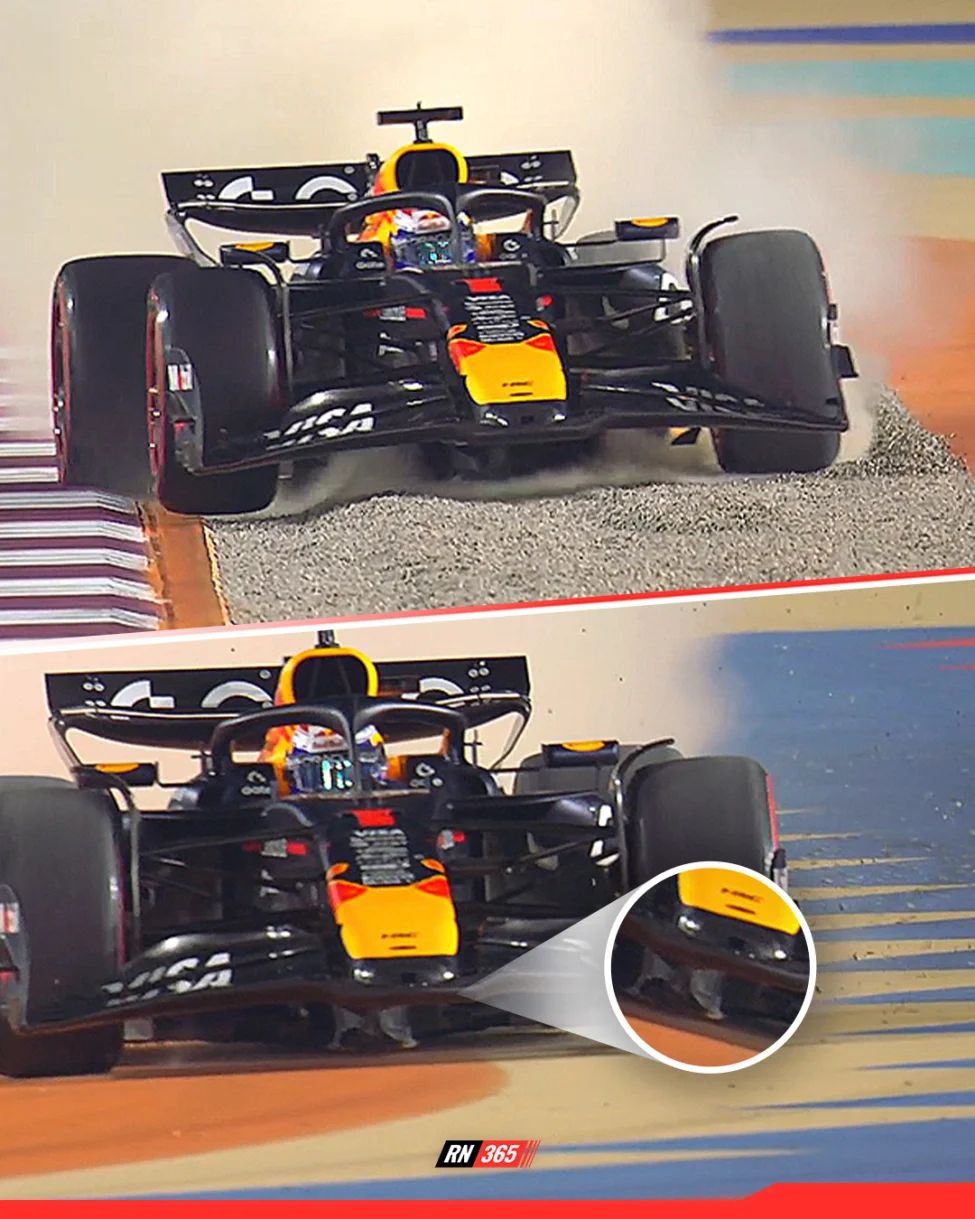
The moment itself was dramatic. Verstappen lost control at Turn 4, slid into the gravel, and kicked up a cloud of dust as the RB20 bounced aggressively across the chicane exit. Frustrated, he radioed to the team that the car was “bouncing like an idiot,” an indication that something didn’t feel right underneath the car. Soon after the session, Viaplay released a detailed analysis of the off, confirming what many suspected—the RB20 had suffered structural damage that would compromise performance.
What raised particular concern among Red Bull engineers was the harm inflicted on the car’s t-tray, also referred to as the tea tray or bib plank. This crucial aerodynamic component sits at the very front underside of the car, directly behind the front wing assembly. It is the first surface to meet the airflow under the chassis, guiding it toward the tunnels and diffuser at the rear. In modern F1 machinery—especially under the current ground-effect era—the t-tray plays a massive role in regulating suction, ride height, and overall aerodynamic balance.
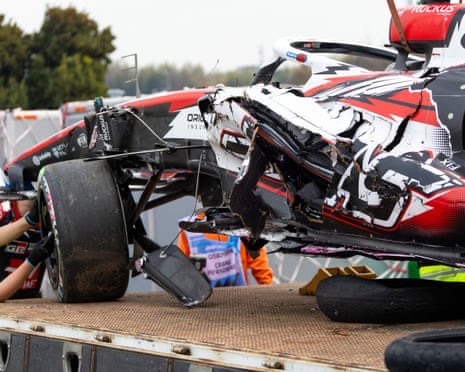
Any disruption to this sensitive area can severely alter performance. According to the footage reviewed post-session, Verstappen’s floor appeared visibly deformed, with particular scarring and fragmentation on the t-tray edges. Analysts suggested that additional unseen damage might extend deeper into the floor’s internal structures, possibly affecting the delicate aerodynamic channels that generate downforce.
Running the car as close to the ground as possible is essential for maximizing ground-effect performance. Even a few millimeters of misalignment or damage can alter pressure distribution, reduce stability, and cause porpoising or inconsistent grip. With Verstappen’s floor compromised, he would inevitably lose performance during the Sprint—something he acknowledged moments after climbing out of the car. He admitted that he expected to “go backwards” during the 19-lap Sprint race due to the loss of downforce and the unpredictable handling that floor damage typically creates.
This situation comes at a sensitive point in the championship fight. With both McLarens—Piastri on pole and Norris in third—showing strong pace, every qualifying setback matters. Verstappen has carried most of Red Bull’s title hopes this season, and while one mistake does not define a campaign, the timing and severity of this one could influence the momentum heading into the final rounds.
The Qatar circuit, known for its abrasive surface and high-speed corners, puts tremendous pressure on the floor of an F1 car. Any floor damage at Lusail is magnified due to the reliance on underbody aerodynamics to carry speed mid-corner. Engineers often say that a compromised floor is one of the hardest things to compensate for, as adjustments elsewhere—including wings and suspension—can rarely claw back the loss.
Red Bull now faces the dual challenge of determining how much of the floor they can repair before the Sprint and deciding whether to risk larger changes that could breach parc fermé regulations. Any major floor replacement could force Verstappen to start from the pit lane—an outcome they will want to avoid, especially with championship points on the line in both the Sprint and the main Grand Prix.
In short, Verstappen’s rare mistake has left Red Bull with significant overnight work. What seemed like a simple off-track moment revealed a deeper aerodynamic setback, one that could shape not only the Sprint race but the weekend’s overall momentum. With McLaren looking sharp and Verstappen’s car operating below optimal levels, the Qatar Sprint promises to be one of the most strategically complex sessions of the season.