Zak Brown Confirms Return of McLaren’s ‘Papaya Rules’ After Championship Triumph
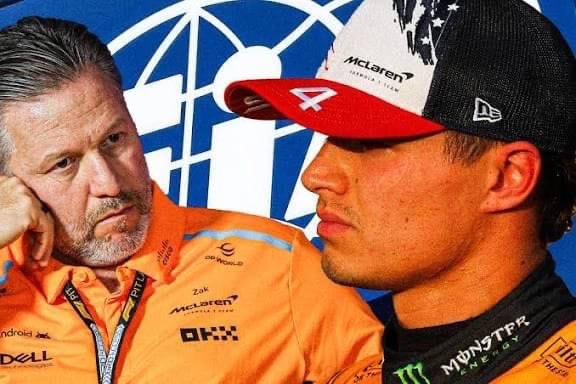
McLaren CEO Zak Brown has confirmed that the team’s much-debated “papaya rules” will continue, following a remarkable Formula 1 season that delivered both drivers’ and constructors’ success. Brown, alongside team principal Andrea Stella, made the announcement during an appearance at the FIA Prize Giving Ceremony in Tashkent, where McLaren’s achievements were celebrated on the global stage.
The 2025 season proved to be a landmark year for the Woking-based outfit. Lando Norris secured the drivers’ championship, while McLaren also claimed the Constructors’ Championship, completing a rare and highly impressive double. Amid the celebrations, Norris hinted that fans should expect to see the return of the team’s distinctive internal philosophy—commonly referred to as the “papaya rules”—in the seasons ahead. Brown has now confirmed that those expectations are well founded.
The papaya rules, which became a defining talking point throughout the year, revolve around McLaren’s commitment to treating both of its drivers equally. Rather than establishing a clear number one driver early in the season, the team allowed Norris and Oscar Piastri to race on merit, prioritising fairness and transparency over rigid team orders. While this approach earned praise for its sporting integrity, it also attracted criticism from rivals and pundits who argued that it risked undermining McLaren’s title ambitions.
Ironically, the decision to avoid favouring one driver over the other may have indirectly strengthened Max Verstappen’s championship challenge. By allowing Norris and Piastri to compete freely, McLaren occasionally found itself in situations where points were split rather than maximised, giving Verstappen opportunities to stay within touching distance in the title fight. That dynamic ensured the championship battle remained alive until the very final race of the season.
The climax came in Abu Dhabi, where Norris managed to edge Verstappen by just two points in the final standings. It was a nail-biting conclusion that underlined both the risks and rewards of McLaren’s philosophy. Despite the razor-thin margin, Brown made it clear that the team has no regrets and no intention of abandoning the approach that brought them success.
Speaking on stage in Tashkent, Brown reflected on the season with pride and optimism. He praised the collective effort behind McLaren’s resurgence, highlighting the commitment shown by everyone within the organisation. According to Brown, the belief and unity within the team were crucial factors in overcoming doubts from outside observers, particularly as the championship battle intensified toward the end of the year.
Brown acknowledged that many had questioned whether McLaren’s strategy could truly deliver titles, especially with both drivers still mathematically in contention heading into the final round. However, he stressed that the way the team raced—competitively, fairly, and with respect between teammates—was exactly how McLaren wants to be represented in Formula 1. That ethos, he confirmed, will remain central to the team’s plans moving forward.
Andrea Stella echoed those sentiments, shifting the focus firmly onto the drivers themselves. The McLaren team principal emphasised that it was Norris and Piastri who ultimately delivered the points, victories, and podium finishes that secured the Constructors’ Championship. Stella was quick to highlight not only their performance on track, but also their professionalism and behaviour away from racing, describing it as a model of what the sport should stand for.
For Stella, the success of the papaya rules goes beyond trophies and statistics. He framed the philosophy as a reflection of true racing values—allowing drivers to compete on equal terms while maintaining mutual respect and a shared commitment to the team’s goals. In his view, Norris and Piastri exemplified those principles throughout the season, making McLaren’s achievements all the more meaningful.
Looking ahead, Brown also hinted at the scale of the challenge McLaren faces in the coming years, particularly with the major regulation changes scheduled for 2026. While he acknowledged that maintaining success under a new technical framework will be extremely difficult, he suggested that McLaren’s culture and approach give them a strong foundation to build upon.
In an era where team orders and internal hierarchies often dominate headlines, McLaren’s decision to double down on the papaya rules sends a clear message. The team believes that fairness, trust, and healthy competition can coexist with championship success—and their latest triumphs provide powerful evidence to support that belief.