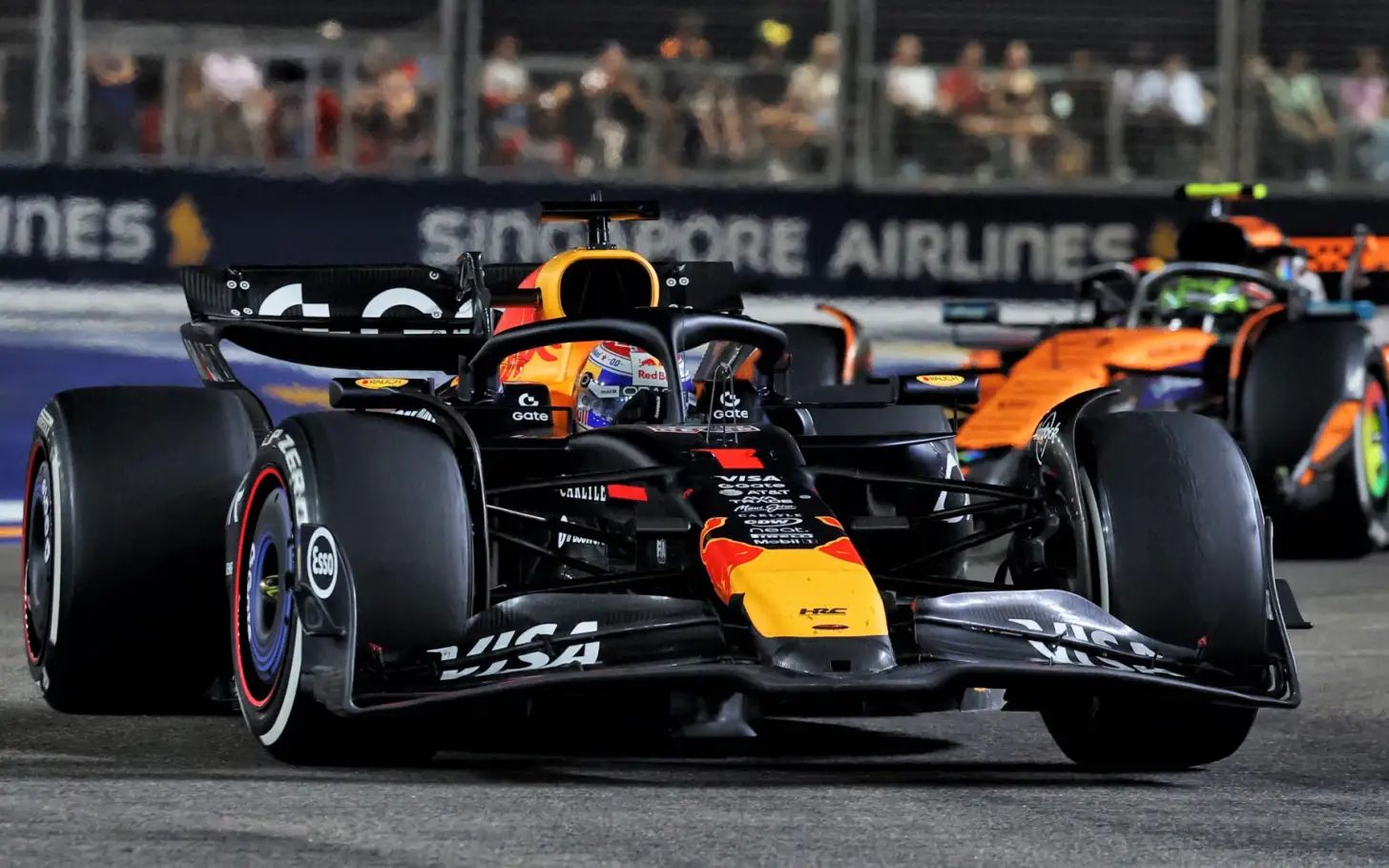
McLaren Reveal Technical Cause Behind Shock Double Disqualification at the Las Vegas Grand Prix
McLaren has finally shed light on the surprising technical infringement that led to both of its cars being disqualified from the Las Vegas Grand Prix—a race in which the team originally celebrated a strong double-points finish. Team principal Andrea Stella offered a thorough explanation of the issue, revealing that an unforeseen surge in porpoising during the race caused the skid blocks on both cars to wear beyond the FIA’s permissible limits.
The team had looked set for an impressive result after Lando Norris crossed the line in second place and Oscar Piastri finished fourth, trailing only race winner Max Verstappen. But those celebrations were short-lived. A detailed post-race inspection conducted by the FIA revealed excessive wear on the skid blocks beneath both McLarens—an automatic breach of technical regulations, triggering immediate exclusion from the final classification.
According to Stella, the team had not taken any experimental risks with ride height or floor setup. In fact, McLaren had increased its safety buffer leading into qualifying and the race based on the data gathered during practice sessions.
However, the problem was rooted in something the team did not anticipate: a level of porpoising far more violent and persistent than anything observed earlier in the weekend.
“The direct reason for what happened was the unexpected onset of significant porpoising, which generated strong vertical oscillations on the car,” Stella explained. “This level of bouncing had not appeared in practice, nor was it predicted by our simulations of the operating window for the race.”
He emphasised that the team had taken what they believed were sensible precautions, raising the cars slightly to ensure they stayed above the critical threshold. But the extreme bouncing effectively erased the safety margin they had built in.
Even more puzzling—and frustrating—for the engineers was the behaviour of the car once the oscillations began. Stella noted that traditional methods of reducing grounding, such as lifting off or slowing down in certain corners, failed to provide consistent relief.
“Even when the drivers attempted to reduce speed, the porpoising only improved in some areas and actually worsened in others,” he said. “This made it extremely challenging to manage during the race.”
How McLaren Attempted to Contain the Problem During the Race
McLaren became aware of the issue almost immediately once the race began. The early laps showed a worrying trend in the car’s telemetry, particularly on Norris’ side of the garage.
“From the start, the data clearly indicated that the unexpected level of porpoising would present a risk,” Stella said. Norris’ car gave McLaren more reliable telemetry readings, but Piastri’s car presented a bigger challenge after the team lost one of the sensors responsible for monitoring the degree of grounding. This meant Piastri was partially driving blind in terms of understanding the severity of the problem.
The team instructed both drivers to adapt their driving by making adjustments in areas where the bouncing was most intense. However, due to the combined influence of the car’s performance window and the unique characteristics of the Las Vegas circuit—a street track with long straights and varying cambers—most of the drivers’ mitigating efforts were too little, too late.
“We recognised quickly that this level of porpoising was contributing to unusually high skid wear,” Stella continued. “The drivers did take steps to try to limit damage, but unfortunately the nature of the circuit meant those actions had limited effectiveness.”
McLaren Confident Issue Will Not Affect Qatar or Abu Dhabi
The double disqualification was particularly painful for the team because both Norris and Piastri remain deeply involved in the fight for the drivers’ championship. Losing such valuable points handed Verstappen an opportunity to close in further at the top of the standings.
Despite the setback, Stella has reassured supporters that the problem encountered in Las Vegas is unlikely to carry over into the final two rounds of the season in Qatar and Abu Dhabi. He explained that the porpoising encountered was a highly specific consequence of the car’s setup window interacting with the Las Vegas layout.
“The conditions we faced in Las Vegas were very particular,” he said. “The combination of the track surface, layout, and the way our car operated in that environment created a unique scenario.”
Stella insisted that the team’s established setup procedures remain reliable and that McLaren expects a smoother, more predictable performance at Lusail and Yas Marina.
However, he also emphasised that the team would use the Las Vegas experience as a learning opportunity, adding: “Every situation, even the difficult ones, offers useful data. We now have new insight into the car’s behaviour in certain porpoising regimes.”