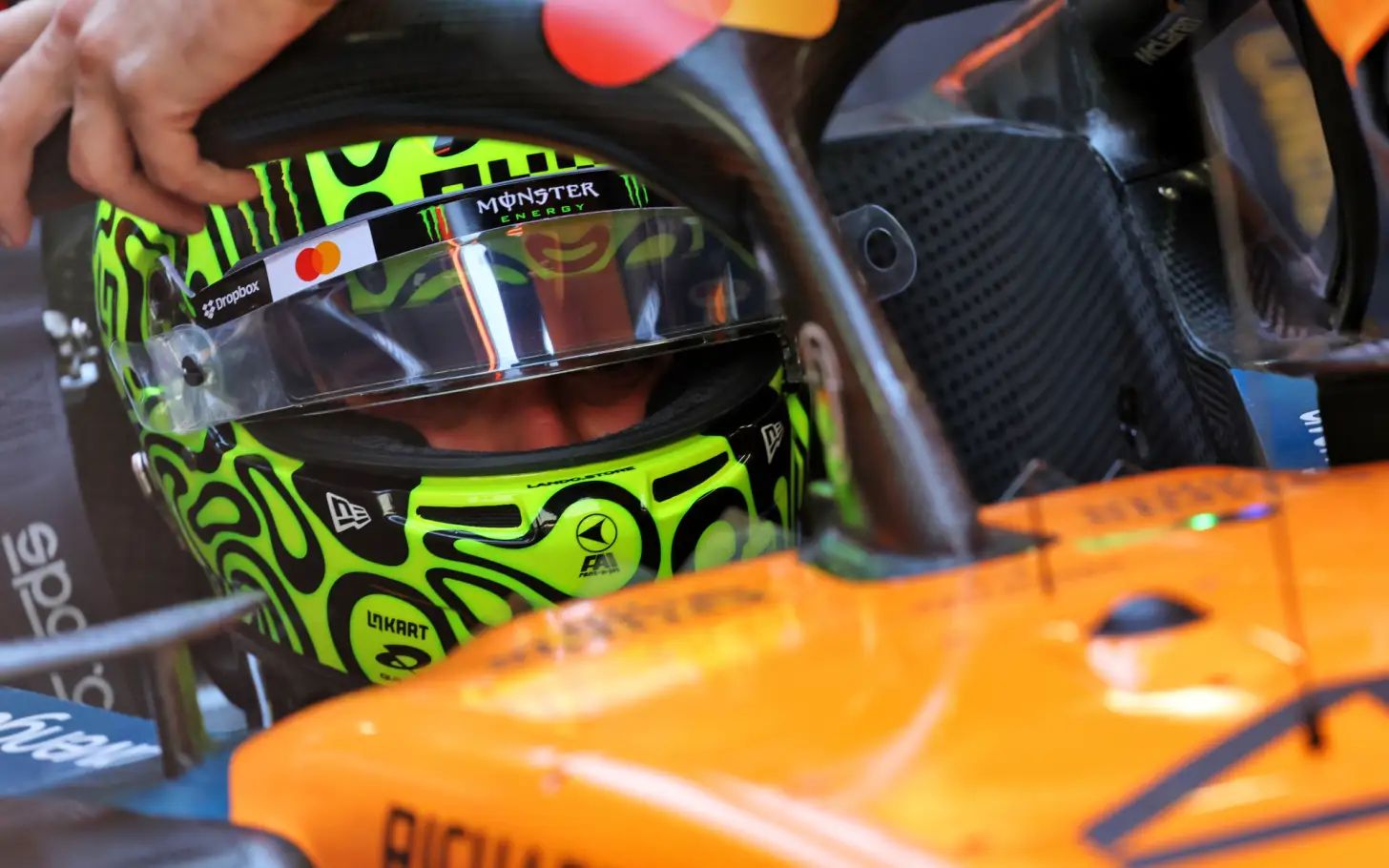
McLaren Granted FIA Exemption After Pre-Session Concerns Over Lando Norris’ Car
McLaren found itself dealing with an unexpected technical situation ahead of the Qatar Grand Prix weekend, prompting the team to request a rare exemption from the FIA. The issue, which emerged shortly before the opening practice session, primarily involved championship leader Lando Norris’ MCL39 and led to a flurry of speculation in the Lusail paddock.
As part of Formula 1’s “Show and Tell” initiative, teams are required to place one of their race cars at the front of the garage for one hour—90 minutes before FP1—so that media personnel and pit-lane pass holders can visually inspect new parts, updates, and setup modifications. This mandatory display session has become a fan-focused element of race weekends, offering a peek into each team’s development.
However, during the Qatar GP weekend, observers noted that McLaren did not have either of its cars on display for most of the allocated time. While the rest of the grid dutifully rolled out their machines, McLaren’s garage remained closed off. Only later, near the end of the session, did the team finally bring out Oscar Piastri’s car. The absence of Norris’ machine immediately sparked curiosity—and concern—among journalists and fans.
It has since been revealed that McLaren had approached FIA technical delegate Jo Bauer to request special permission to delay the mandatory display. According to Sky Sports F1 reporter Ted Kravitz, the team was forced into this unusual position because both cars—especially Norris’—were undergoing detailed structural checks.
Kravitz explained that McLaren engineers were carrying out non-destructive testing (NDT) across multiple surfaces of Norris’ chassis. This procedure involves using specialized probes and sensors to inspect carbon-fibre components for internal cracking or weakening, even when the outer layer shows no visible damage.
“McLaren had issues with both cars,” Kravitz reported. “They received an exemption from Jo Bauer to postpone putting a car out. They eventually brought out Piastri’s. But they were doing NDT checks on nearly every surface of Norris’ car. I’m still trying to understand exactly why they felt the need to inspect and replace certain sections. They were probing the bodywork for cracks that may not be visible externally.”
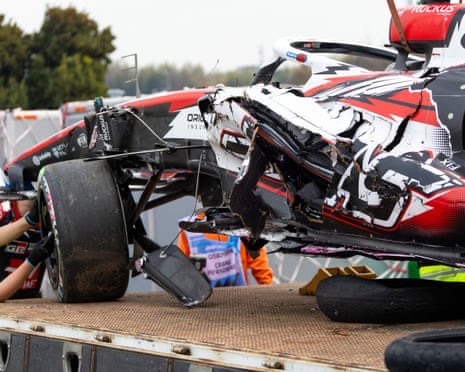
The need for an urgent structural assessment so close to FP1 raised eyebrows. Carbon fibre—lightweight yet incredibly strong—is the core material in Formula 1 chassis and bodywork. While it provides exceptional rigidity, it is also vulnerable to internal fractures that cannot be detected with the naked eye. Even minor disruptions in the fibre layers can compromise safety at high speeds.
Former Aston Martin chief strategist and current Sky F1 analyst Bernie Collins expanded on the potential reasoning behind the tests. She noted that internal carbon-fibre damage commonly occurs when a car brushes a wall, suffers vibrations, or experiences harsh vertical loading.
“Most of an F1 car is carbon fibre, and it can crack internally,” Collins explained. “The fibres within the structure can split even without external damage. That can happen from impacts or from repeated vibrations. Given that McLaren had severe porpoising issues in Las Vegas last week, the team may have suspected that the bouncing stressed some components.”
Collins highlighted that what made the situation unusual was the timing. Teams typically spend Wednesday and Thursday building the cars and running checks, meaning NDT is usually completed well before Friday morning.
“That’s what makes this so strange,” she said. “It suggests they noticed something during the Friday morning car-fire-up or during sensor calibration. If any sensor readings showed irregularities—something reading broken or unclear—they would have been forced to run further structural checks before allowing the car onto the circuit.”
NDT is a purely safety-driven procedure, designed to ensure that high-speed components such as suspension elements, torsion rods, and chassis mounting points are free of hidden fractures. Any unnoticed crack, even a small one, can result in catastrophic failure at racing speeds. McLaren’s insistence on verifying the car’s integrity suggests a cautious approach, particularly given Norris’ championship fight.
Despite the disruption and the last-minute tests, McLaren managed to complete the required inspections and eventually prepared Piastri’s car for public display. Norris’ machine remained under scrutiny for longer, but the team confirmed all checks were completed before FP1 began.
While the cause of the structural concerns remains unclear, the incident underscores the delicate balance of performance, reliability, and safety in Formula 1—especially during high-pressure periods such as the final stretch of a championship battle.