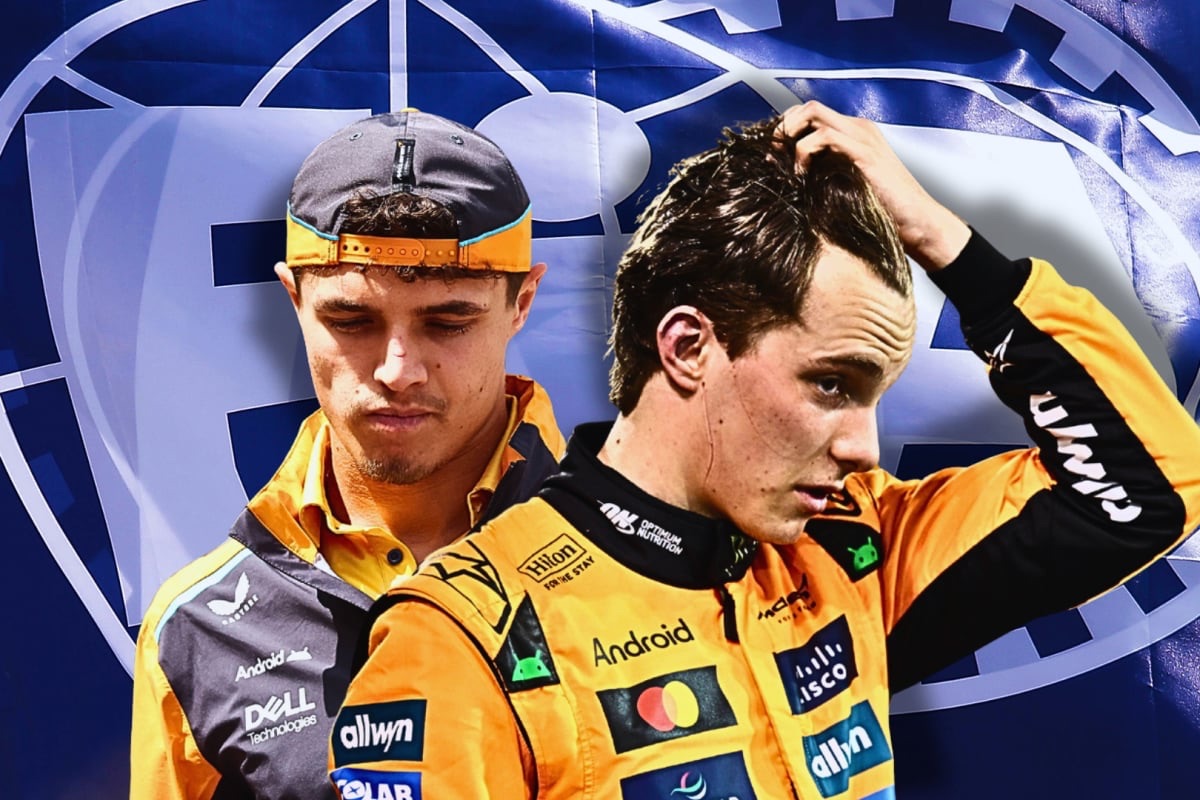
McLaren’s Championship Dream Comes With a €2 Million Price Tag as Norris and Piastri Trigger FIA Fee Surge
McLaren’s long-awaited return to the top of Formula 1 in 2025 delivered glory, headlines, and a first world title for Lando Norris — but it also came with an unexpected financial sting. Thanks to the FIA’s super licence fee structure, the combined success of Norris and Oscar Piastri will cost McLaren more than €2 million just to put both drivers on the grid for the 2026 season.
While championships are priceless in sporting terms, Formula 1’s governing body places a very real monetary value on success. Every driver must hold an FIA super licence to compete in F1, and the cost of that licence increases dramatically with each championship point scored in the previous season.
After an intense 2025 title fight that went down to the final races, Norris emerged as world champion for the first time in his career, edging out Max Verstappen by a razor-thin two-point margin. Verstappen, despite losing the crown, still claimed more race victories than any other driver, with eight grand prix wins. McLaren’s other star, Oscar Piastri, was also heavily involved in the championship battle, leading the standings for much of the season before fading slightly in the closing rounds and finishing 13 points behind his team-mate.
That trio’s success, however, has pushed their super licence fees into eye-watering territory.
Under FIA regulations, every F1 driver pays a base fee of €11,842 for their super licence. On top of that, drivers are charged €2,392 for every championship point they accumulated during the previous season. The result is a system where performance directly translates into cost — effectively making drivers pay more the better they do.
For Norris and Verstappen, their 2025 points totals mean each will be billed more than €1 million simply to be eligible to race in 2026. Piastri’s strong campaign has left him just shy of that mark, with a projected super licence bill of €992,562.
Although the invoices are issued in the drivers’ names, it is widely understood within the paddock that teams usually cover these fees as part of their contractual arrangements. That means McLaren will shoulder the burden for both Norris and Piastri, with the combined cost exceeding €2 million before a single wheel is turned in the new season.
In the context of modern Formula 1 budgets — and given the multi-million-euro salaries paid to top-tier drivers — the figure is unlikely to cause McLaren serious financial discomfort. Still, it highlights one of the sport’s more unusual quirks: success is not only rewarded with trophies and prestige, but also with higher operating costs.
The contrast is stark when compared to drivers who either did not compete or failed to score points during the 2025 season. Sergio Perez, Valtteri Bottas and highly rated youngster Arvid Lindblad, none of whom raced last year, will all pay only the standard €11,842 fee. The same applies to Franco Colapinto, who endured a point-less campaign and therefore avoided any additional charges.
While those drivers may envy Norris and Piastri’s results, they will at least enter 2026 with significantly smaller bills from the FIA.
The super licence system itself is designed to ensure that only suitably qualified drivers reach Formula 1. Issued by the FIA, the super licence represents the highest level of accreditation in motorsport. Separate licences exist for other disciplines such as endurance racing or karting, but F1 requires the most stringent criteria.
To qualify, drivers must typically be at least 18 years old — unless granted special dispensation — pass a theory-based knowledge test, and accumulate a minimum of 40 super licence points. These points are earned through results in recognised FIA championships around the world, including Formula 2, Formula 3, and selected international series.
Once qualified, drivers must then pay the annual licence fee at the start of each season. According to the FIA, these charges contribute toward the governance and administration of the championship.
For McLaren, the irony is hard to ignore. The very performances that delivered their first drivers’ title in years have also made them one of the hardest-hit teams financially under the super licence rules. Yet few within the team are likely to complain.
After all, paying an extra €2 million is a small price to pay for a world champion, a title-contending line-up, and a statement that McLaren are once again at the very top of Formula 1.