Oscar Piastri Calls Out FIA’s “Double Standards” Ahead of Crucial Meeting
Formula 1’s season drama isn’t only unfolding on the track — it’s also heating up behind closed doors. McLaren’s talented young driver Oscar Piastri has stirred the pot by criticizing what he calls the FIA’s “double standards” in how penalties are issued. His comments follow a controversial moment during the Las Vegas Grand Prix and come just before a highly anticipated drivers–stewards meeting that could influence future interpretations of racing regulations.
A Night of Chaos in Las Vegas
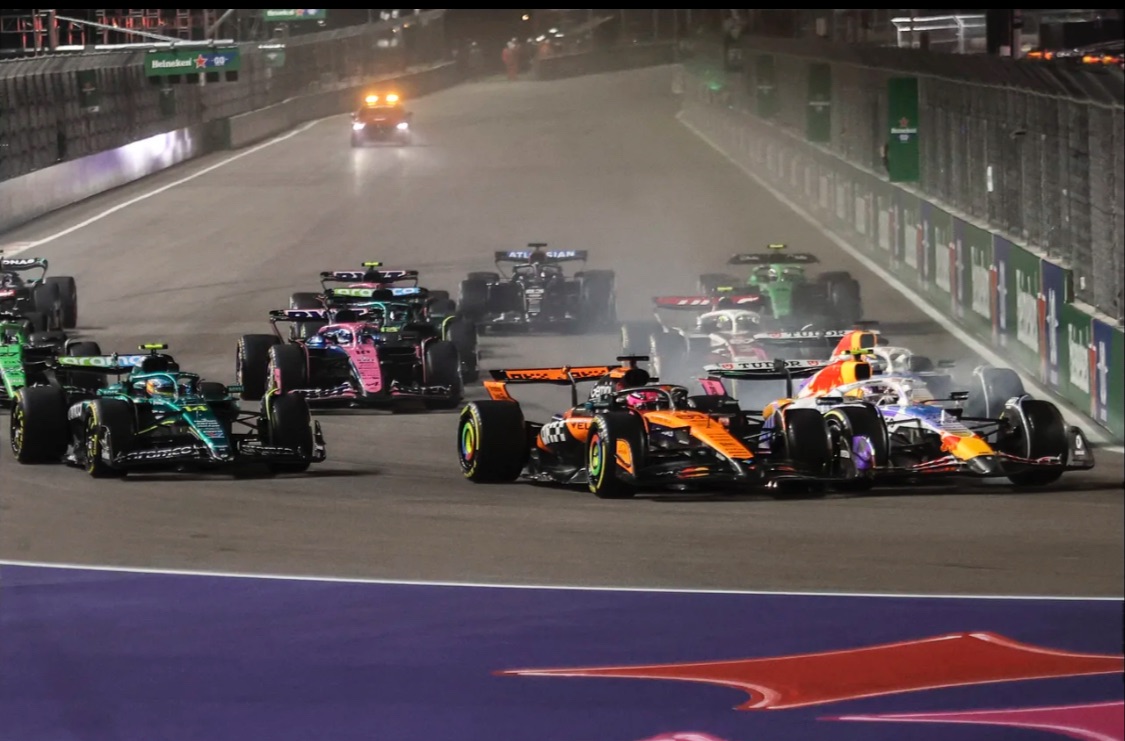
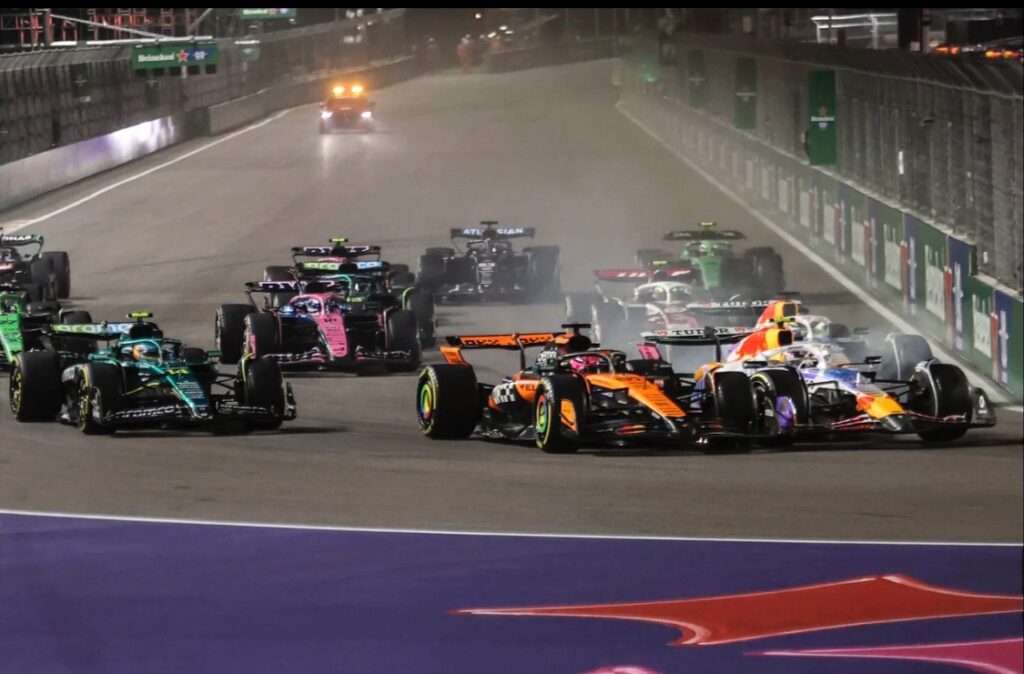
The Las Vegas Grand Prix delivered plenty of drama, and Piastri found himself at the center of it early. On the opening lap, he was hit by Liam Lawson in an incident that seemed straightforward. But to Piastri’s surprise, the stewards declared it a “racing incident,” handing out no penalty to Lawson.
The decision left him visibly puzzled. To him, the inconsistency was glaring—especially because, just one race prior, he was hit with a 10-second penalty in São Paulo for a collision he felt was far less clear-cut. In that earlier incident, Piastri was squeezed between Kimi Antonelli and Charles Leclerc, locked up, and slid into Antonelli. Despite the tricky circumstances, the stewards held him fully responsible.
Commentators and analysts called Piastri’s penalty harsh, pointing out that he had limited room to react. That wider criticism adds weight to Piastri’s frustration: if similar or worse collisions are judged differently, how can drivers know where the line truly is?
A Meeting That Could Change Everything
Piastri confirmed that the drivers will soon meet with the stewards — a “crunch meeting,” in his words. These meetings are designed to give feedback on the Driving Standards Guidelines, a set of rules shaped partly by the drivers themselves.
Piastri acknowledged that the guidelines have helped in most situations, reducing confusion and making racing a bit clearer. But he added that there are still areas where improvements are needed. According to him, certain drivers may be “gaming the rules,” exploiting vague descriptions or loopholes in ways the guidelines didn’t intend.
The purpose of the meeting isn’t to overturn the rulebook but to refine it. Piastri emphasised that the goal is to help the sport “move forward,” ensuring that the guidelines evolve with the realities of modern racing.
Stewarding Consistency: A Growing Topic of Debate
F1’s stewarding has always been under scrutiny, but the debate intensifies whenever drivers publicly question fairness. Piastri calling out “double standards” has reignited discussion about how decisions are made.
The main issue isn’t whether the FIA should be strict — it’s whether they should be consistent. Drivers need to know what to expect when they fight for position. When two similar incidents produce two completely different outcomes, it undermines confidence in the system.
This inconsistency affects not only individual drivers but the championship as a whole.
Championship Pressure Adds to Tension
Piastri’s concerns also come within the context of a tightening championship battle. He’s still a contender, but his chances rely on near-perfect execution combined with a mistake from his teammate Lando Norris.
In a title fight this close, every point matters. A single penalty — or lack of one — can swing momentum dramatically. That’s why Piastri is pushing for fairness: a misjudged stewarding call could shape the arc of the entire season.
Why This Meeting Matters for Formula 1
This situation is more than a disagreement between a driver and the FIA. The outcome of the meeting will reflect broader concerns about how the sport is governed. Several key themes emerge:
1. Integrity of Stewarding
Fans, teams, and drivers expect clarity and consistency. If the FIA is perceived as unpredictable or inconsistent, it can erode trust in the sport’s governance.
2. Giving Drivers a Voice
The guidelines were created with drivers’ input. Piastri’s request for tweaks shows that the dialogue is ongoing, not symbolic. Drivers want rules that match the real world of wheel-to-wheel racing.
3. Preventing Rule Exploitation
If some drivers are using the rules to gain unfair advantages, the FIA must respond. Leaving loopholes open risks manipulating race outcomes.
4. Long-Term Impact on Competition
The way incidents are judged affects how aggressively drivers defend and attack. Clear, uniform rules shape racing style, risk-taking, and sportsmanship.
A Driver Willing to Speak Up
Oscar Piastri’s willingness to challenge the FIA reflects his maturity and growing confidence as a top-tier driver. He’s not simply venting; he’s pushing for improvements that could benefit the entire field.
He made it clear that he expects only minor adjustments, but ones that could significantly reduce ambiguity. In the fast-paced, split-second world of Formula 1, clarity is everything.
Conclusion
Oscar Piastri’s comments highlight a deeper issue within Formula 1: the need for stewarding consistency at the highest level. With a crucial meeting coming up, his feedback could help refine the rules and align them more closely with the realities drivers face on track.
Whether this leads to tangible changes remains to be seen. But Piastri’s stance sends a powerful message: in a sport where championships can be decided by seconds, fairness and clarity aren’t luxuries — they are essential. His push for more consistent stewarding is not just for his own benefit, but for the integrity and future of Formula 1.