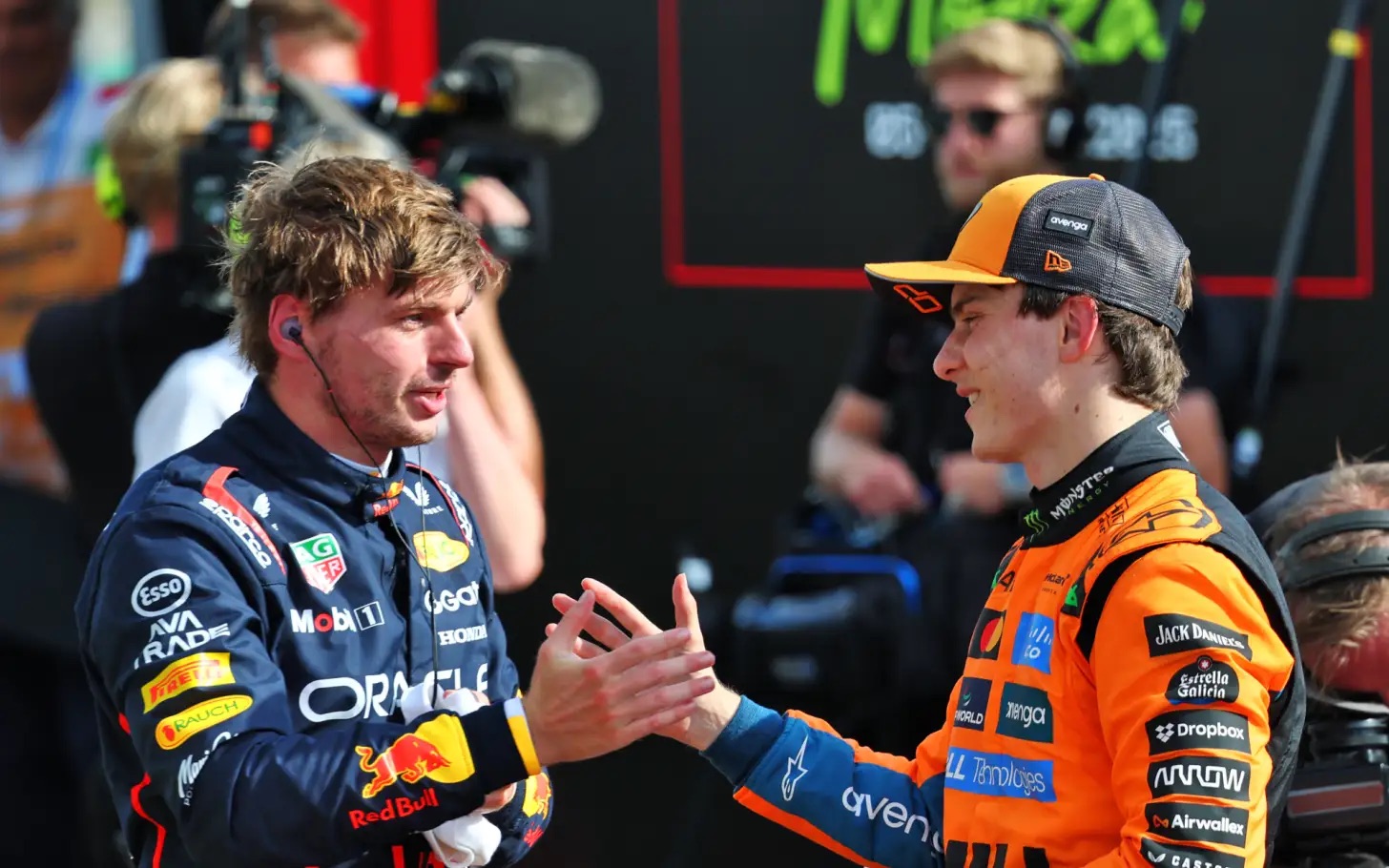
Oscar Piastri points to Max Verstappen as proof junior titles aren’t everything in Formula 1
Oscar Piastri believes success in junior racing categories, while valuable, is not the ultimate indicator of whether a driver is ready to succeed at the highest level of Formula 1 — and he has highlighted Max Verstappen as the clearest example of that reality.
Piastri’s own path to F1 followed a more traditional and highly decorated route. The Australian enjoyed a remarkable rise through the feeder series, winning the Formula 3 and Formula 2 championships in consecutive seasons and establishing himself as one of the most highly rated prospects of his generation. Yet despite that résumé, Piastri insists junior titles alone do not define future F1 success.
Speaking after narrowly missing out on his first Formula 1 world championship last month in Abu Dhabi, the McLaren driver reflected on how the pressures and emotions of an F1 title fight compare to those he experienced earlier in his career.
“There are definitely similarities,” Piastri said. “The emotions you feel are more or less the same.”
However, he explained that the scale and duration of an F1 season create a very different challenge compared to the junior categories.
“What’s different in Formula 1 compared to the junior championships is the length,” he continued. “The longest junior championship I competed in was 10 rounds. This season has been more than two and a half times that. The duration you have to live through is much more demanding.”
Piastri pointed out that his title-winning Formula 2 campaign, for example, consisted of just eight rounds — a stark contrast to the relentless nature of the modern Formula 1 calendar, which stretches across continents and spans nearly an entire year.
“That part is quite different,” he added. “In F1, you’re managing pressure, form, expectations, and performance for a very long time.”
While Piastri’s junior record is one of the strongest among current F1 drivers, he was quick to downplay the idea that winning championships in the lower formulas guarantees success at the top level. Instead, he used reigning world champion Max Verstappen as an example of how talent can be evident even without a trophy-laden junior career.
Verstappen’s progression to Formula 1 was famously rapid. After excelling in karting, the Dutch driver spent just a single season in single-seater racing, competing in the European Formula 3 Championship. He finished third overall that year, behind eventual champion Esteban Ocon, before being promoted directly to F1 at just 17 years old.
Despite not winning a junior championship, Verstappen’s raw speed and racecraft were enough to convince Red Bull that he was ready for the sport’s highest level — a decision that has since been emphatically justified by multiple world titles.
“In the junior categories, you obviously want to win the championship,” Piastri said. “But at the same time, you’re really trying to make your case for why you deserve a spot in Formula 1.”
He added that history has shown there are multiple paths to F1 success.
“I think we’ve seen over the years — Max is probably the perfect example — that you don’t need to win championships to demonstrate your capabilities for Formula 1,” Piastri explained.
According to the Australian, the priorities shift dramatically once a driver reaches the pinnacle of the sport.
“When you get to Formula 1, there’s nothing bigger than becoming world champion,” he said. “That aspect is very different.”
While junior titles can open doors and strengthen a driver’s credentials, Piastri believes Formula 1 ultimately strips everything back to one simple measure: performance at the highest level, over the longest and most demanding season in motorsport.
Despite missing out on the championship this time around, Piastri’s comments underline his growing maturity and understanding of what success in Formula 1 truly requires. As he continues his career alongside proven champions like Verstappen, the Australian appears well aware that talent, resilience, and consistency matter far more than the number of trophies collected on the way to the grid.