Mercedes and Red Bull Face Early Questions Over 2026 F1 Engine Compression Rules
With Formula 1’s radically revised 2026 power units set to make their first on-track appearance at the Circuit de Barcelona-Catalunya in just over a month, an early technical controversy has already emerged. Even before a single competitive lap has been completed, rival manufacturers have raised concerns about a potential grey area in the new engine regulations, placing Mercedes and Red Bull Powertrains under the spotlight.
According to reports from German publication Motorsport Magazin, several power unit manufacturers have formally approached the FIA to seek clarification over the interpretation of the new compression ratio limits introduced for 2026. Under the upcoming rules, the maximum permitted compression ratio for the internal combustion engine has been reduced from 18.0:1 to 16.0:1, a significant shift designed to complement the increased reliance on electrical energy within the hybrid power unit.
While the regulations appear clear on paper, questions have been raised about how strictly the compression ratio must remain within limits under all operating conditions. The current technical framework specifies that compliance checks are conducted under static conditions at ambient temperature. This has reportedly led to suspicions that certain manufacturers may have identified a way to exploit the difference between static measurements and real-world running conditions.
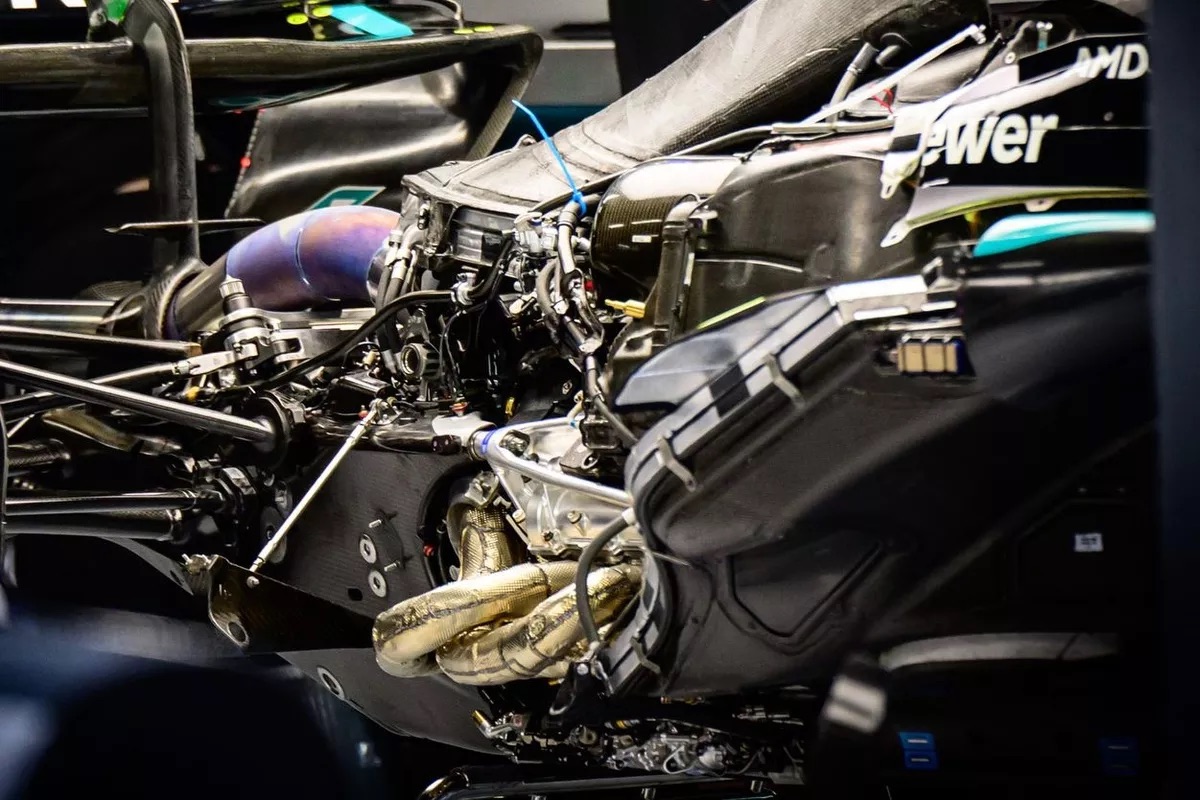
Mercedes, and potentially Red Bull Powertrains, are understood to be at the centre of these concerns. Rival manufacturers, including Ferrari, Audi and Honda, are said to believe that clever design choices could allow the effective compression ratio to increase once the engine reaches normal operating temperatures, even if it remains compliant during FIA checks carried out at room temperature.
The focus of the suspicion lies in the use of advanced materials within the engine architecture. As temperatures rise during operation, certain materials naturally expand. If such expansion were to reduce combustion chamber volume, it could theoretically raise the compression ratio beyond the regulatory limit once the engine is running at speed. Critics argue that this would conflict with the principle of the technical regulations, which state that cars must remain fully compliant at all times throughout a race weekend, not just during pre-event inspections.
These concerns have prompted Ferrari, Audi and Honda to request formal FIA involvement, asking the governing body to clarify whether such interpretations are acceptable or whether further safeguards are required. Although no formal accusation of wrongdoing has been made, the situation has already added tension to an engine formula that is widely regarded as one of the most complex in Formula 1 history.
In response, the FIA has acknowledged that the issue is being actively discussed. A spokesperson for the governing body confirmed that compression ratio limits have been a topic of ongoing dialogue within technical working groups involving all power unit manufacturers.
“The topic has been and continues to be discussed in the technical forums with the PUMs,” the FIA said in a statement. “The introduction of a new limit naturally raises questions about interpretation and compliance. The FIA continuously reviews such matters to ensure fairness and clarity and, if necessary, may consider changes to the regulations or measurement procedures in the future.”
The governing body also reiterated that, under the current rules, the method used to measure compression ratio has not changed, despite the lower limit for 2026. Measurements are still defined under static conditions at ambient temperature, and there is presently no provision for checks to be carried out at elevated operating temperatures.
“The regulations clearly define the maximum compression ratio as well as the method for measuring it,” the FIA added. “It is true that thermal expansion can influence dimensions, but the current rules do not provide for measurements to be carried out at higher temperatures.”
What makes the situation particularly intriguing is the timing. The 2026 engines have yet to complete a single kilometre of competitive running, yet suspicions are already circulating within the paddock. Historically, Formula 1 has seen similar scenarios unfold, where innovative concepts come under scrutiny long before they are publicly revealed. In some cases, knowledge of such ideas has spread through staff movements between teams and manufacturers, a common occurrence in the highly competitive world of F1 engineering.
For now, no rule breach has been established, and neither Mercedes nor Red Bull Powertrains has been accused of violating the regulations. However, the controversy highlights how closely every detail of the 2026 ruleset is being examined, with manufacturers eager to ensure that no rival gains an early advantage through interpretation rather than outright performance.
Ultimately, the responsibility now lies with the FIA to decide whether the existing regulations are sufficient or whether additional clarification or amendments are required. As the countdown to the first 2026 test continues, the compression ratio debate serves as an early reminder that Formula 1’s next era may be shaped as much by regulatory interpretation as by outright speed on the track.