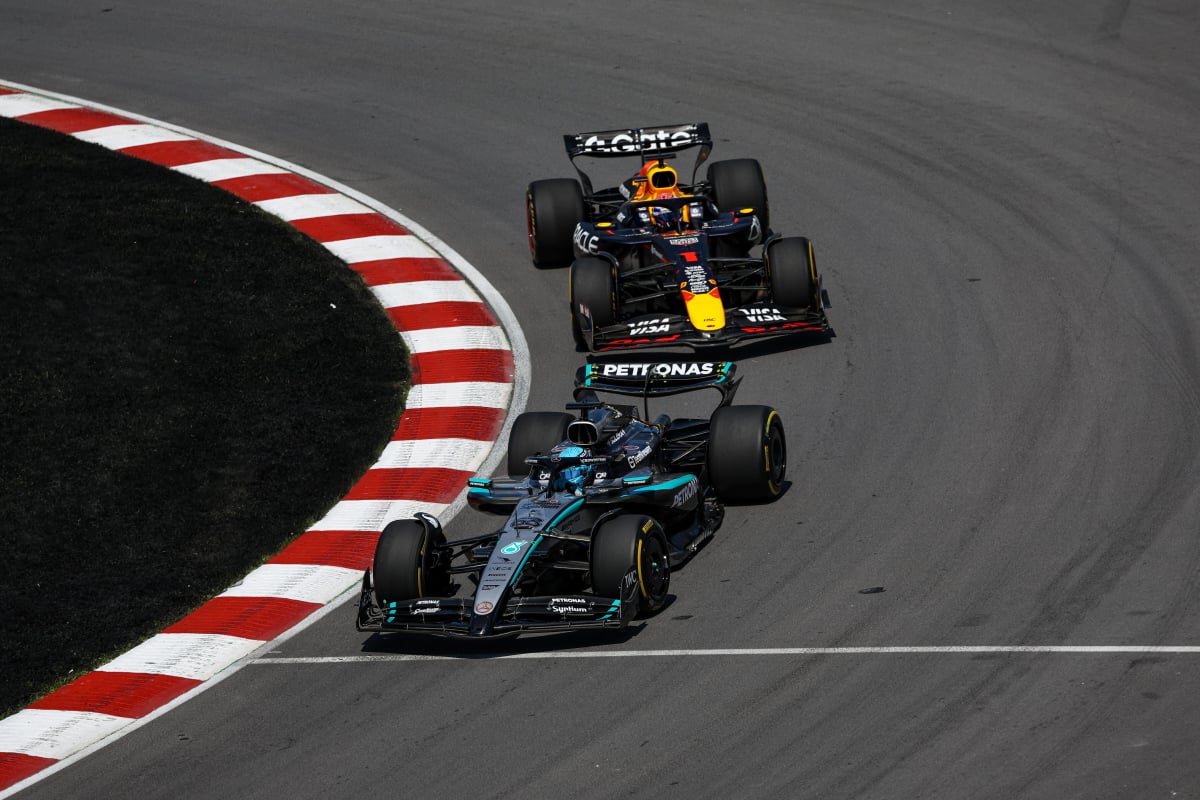
Red Bull chief fires back as Mercedes WAR against…read more
Red Bull Powertrains boss Ben Hodgkinson has pushed back strongly against growing claims that Mercedes are set to dominate Formula 1’s new 2026 engine era, dismissing much of the hype as politically motivated noise rather than hard fact.
As the sport prepares for one of its biggest technical resets in decades, power units are once again at the centre of attention. From 2026, F1 will run on a new hybrid formula with increased electrical output and fully sustainable fuels, prompting intense development races behind the scenes. For Red Bull, the stakes are particularly high: the Milton Keynes outfit will debut its first-ever in-house engine, the DM01, through Red Bull Powertrains.
Unlike established manufacturers such as Mercedes and Ferrari, Red Bull does not have a long legacy of producing its own power units. That reality has led to persistent questions about whether the team can hit the ground running under the new regulations — and whether any early struggles could influence Max Verstappen’s long-term future with the team, despite his contract running until 2028.
Recent paddock rumours have suggested Mercedes may be emerging as the benchmark for 2026, echoing the advantage they famously enjoyed at the start of the turbo-hybrid era in 2014. Those reports have coincided with renewed speculation about Mercedes team principal Toto Wolff’s interest in Verstappen, further fuelling the narrative that the Silver Arrows could soon reclaim the top spot in F1.
However, Hodgkinson believes much of that story has been carefully constructed by Mercedes themselves.
Speaking to the media, the Red Bull Powertrains technical director played down suggestions of a clear Mercedes advantage and questioned the origins of those claims. Using a pointed analogy, Hodgkinson implied that the loudest voices are not necessarily the ones with the strongest product.
“I think a lot of that talk originated from Mercedes themselves,” he said. “My gran used to say, ‘An empty can rattles the loudest.’”
Hodgkinson stopped short of directly accusing Mercedes of exaggeration, but made it clear he sees a strong political element behind the public messaging. According to him, repeated claims of technical superiority can quickly take on a life of their own, even in the absence of concrete evidence.
“There’s been a lot of noise in the press suggesting Mercedes will be the benchmark,” he explained. “A lot of that seems to have started with them. If you repeat a rumour often enough, people begin to treat it as fact, and then they start searching for reasons why it must be true.”
He also suggested that the current state of the driver market could be influencing how teams present themselves publicly. With top-level talent scarce and competition fierce, portraying confidence in future performance can be a powerful recruitment tool.
“The driver market is really tough,” Hodgkinson added. “If you want to attract people, you want to sell the idea that your car — or your engine — is going to be very strong, even if the current performance doesn’t fully support that message.”
Hodgkinson stressed that all teams engage in a degree of political positioning as regulation changes approach, and that external narratives should be viewed through that lens. While Mercedes may be confident, he warned against assuming any outcome before the new cars even hit the track.
For Red Bull, the focus remains firmly on execution rather than speculation. The team has invested heavily in infrastructure, personnel and long-term planning to ensure its power unit project is competitive from day one. Hodgkinson’s comments suggest confidence that Red Bull will not be caught out by the transition — and that the true competitive order of 2026 will only become clear once the lights go out.
Until then, he believes the talk of a Mercedes engine advantage is just that: talk.