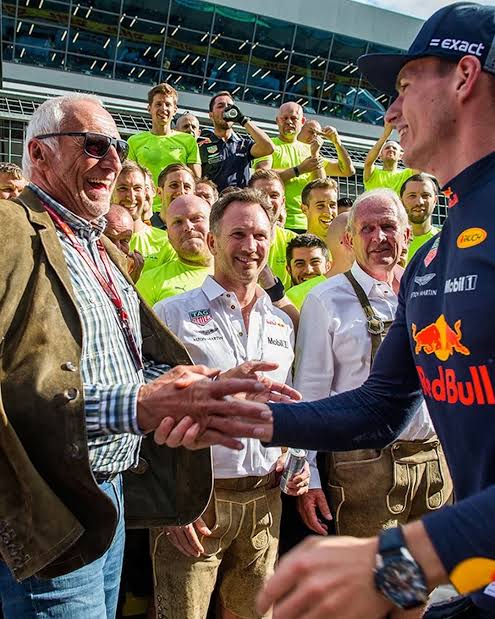
Red Bull Honor Late Founder Dietrich Mateschitz with Powerful 2026 Tribute
Red Bull Racing have paid a deeply emotional tribute to their late founder, Dietrich Mateschitz, as the team enters a bold new chapter in Formula 1 history.
The Milton Keynes-based outfit officially unveiled their 2026 Formula 1 car on Thursday evening at Ford’s headquarters in Detroit, marking a symbolic moment not just for the team, but for the sport itself. The launch showcased a striking new livery — a sleeker, glossier blue combined with brighter detailing — signaling Red Bull’s evolution under the sport’s upcoming regulations.
However, beyond the visual spectacle, it was the announcement of Red Bull’s first-ever in-house power unit that carried the most meaning. The engine has been named DM01, a clear and heartfelt nod to Dietrich Mateschitz, the visionary entrepreneur who founded Red Bull and transformed it into one of the most successful brands in global sport. Mateschitz passed away in 2022 at the age of 78, but his influence remains deeply embedded in the team’s DNA.
The DM01 represents Red Bull’s first step into full power unit production through Red Bull Powertrains, developed in partnership with Ford ahead of the major regulation changes coming in 2026. For the team, the name is more than branding — it is a tribute to the man whose ambition and belief laid the foundation for everything Red Bull has achieved in Formula 1.
The Man Behind the Bull
Dietrich Mateschitz was an Austrian businessman and the co-founder of Red Bull GmbH. His journey toward building the global energy drink empire began in 1982 during a business trip to Hong Kong. There, he discovered a locally popular energy drink known as Krating Daeng, created by Thai brothers Chaleo and Chalerm Yoovidhya.
Recognizing its potential, Mateschitz partnered with Chaleo Yoovidhya to adapt and market the drink internationally. The name was translated into “Red Bull” for European markets, and the brand quickly grew into a worldwide phenomenon. But Mateschitz’s ambitions extended far beyond beverages.
A passionate motorsport fan, he believed strongly in aligning Red Bull with adrenaline-fueled activities and extreme sports. This philosophy naturally led him toward Formula 1, where he began by sponsoring drivers such as Gerhard Berger and Karl Wendlinger, later deepening his involvement by supporting the Mercedes-Sauber project.
Building a Formula 1 Empire
Mateschitz’s most defining move in Formula 1 came in 2004 when he purchased the struggling Jaguar Racing team from Ford. That acquisition marked the birth of Red Bull Racing. One year later, he bought Minardi, turning it into Toro Rosso — a junior team designed to nurture young talent. The outfit has since evolved through several identities, most recently becoming Racing Bulls.
What followed was one of the most remarkable success stories in modern F1. Over two decades, Red Bull Racing rose from midfield newcomers to dominant champions, claiming six constructors’ championships and eight drivers’ titles. Icons such as Sebastian Vettel and Max Verstappen became world champions under the Red Bull banner, fulfilling Mateschitz’s vision of challenging — and beating — the sport’s traditional powerhouses.
Yet the team now finds itself in a period of transformation. Many of the key figures originally installed by Mateschitz are no longer part of the organization. Christian Horner, Adrian Newey, and Helmut Marko have all moved on, ushering in a new leadership era led by Laurent Mekies.
A Fitting Tribute at a Defining Moment
As Red Bull prepare for one of the most demanding phases in their history — navigating new technical regulations, producing their own power units, and reshaping team leadership — the timing of the DM01 tribute feels especially poignant.
Returning to a close partnership with Ford, the same company from which Red Bull purchased Jaguar two decades ago, adds another layer of symbolism. The Detroit launch represented both a homecoming and a leap into uncharted territory.
In naming their first in-house engine after Dietrich Mateschitz, Red Bull have ensured that his legacy will live on at the very heart of the car. As the team looks toward an uncertain but ambitious future, the DM01 stands as a reminder that every innovation, victory, and challenge ahead is built on the vision of the man who dared to dream big — and made Red Bull a Formula 1 powerhouse.