Red Bull Ends Ties with Two Junior Drivers as 2026 Season Looms
Red Bull Racing has confirmed the departure of two drivers from its renowned junior development programme ahead of the 2026 motorsport season, signaling another significant reshuffle in its pipeline of emerging talent. The Red Bull Junior Team, famous for nurturing some of Formula 1’s biggest names, has long been a launchpad for young drivers aspiring to reach the pinnacle of motorsport. Alumni of the programme include world champions and prominent F1 stars such as Max Verstappen, Sebastian Vettel, Daniel Ricciardo, and Carlos Sainz. Over the years, it has been widely praised for identifying raw talent and giving them the necessary support to climb through the ranks of junior racing series.
Despite its track record of success, the programme remains highly competitive and selective. In recent years, Red Bull has continued to maintain a broad presence across feeder series, backing promising drivers in Formula 2, Formula 3, and other development categories. The aim has always been to cultivate potential F1 stars while ensuring the programme’s roster consists of drivers capable of achieving consistent results. However, as the 2026 season approaches, it has been announced that two drivers, Oliver Goethe and Tim Tramnitz, will no longer be part of the junior programme.
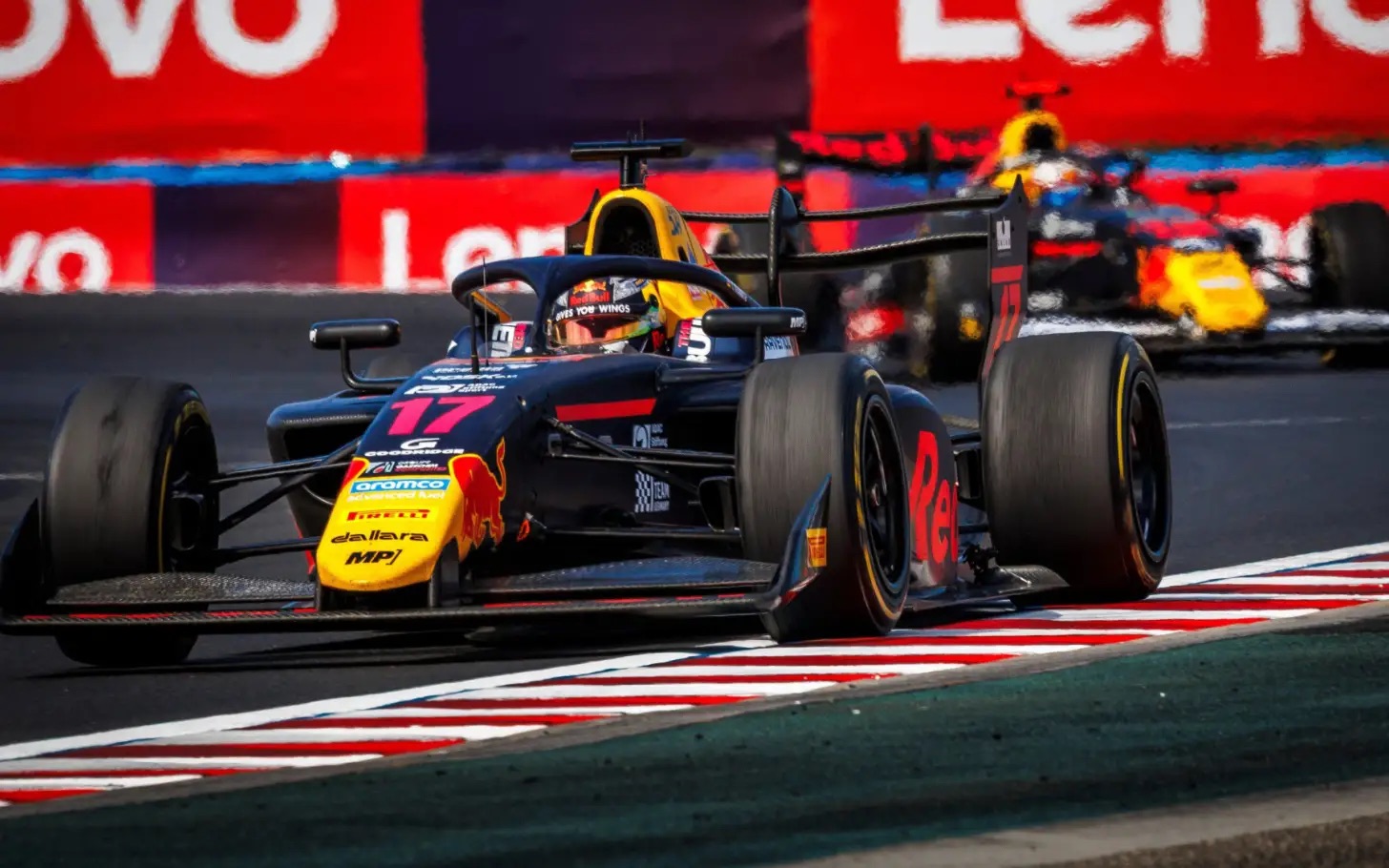
Oliver Goethe, a German driver who spent the 2025 season in Formula 2, was one of the departing talents. Goethe competed for MP Motorsport alongside former Red Bull junior Richard Verschoor. Although he gained valuable experience throughout the season, Goethe struggled to produce results consistently, ultimately finishing 15th in the championship standings. This outcome fell short of the expectations Red Bull typically sets for its juniors, highlighting the harsh realities of remaining in one of motorsport’s most competitive development pipelines. While his departure from the programme is a setback, Goethe is set to remain active in Formula 2, continuing with MP Motorsport for the 2026 season, offering him an opportunity to regain momentum and prove his capabilities on track.
The other driver leaving Red Bull’s junior ranks is Tim Tramnitz, another German talent who has been closely watched for his performances in Formula 3. Tramnitz has spent the last two seasons competing at this level and finished fourth in the 2025 championship standings, a result that demonstrated his potential but ultimately was not enough to meet Red Bull’s criteria for continuation. Reports indicate that a key condition for remaining in the Red Bull programme was securing a competitive seat for the upcoming season. Unfortunately, Tramnitz was unable to finalize such an arrangement, which ultimately led to his exit from the development programme. His departure underscores the programme’s strict standards and the intense pressure placed on young drivers to not only perform but also secure optimal team positions in junior categories.
Beyond Goethe and Tramnitz, Red Bull has also parted ways with other junior talents competing in lower-tier categories. Jules Cantara and Christopher Feghali are among those who will no longer be associated with the programme. These changes reflect Red Bull’s ongoing strategy of refining its development roster to focus on drivers who demonstrate both immediate performance and long-term potential for Formula 1 progression.
The departures follow a series of separations from the programme in previous months. Notably, Spanish driver Pepe Marti also ended his partnership with Red Bull earlier in 2025. Marti had initially hoped to transition into another F1 setup but ultimately opted for a full-time seat in Formula E, highlighting the variety of career paths available to talented young drivers even after leaving a top-tier development programme.
Red Bull’s decision to make these changes ahead of the 2026 season emphasizes the programme’s competitive nature and high expectations. While the exits may be disappointing for the drivers involved, they also illustrate the unforgiving environment of motorsport, where only the most consistent and successful performers can remain within elite development systems. For Red Bull, maintaining a junior programme populated with top-performing talent is crucial not only for nurturing the next generation of F1 drivers but also for sustaining the team’s long-term competitive edge at the highest level of motorsport.
As the 2026 season approaches, attention will now shift to which emerging drivers will step into the Red Bull junior programme’s vacant positions and how the remaining talents will fare as they strive for Formula 1 success. For Goethe, Tramnitz, and others leaving the programme, the coming months represent both a challenge and an opportunity—to prove themselves on track, secure strong results, and potentially return to the radar of F1 teams in the future.