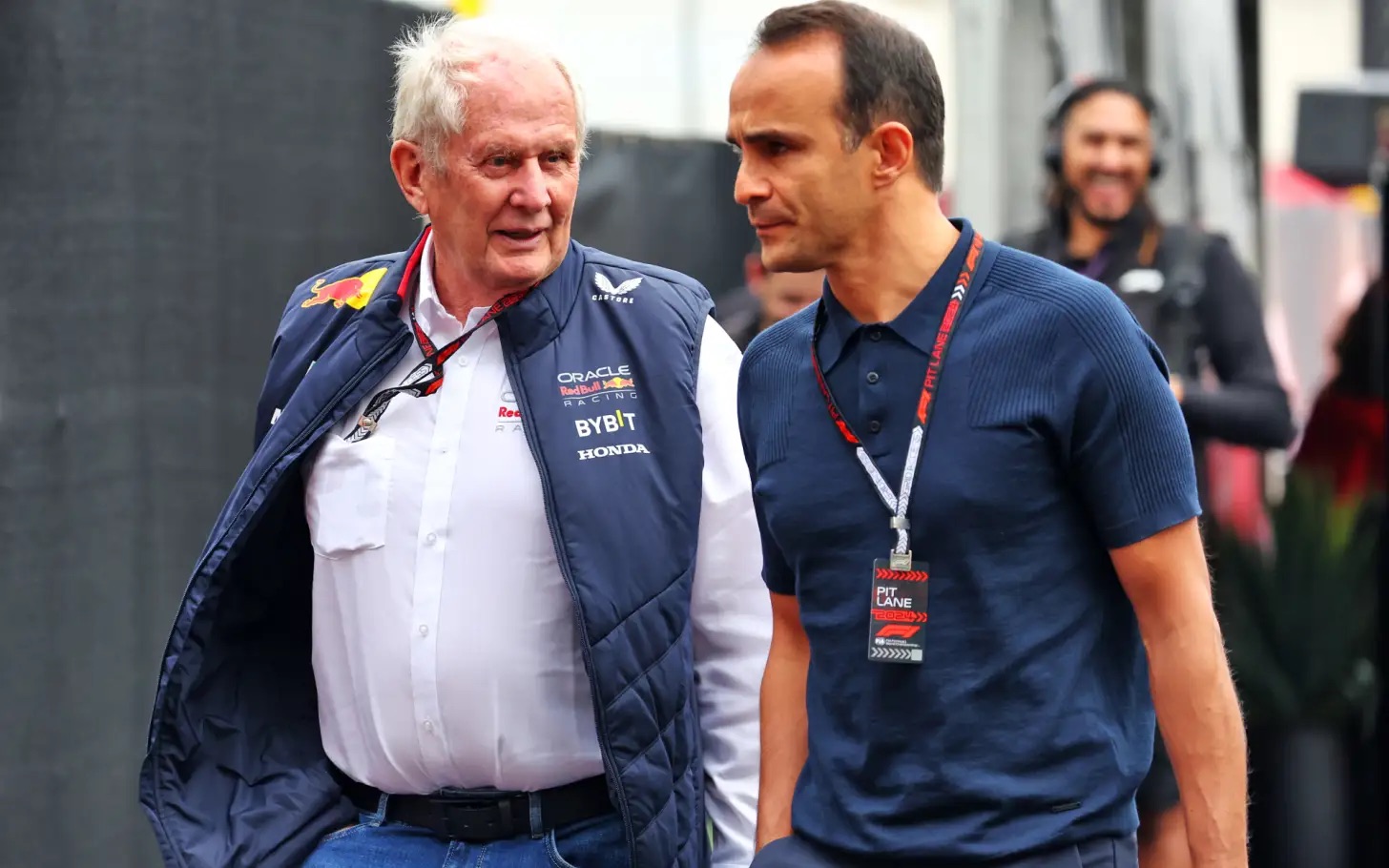
Red Bull Push Back Against Helmut Marko’s Explosive Exit Comments
Red Bull have firmly responded to the sharp criticism made by former motorsport adviser Helmut Marko following his departure from the Formula 1 team, with senior company figures moving to distance the organisation from the Austrian’s remarks.
Oliver Mintzlaff, managing director of Red Bull GmbH – the parent company of Red Bull Racing – has spoken publicly about Marko’s comments, which were made shortly after the 82-year-old ended his long-standing association with the Milton Keynes outfit at the conclusion of the 2025 season.
Marko’s exit brought an end to a remarkable chapter in Red Bull’s history. Over more than two decades, he played a central role in shaping the team’s identity, most notably through his leadership of the junior driver programme. Under his guidance, Red Bull helped guide 17 drivers into Formula 1, a number set to rise to 18 with the arrival of highly rated prospect Arvid Lindblad. Among those graduates were four-time world champions Sebastian Vettel and Max Verstappen, two drivers who became synonymous with Red Bull’s rise to dominance.
Since Red Bull acquired the Jaguar Formula 1 team ahead of the 2005 season, Marko was widely regarded as one of the architects of its transformation into a powerhouse, winning six constructors’ championships and multiple drivers’ titles along the way.
However, despite his legacy, Marko did not leave quietly. In the aftermath of his departure, he made a series of blunt remarks that drew widespread attention in the paddock. These included criticism surrounding the circumstances of his exit and a pointed attack on former team principal Christian Horner, who was dismissed from his role shortly after the British Grand Prix in July.
Mintzlaff was quick to stress that those comments reflect Marko’s personal views, not the position of Red Bull as a company. Speaking to De Telegraaf, he made it clear that the organisation does not share the same perspective.
“Those words about Christian are Helmut’s own,” Mintzlaff said. “I can’t say anything negative about Christian, simply because he meant a great deal to Red Bull.”
While Mintzlaff acknowledged Horner’s importance to the team’s success, he also emphasised that difficult decisions are sometimes unavoidable in elite sport. According to him, Red Bull felt the time had come for a leadership change.
“There always comes a moment when things are no longer going as they should,” he explained. “Then, as a company, you have to decide whether you give someone more time or whether it’s time for new leadership. We believed a change was necessary.”
Marko, for his part, suggested that Red Bull had changed significantly in recent years, implying that the environment was no longer what it once was. Mintzlaff, however, strongly disagreed with that assessment.
“I don’t share Helmut’s view,” he said. “Of course, things change within an organisation – that’s only natural. And perhaps Dr Marko himself has changed over the years too.”
Mintzlaff argued that it would be unrealistic to expect a global sporting organisation to remain exactly the same over such a long period, particularly one operating at the cutting edge of Formula 1.
“It’s completely normal that not everything is identical to how it was five years ago,” he continued. “Christian and Helmut worked together exceptionally well for many years, right from the beginning in 2005. That’s more than twenty years side by side.”
He also highlighted how rare such long-term stability at the top is in modern sport, suggesting that Red Bull’s situation was more the exception than the rule.
“Try to name many major sports organisations where the same leadership group stays in place for that length of time,” Mintzlaff said. “You could choose to look at it negatively and say they’re both gone now. But I see it differently.”
From Mintzlaff’s perspective, the real story is not one of decline or dysfunction, but of sustained success followed by an inevitable period of renewal.
“It’s actually unique that they remained together for so long and achieved so much,” he added. “At some point, though, change can be necessary. Sometimes you need to shake things up.”
As Red Bull prepare for a new era both on and off the track, the message from the company’s leadership is clear: while Marko’s contributions will not be forgotten, his recent comments do not define the team’s future. Instead, Red Bull appear focused on moving forward, embracing change, and building on the foundations laid during one of the most successful periods in Formula 1 history.