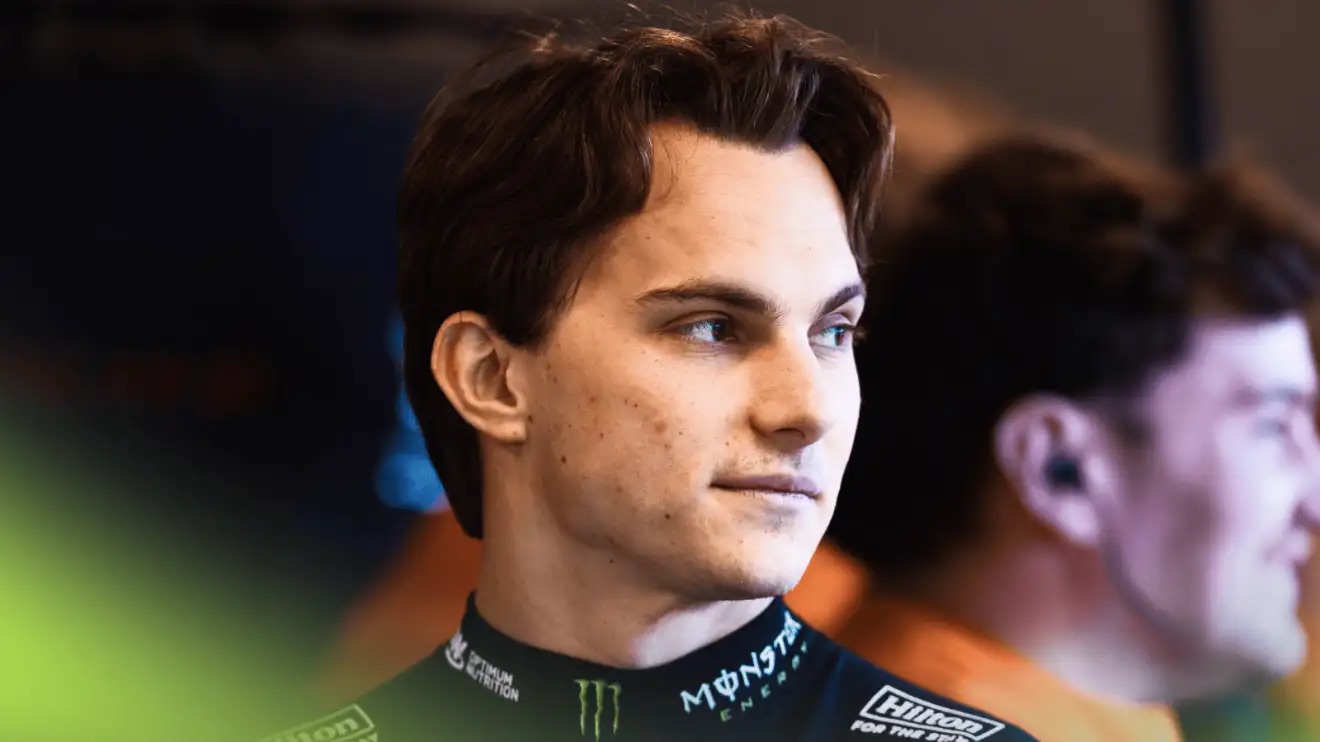
As the 2025 Formula 1 season heads toward its dramatic finish in Abu Dhabi, one notable update has emerged regarding Oscar Piastri. For the season-final Grand Prix’s first practice session (FP1), Piastri will be absent — and instead, Pato O’Ward, the reserve driver for McLaren F1 Team, will take the wheel of Piastri’s car.
Why Piastri Has to Sit Out FP1
The reason for this absence is rooted in regulatory obligations. According to current FIA / Formula 1 rules, teams must allocate a certain number of FP1 sessions during the season to “rookie drivers.” A “rookie,” for these purposes, is defined as a driver who has participated in no more than two Grands Prix up to that point.
In the case of McLaren, they are required to run a rookie in four FP1 sessions over the course of the 2025 season. Up to now, two of those sessions have already been used — both by the team’s lead driver Lando Norris, who sat out his FP1 appearances at the Austrian and Mexican Grands Prix.
Piastri himself had already relinquished his FP1 seat once this season — which happened at the Monza Grand Prix.
Because of that history, with Abu Dhabi being the final race of the season and the last remaining slot for a rookie FP1, Piastri is once more obliged to give up his car for FP1 and let a rookie or reserve driver take over. That role, this time, falls to Pato O’Ward.
Hence, despite being one of the drivers still in contention for the 2025 title, Piastri will head into the Abu Dhabi weekend with one less hour of crucial on-track practice time than his rivals.
The Stakes: Title Fight Implications
The absence from FP1 comes at a sensitive time. Piastri remains in the mix for the 2025 Drivers’ Championship, locked in a three-way battle with Norris and Max Verstappen.
At this late stage of the season, every minute on track can matter — practice sessions help drivers fine-tune their cars’ setups, get acclimated to track conditions, and build confidence heading into qualifying and the race. Missing one of those sessions could impose a disadvantage, particularly when others (Norris and Verstappen) get the full benefit.
At the same time, the timing of the season finale in Abu Dhabi adds its own complications. The final race will determine the championship — and under those high pressure circumstances, any missing practice time can intensify the challenge. Piastri will need to rely partly on previous experience, simulator work, and feedback from O’Ward’s session in FP1 to make up for the lost track time.
McLaren’s Plan and O’Ward’s Role
McLaren have confirmed that O’Ward is slated to take over the McLaren car during FP1.
This is not a random choice. O’Ward has long served as McLaren’s test and reserve driver. Over the course of his time with the team, he has built familiarity with F1 machinery, and has grown to understand how the car responds. In his own words, he feels he now “knows what the car likes,” which suggests McLaren believe he can still provide valid and useful feedback even if he isn’t part of the title-fight personally.
Nevertheless, O’Ward will only be in the car for an hour (FP1), not a full weekend — meaning his ability to find the optimal setup is inherently limited. This increases the importance of Piastri being able to extract as much useful data and information as possible from that brief session (via debriefs, telemetry, simulator data) ahead of qualifying and the race.
Context: The 2025 Season and Title Landscape
The timing of this regulatory requirement could hardly be worse for Piastri. Through the 2025 season, he has been one of the strongest drivers in the field — but recent turbulence has shaken his championship bid. As the season drew on, his form dipped while Lando Norris began to surge, and, at the same time, Verstappen found renewed speed and consistency.
Heading into Abu Dhabi, the championship standings are tight, and every decision, every fraction of a second, could alter the outcome. The requirement to sit out FP1 — one hour less practice, one less chance to perfect the car — therefore becomes a significant factor in what is shaping up to be a tense finale.
That said, Piastri does enjoy one advantage: familiarity. The season-ending race is held at the Yas Marina Circuit, which is a track he knows reasonably well (having driven there in junior categories or pre-season tests in previous seasons). That prior experience might mitigate some of the impact of missing FP1.
Still, in a championship fight where margins are razor-thin and every driver is firing on full cylinders, that lost hour of practice could make a difference — even if a small one.
Broader Implications — Fairness, Rules, and Strategy
This situation brings into focus an intriguing tension at the heart of modern Formula 1: the balance between regulatory fairness (giving rookies track time) and competitive fairness (not compromising a top driver’s title bid). The rule mandating rookie FP1 appearances is meant to help develop new talent, ensure teams invest in rookie drivers, and give young drivers valuable seat time in real F1 machinery.
But when that rule intersects with a title fight — especially at the final race — it inevitably leads to awkward trade-offs. For a team like McLaren, managing that trade-off means deciding which driver misses sessions and when; in this case, the decision falls on Piastri.
Critics might argue that such a rule — while well-intentioned — undermines sporting fairness when it affects championship contenders. Meanwhile, proponents might insist that the long-term development of the sport (bringing up new talent) must sometimes take precedence over short-term championship interests.
From McLaren’s perspective, the challenge then becomes about damage control — ensuring the loss of practice time doesn’t translate into lost performance. Putting a capable driver like O’Ward in the car for FP1 helps somewhat, but cannot fully replace having their lead driver behind the wheel.
What It Means for Piastri’s Title Hopes
For Oscar Piastri, this is — to say the least — a complication at a critical moment. As one of the three drivers still alive in the title hunt, he now embarks on the final Grand Prix with a built-in disadvantage compared to his rivals.
He must rely on several mitigating factors: his past experience at Yas Marina, how well the reserve driver’s FP1 session goes, how effectively he and the team can convert O’Ward’s feedback into setup decisions, and — perhaps most importantly — his own ability to adapt quickly once he is back in the car for qualifying and the race.
If things go badly — if the car ends up suboptimal, or if the lack of practice unsettles him even slightly — it could cost him tenths of a second when it matters most. In a three-way title fight, tenths are everything.
On the other hand, if Piastri — and McLaren — manage the situation well, and extract maximum value despite the handicap, the disadvantage could be minimized. It might not even be decisive.
Ultimately, the season finale will reveal just how much this rule-enforced sit-out affects the balance at the top of the championship — and whether Piastri can still contend for the crown on reduced fuel time.
In short: because of a regulation forcing each team to use a rookie driver in four FP1 sessions a season, McLaren must have a rookie or reserve driver sit FP1 once more. As a result, Oscar Piastri — one of the championship contenders — will miss the first practice session at the Abu Dhabi Grand Prix. He’ll be replaced by Pato O’Ward for that hour. The timing couldn’t be worse: with the title on the line, practice time is precious, and Piastri may now face a disadvantage compared to his rivals. Whether that disadvantage proves critical will depend on how well McLaren manages the weekend and how quickly Piastri adapts once back in the car.