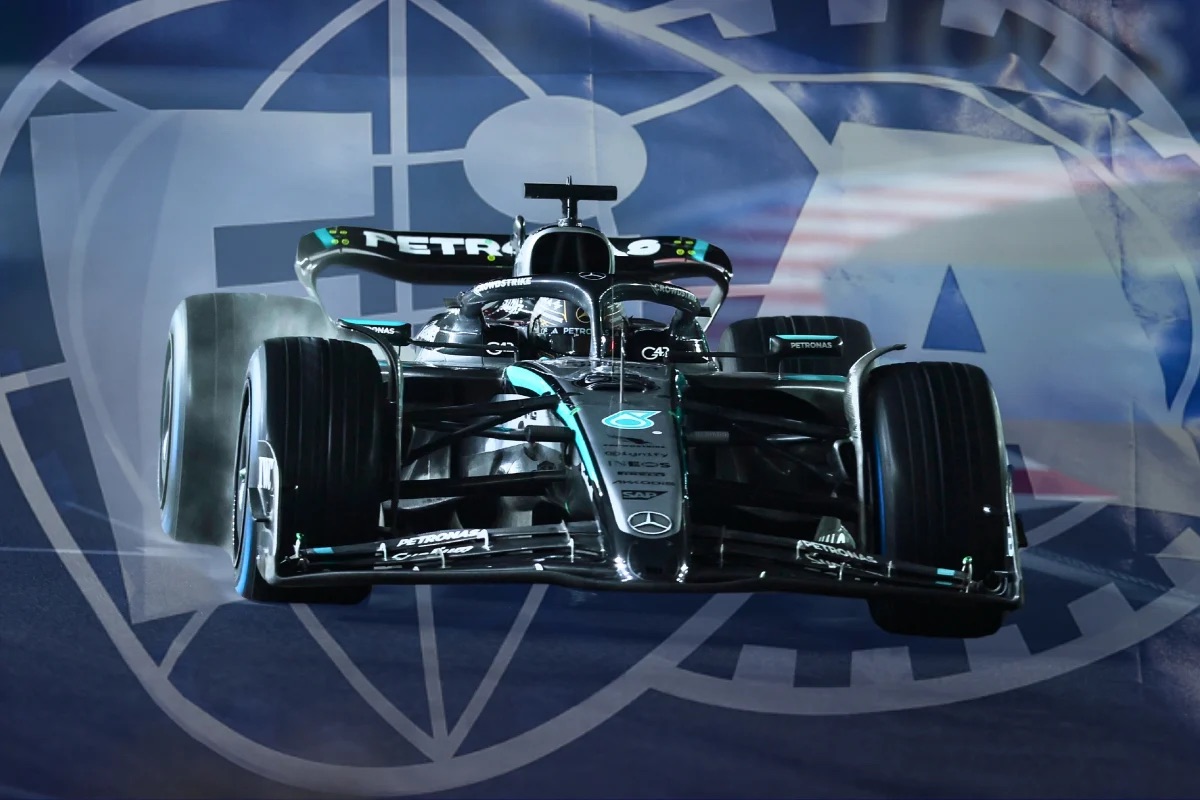
In the lead-up to the 2026 Formula 1 season, the sport’s governing body — the Fédération Internationale de l’Automobile (FIA) — finds itself at the centre of a growing controversy involving significant regulation changes and what many see as a loophole exploited by one of the sport’s most successful teams. As Formula 1 teams prepare for the first race in Melbourne next month, officials are scrambling to settle disputes arising from new engine rules, specifically around how engine compression is measured and enforced — a technical issue that has sparked fierce debate among competitors.
What’s the Engine Rule Controversy About?
For the 2026 season, the FIA introduced major revisions to the power unit regulations — changes that are intended to make the sport more competitive and cost-controlled under the new cost cap. One of the critical changes was lowering the permitted geometric compression ratio for combustion engines from 18:1 to 16:1. Compression ratio is a fundamental aspect of an internal-combustion engine’s design, and controlling it at lower levels typically reduces power output — making it harder for teams to produce extra horsepower through conventional means.
However, what has triggered uproar among rival manufacturers — including Ferrari, Audi, and Honda — is how Mercedes has interpreted the rule. Mercedes has developed a way for its 2026 power unit to technically comply with the letter of the compression limit when the engine is cold (at ambient temperature), which is when the FIA conducts official checks. Once the engine is running and reaches operating temperatures, components expand slightly, and the effective compression ratio rises to around 18:1 — effectively restoring it to the previous, higher performance level.
Critics argue this gives Mercedes a significant competitive advantage, potentially worth 10-15 extra horsepower — roughly equivalent to a larger aerodynamic upgrade or a fraction of a second per lap. For teams still developing their own 2026 engines, that kind of edge could have major consequences for race performance and championship aspirations.
Competitors Demand Action
As the controversy has unfolded, rival manufacturers have demanded that the FIA act quickly to close the loophole. According to insiders and technical commentators, Ferrari, Honda, and Audi have made formal complaints and proposals to modify the regulatory wording or testing regime so that compression measurements would also account for conditions when the engine is hot — the way it actually runs on track. This would effectively ban Mercedes’ interpretation by making the higher compression ratio unacceptable under active conditions.
Some reports even suggest that Red Bull — which initially appeared neutral — has shifted its stance and might now support a tighter interpretation of the rules alongside Ferrari and the other manufacturers. The Power Unit Advisory Committee (PUAC), which includes representatives from all engine suppliers, has been discussing possible regulatory tweaks, including alternative measurement methods and checking procedures.
The underlying fear among manufacturers isn’t just about one team’s advantage this year, but about setting a precedent. If one team can find a clever technical interpretation that gives it extra performance while technically complying with tests, others worry this could lead to future “loophole wars,” where ingenious but controversial interpretations of the technical regulations decide more races than on-track performance.
FIA’s Position
The FIA has already weighed in on this debate. In a statement released earlier in the offseason, officials acknowledged that the Mercedes power unit complies with the existing dictionary of tests — specifically because the rules currently mandate measurements at ambient temperature. The FIA’s single-seater director, Nikolas Tombazis, has been quoted saying that the governing body wants to resolve such issues “before the start of the season” and that they want racing to be decided on track, not via legal challenges or courtroom debates.
Even so, the statement included a notable caveat: the FIA said that if necessary, adjustments to the regulations or measurement procedures might be considered in the future. This has given competitors hope that a mid-season ruling or pre-season clarification could emerge to limit or eliminate the perceived advantage.
Implications and Reactions
The situation has divided the paddock. Teams that supply engines from Mercedes (like McLaren, Alpine, and Williams) defend the system’s legality, pointing out that it currently passes all official tests and therefore meets the technical regulations. They argue that Mercedes has simply interpreted a new rule in a clever way — which should be rewarded, not punished.
On the other hand, competitors and observers argue that continuing to allow the loophole unchallenged could disproportionately benefit one supplier. Some technical analysts warn that banning Mercedes’ solution late on — after homologation deadlines — could be incredibly difficult and legally complex. It might require proving that Mercedes is in breach of the spirit of the rule, not just its letter, a much harder standard to enforce.
There’s also concern among some team principals that opening up votes on altering approved technical regulations sets a dangerous precedent. They argue that if the sport approves changes simply because some teams don’t like a particular interpretation, it may lead to constant post-approval rule changes and undermine technical certainty.
What Happens Next
With the Australian Grand Prix approaching rapidly, the FIA wants clarity before the season begins so that all teams know where they stand and can focus on racing. The governing body has signalled it is working on solutions — whether that results in a ban of the current interpretation, revised measurement regimes, or a compromise change that still respects the original technical intent of the rule.
Whether the Mercedes engine trick will actually be outlawed before the first race remains unclear, but what is certain is that this debate has highlighted the increasing complexity of Formula 1’s technical regulations and the intense political battles that now play out behind the scenes. If the FIA does make a change, it will send a strong signal about how strictly future loopholes and interpretations will be policed — and potentially reshape how power units are developed for the rest of the hybrid era.