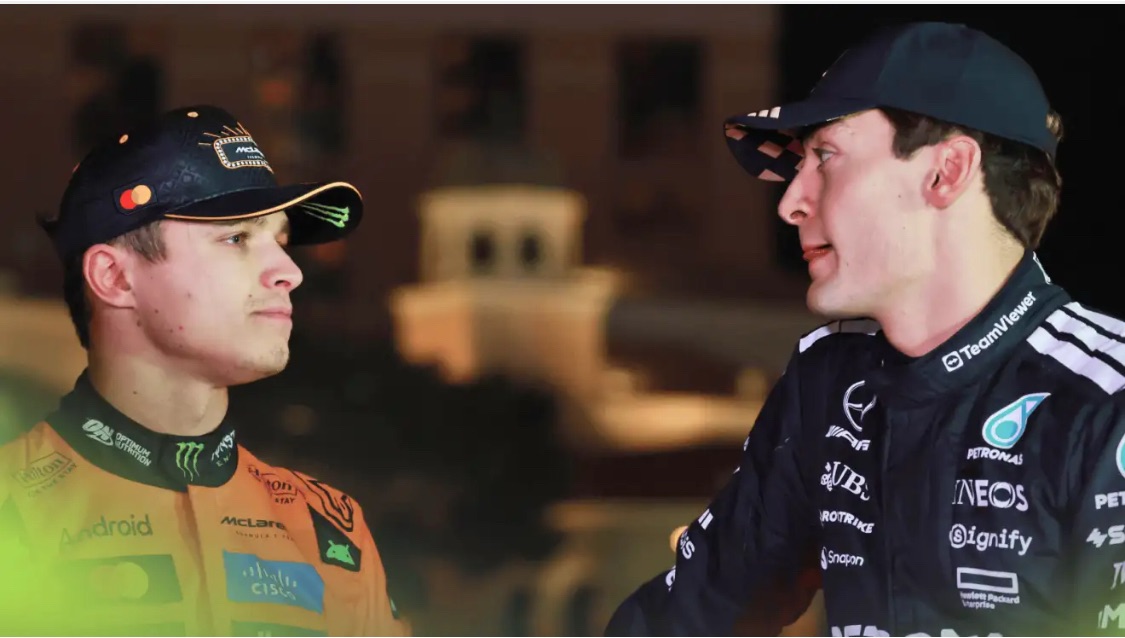
“I’m smelling a lot of wood” — George Russell’s DSQ Alert at the 2025 Qatar Grand Prix
As the drivers rolled into the paddock for the 2025 Qatar Grand Prix at the Lusail International Circuit, one of the most interesting — and nerve-wracking — moments came not from a qualifying lap or a last-corner overtake, but from an unexpected comment over the team radio by Mercedes’ George Russell. During the first practice session (FP1), Russell reported to the garage that he could “smell a lot of wood” out on track.
That seemingly simple phrase carried far more weight than many casual viewers realized. In modern Formula 1, “wood” refers not to anything natural around the track, but to the wooden plank — or skid block — underneath the car. With the championship entering its decisive final stretch and scrutiny around technical compliance at an all-time high, Russell’s remark sent immediate ripples through the entire Mercedes garage.
The tension came largely from the recent chaos at the Las Vegas Grand Prix, where both McLaren drivers were disqualified after the race for excessive plank wear. Their exclusion flipped the race results upside down and dramatically reshaped the title battle. As a result, every team arrived in Qatar hyper-sensitive to anything that might indicate abnormal wear or potential breaches of the technical regulations.
In that context, Russell’s radio call was no joke — it was a survival tactic.
Why “Wood” Means Trouble in Formula 1
To anyone unfamiliar with the technical side of F1, the idea that a driver could smell wood may seem odd. But the plank under each car, made from a dense wood-like composite, plays a critical role in the sport’s regulatory framework.
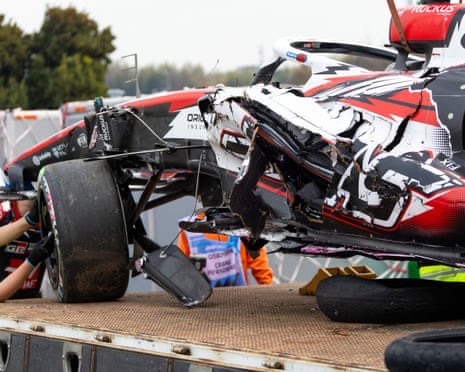
FIA rules dictate exactly how much this plank is allowed to wear down during a session or race. If it wears even slightly beyond the permitted limit, the car is deemed illegal — regardless of whether the team gained performance from it or not. This is why the McLaren Las Vegas disqualifications were so dramatic: both cars were found in breach of the minimum thickness rule after the race.
The McLaren team explained that their cars suffered from excessive porpoising — violent vertical bouncing — due to the unique layout and bumps of the Las Vegas street circuit. They insisted it wasn’t due to setup trickery or a deliberate attempt to run the car lower. Still, according to FIA rules, intent doesn’t matter: measurements do.
This is why Russell’s “smelling wood” comment immediately raised alarms. The sensation might suggest that the car was bottoming out too aggressively, potentially scraping the plank. With the FIA’s heightened vigilance after the McLaren incident, this was something Mercedes could not afford to gamble with.
FP1 at Qatar: A High-Stakes Warm-Up
The Qatar weekend followed a Sprint format, meaning teams had just a single practice session before going straight into competitive running. With only one hour to gather data, adjust setups, and diagnose any issues, FP1 was more important than usual.
George Russell started the session strongly on the hard tyres, posting competitive times early on. However, as the field switched to softer tyres and the track evolved, he eventually slipped down the timing sheet, ending the session in 14th place — nearly a full second behind the fastest time set by Oscar Piastri.
Despite the drop in position, Russell’s pace wasn’t the main storyline — his radio call was. Even though the car felt good performance-wise, his sensitivity to the smell of burning wood-like material suggested bottoming-out concerns. That kind of information is crucial during a Sprint weekend, where one wrong setup choice can cascade into a weekend-long problem.
For Mercedes, the priorities became clear: adjust ride height, evaluate wear patterns, and ensure compliance before competitive laps began.
After Las Vegas, Everyone Is on Edge
Russell’s cautious tone reflects a broader concern shared across the grid. The double disqualification of Lando Norris and Oscar Piastri in Las Vegas rattled every team. It served as a harsh reminder that, no matter how fast a car runs, any violation of the technical rulebook — even unintentional — can erase hours of brilliance on track.
Teams typically set their ride heights and suspension systems very aggressively to maximize aero performance. The lower the car, the more downforce it produces. But this also increases the risk of the plank scraping against the asphalt.
After Las Vegas, teams have been forced to rethink how close they want to run to the limit. One millimeter too low could lead to a catastrophic penalty. As a result, drivers have been encouraged to report even the slightest signs of unusual scraping, vibration, or — in Russell’s case — the smell of burning material.
Russell’s radio message illustrates how much things have changed. What once would have been dismissed as an odd trackside smell has now become a potential warning sign capable of altering a race strategy or even a season finale.
What This Means for the 2025 Championship Battle
The title fight heading into Qatar is fierce, with Oscar Piastri, Lando Norris, and Max Verstappen all still mathematically in contention. McLaren’s disaster in Las Vegas leveled the playing field again, giving Red Bull and Mercedes renewed hope.
For Mercedes, ensuring that both Russell and Kimi Antonelli stay penalty-free is essential. Even if they don’t have the fastest car this weekend, they can’t afford unnecessary setbacks — especially when the FIA is watching plank wear more closely than ever.
If Russell had not reported the wood smell, and if it had turned out that the plank was wearing too aggressively, it could have meant disaster later in the weekend. His attention to detail may well save the team from the kind of post-session heartbreak experienced by McLaren in Las Vegas.
Conclusion: A Championship Decided by Details
In Formula 1, fans often see the glamour, the speed, and the aggressive wheel-to-wheel battles. But just beneath that surface lies a delicate world where millimeters decide legality, and compliance can be as important as raw pace.
George Russell’s comment — “I’m smelling a lot of wood” — captured that reality perfectly. It wasn’t just a curious observation. It was a warning. A sign of intelligence, awareness, and maturity under pressure.
As the 2025 season nears its climax, such moments could define championships. Whether Russell’s caution pays off remains to be seen — but one thing is certain: in a sport governed by precision, the smallest hint of trouble can shape the biggest outcomes.