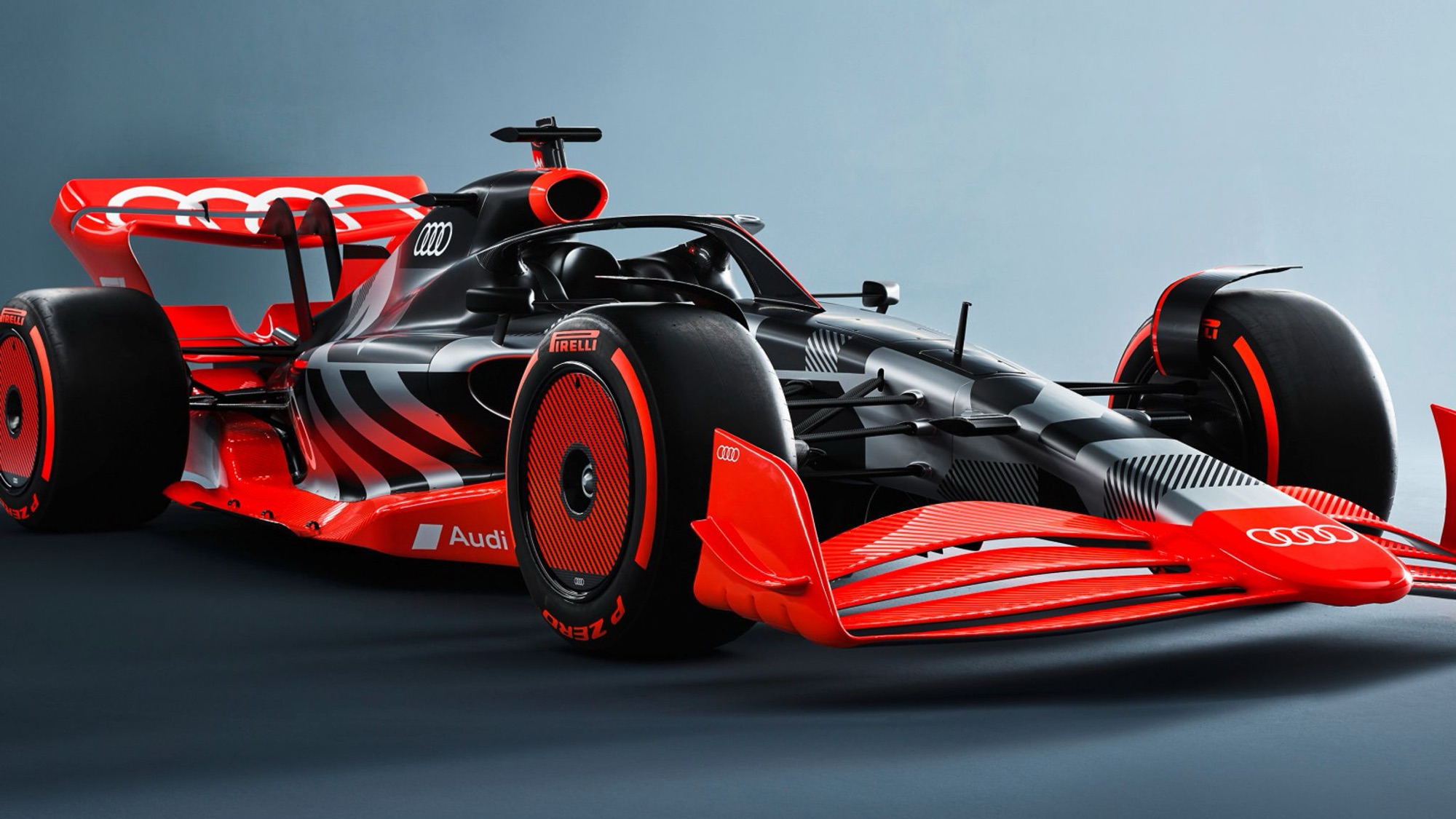
Audi has taken a groundbreaking step in its Formula 1 journey by becoming the first team to put a 2026-spec car on track. On Friday, January 9, 2026, the newly rebranded outfit held a filming day at the Circuit de Barcelona-Catalunya, marking the initial on‑track outing for their 2026 challenger — the Audi R26. This momentous occasion not only represents Audi’s first laps in Formula 1 machinery since assuming control of the former Sauber program, but also a significant milestone ahead of the upcoming season under radically updated technical regulations.
The filming day in Barcelona was undertaken under the sport’s rules that allow teams to run a limited number of kilometres before the official winter testing period begins. Although not a competitive test in the conventional sense, such days are highly useful for teams to perform basic shakedown runs, gather early data on reliability, and begin to integrate the many complex systems on a modern Formula 1 car. For Audi, this occasion was especially notable because it marked the first time its 2026-design car had been driven outside the factory environment.
This track outing comes against the backdrop of major changes to the sport’s technical framework for the 2026 season. The new set of regulations ushers in a new era of Formula 1, with fundamental revisions to aerodynamics, power units, tyres, and chassis design — all aimed at improving racing quality, sustainability, and long‑term competitiveness. Under these rules, teams have had to design both their chassis and engine from scratch, meaning Audi’s accomplishment of getting a complete car running on track ahead of rivals is a meaningful achievement in itself.
From Sauber to a Works Team
Audi’s presence in Formula 1 this year represents a transformative chapter for the Swiss team formerly known as Sauber. The company completed its acquisition and transition of the outfit into a full works operation, branded as the Audi Revolut F1 Team. Unlike the Sauber era, when the team relied on customer power units supplied by Ferrari, Audi will now produce its own bespoke engine as part of its integrated approach to Formula 1 competition. This step makes Audi one of only a handful of manufacturers constructing both their chassis and powertrain, underscoring the scale of the challenge they are embracing.
The Barcelona session saw experienced driver Nico Hülkenberg and rising star Gabriel Bortoleto share driving duties behind the wheel of the R26. Both pilots have a vital role in the team’s development phase: Hülkenberg brings a wealth of experience and technical feedback capability, while Bortoleto, still in the earlier stages of his grand prix career, represents the youthful talent Audi hopes to build around for the future. On the day, the team ran installation laps and ensured that core systems were functioning correctly, enjoying the first opportunities to observe how their new package behaves in real‑world conditions.
During the outing, spy photos and footage quickly surfaced across social media and motorsport outlets, partly because all filming day sessions must be open for limited observation to allow promotional content to be produced. These early glimpses captured the R26 in an all‑black, unpainted state — a typical look for cars running on filming days before their official livery reveal. Despite not showcasing final colours or sponsor branding, these images offered fans and competitors a first unfiltered look at the proportions and aerodynamic philosophy of Audi’s 2026 machine.
Official Statements and Reactions
In the aftermath of the Barcelona session, Audi’s own social media channels shared the excitement within the team. The outfit described the moment as a “milestone” in their journey, highlighting the importance of the first laps for their drivers and crew — emphasising that the path to their competitive debut truly begins now. Team leadership figures, including Team Principal Jonathan Wheatley and Head of Audi F1 Mattia Binotto, were present to oversee the operation and lend their support to the embryonic stage of the season’s preparations.
Beyond the team’s post on Instagram, further commentary from drivers has since emerged through various sources. Hülkenberg and Bortoleto both reflected positively on the shakedown experience, acknowledging the collective effort required to bring the project to this point and their personal enthusiasm for the challenge ahead. Videos and photos shared by photographers around the track captured these reactions, underscoring how much this moment means for Audi — both as a brand and a new Formula 1 competitor.
Although the mileage completed on a filming day is limited compared to what teams will achieve during the formal pre‑season tests, this initial outing allows Audi’s engineers to start validating fundamental systems and gather initial baseline data. With the first collective private test scheduled to take place at the same Barcelona venue from January 26 to January 30, the squad will soon build on this early work with more intense and structured running.
Looking Ahead: Launch and Testing Season
Audi’s progress thus far is part of a wider flurry of activity across the Formula 1 paddock as teams prepare for the 2026 campaign. All 11 teams on the grid have now confirmed their plans for the so‑called “launch season,” during which they will reveal new liveries, introduce car designs, and begin on‑track work. Notable among these is the Red Bull operation, which is scheduled to present its cars alongside partner Ford at a high‑profile event in Detroit on January 15 — a sign of how eagerly anticipated this season is.
Audi itself has scheduled its official team and car launch event in Berlin on January 20, where its first livery will be unveiled in full. After that ceremony, the R26 will return to the Circuit de Barcelona‑Catalunya for the closed‑doors private test that will serve as a critical stepping stone toward its competitive debut.
Formula 1’s 2026 season promises to be one of the most transformative in the sport’s history, with new technical rules designed to enhance closer racing, accommodate advanced power units with more electrification, and improve sustainability through cleaner fuels and novel efficiencies. Against this backdrop, Audi’s early progress — highlighted by becoming the first team to run a 2026 car on track — reflects both its ambitions and the scale of the challenge ahead. As the R26 continues its development and the season approaches, all eyes will be on how this storied manufacturer evolves from its shakedown laps in Spain to racing competitively at venues around the world.