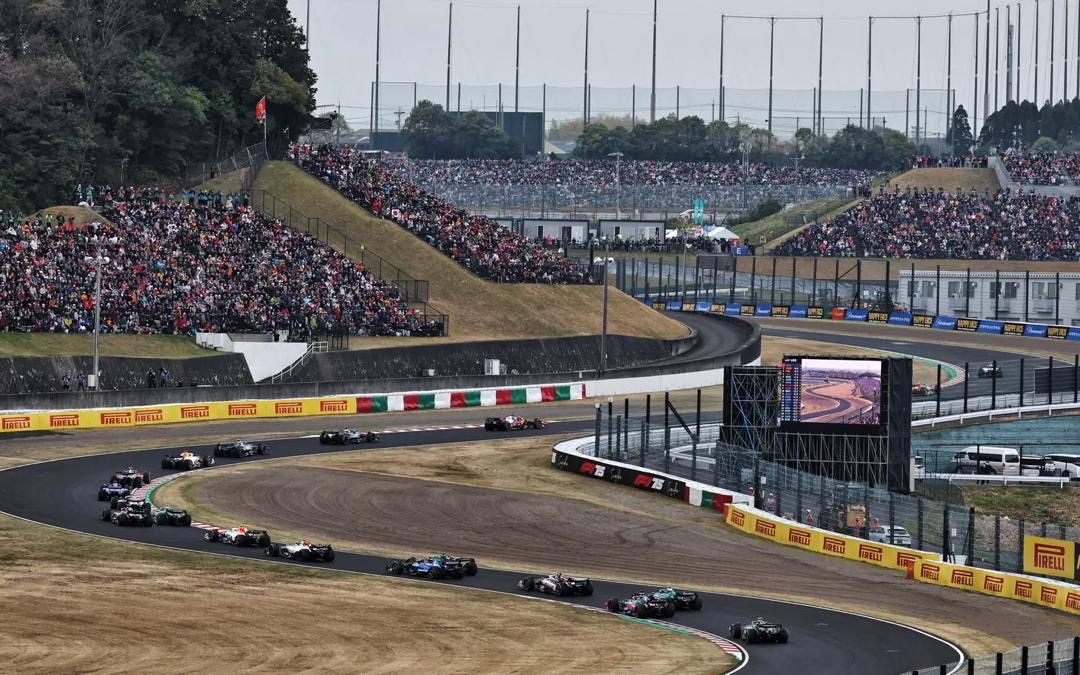
Breaking news surrounding the 2026 Formula 1 Japanese Grand Prix has confirmed an important update regarding the qualifying session, specifically its official start time. This announcement comes as excitement continues to build ahead of one of the most iconic races on the Formula 1 calendar, hosted at the legendary Suzuka Circuit in Japan.
The Japanese Grand Prix, which forms part of the early stretch of the 2026 Formula 1 season, is scheduled to take place over the weekend of March 27 to March 29. As always, the event follows the traditional Grand Prix weekend format, consisting of practice sessions, qualifying, and the main race. Among these, qualifying is especially crucial because it determines the starting grid positions for Sunday’s race, often playing a decisive role in shaping the final outcome.
According to the latest confirmed schedule, the qualifying session for the 2026 Japanese Grand Prix will take place on Saturday, March 28. The session is set to begin at 3:00 PM local time in Japan (JST). This timing aligns with the standard Formula 1 weekend structure, where qualifying typically occurs on Saturday afternoon following the final practice session earlier in the day.
For international viewers, particularly those watching from different time zones, this start time translates into various local times. For example, in GMT terms, the qualifying session is expected to begin around 6:00 AM, while viewers in the United States will need to tune in during the early morning hours depending on their specific time zone. These time differences highlight the global nature of Formula 1, where fans across continents adjust their schedules to follow the action live.
The qualifying format itself remains unchanged, consisting of three knockout segments known as Q1, Q2, and Q3. All drivers participate in the opening phase, Q1, where the slowest five competitors are eliminated. The remaining drivers proceed to Q2, where another five are knocked out. Finally, the top ten drivers advance to Q3, which ultimately determines the pole position and the top spots on the starting grid. The entire qualifying session typically lasts for about one hour, delivering intense, high-stakes competition as drivers push their cars to the limit in pursuit of the fastest lap time.
The timing confirmation is particularly important this year due to heightened anticipation surrounding the 2026 season. Major regulation changes introduced this season have significantly altered car performance and race dynamics, making every session—including qualifying—more unpredictable and competitive. Teams and drivers are still adapting to these new technical rules, which emphasize a greater balance between electric and combustion power within the hybrid engines.
Recent developments have also added another layer of intrigue to the qualifying session in Japan. The sport’s governing body, the FIA, has implemented a late adjustment to energy management rules specifically for qualifying. This change reduces the allowable energy recovery per lap, aiming to minimize issues such as “super-clipping,” where cars lose speed unexpectedly due to energy harvesting. This tweak is expected to allow drivers to push harder and maintain more consistent speeds throughout their laps, potentially improving both performance and spectacle.
Practice sessions leading up to qualifying have already provided some insight into team performance and competitiveness. Early indications suggest that teams like Mercedes and McLaren could be strong contenders, while others are still working to find optimal setups. Drivers have been fine-tuning their cars during practice to ensure they are fully prepared for the crucial qualifying showdown.
Qualifying at Suzuka holds particular significance due to the nature of the circuit itself. Known for its challenging layout, high-speed corners, and technical demands, Suzuka is a track where driver skill and precision are paramount. Overtaking can be difficult during the race, which makes a strong qualifying position even more valuable. Securing pole position or a front-row start often provides a significant advantage, increasing the chances of victory on race day.
Furthermore, the Japanese Grand Prix has a long-standing reputation for producing dramatic and memorable moments in Formula 1 history. From championship-deciding races to unexpected performances, Suzuka consistently delivers high-intensity action. As such, the qualifying session is not just a precursor to the race but an event in its own right, often filled with surprises, strategic gambles, and standout laps.
Fans around the world are expected to closely follow the qualifying session, as it will offer a clearer picture of the competitive order heading into Sunday’s race. With teams closely matched and new regulations still influencing performance, even small differences in lap times could have a major impact on the final grid.
In summary, the confirmed start time of 3:00 PM local time for the 2026 Japanese Grand Prix qualifying session provides clarity for fans and teams alike as they prepare for a pivotal moment in the race weekend. The session promises to be a thrilling contest, shaped by evolving regulations, competitive rivalries, and the unique challenges of the Suzuka Circuit. As anticipation continues to build, all eyes will be on qualifying to see which driver can deliver the perfect lap and claim pole position for one of Formula 1’s most prestigious races.