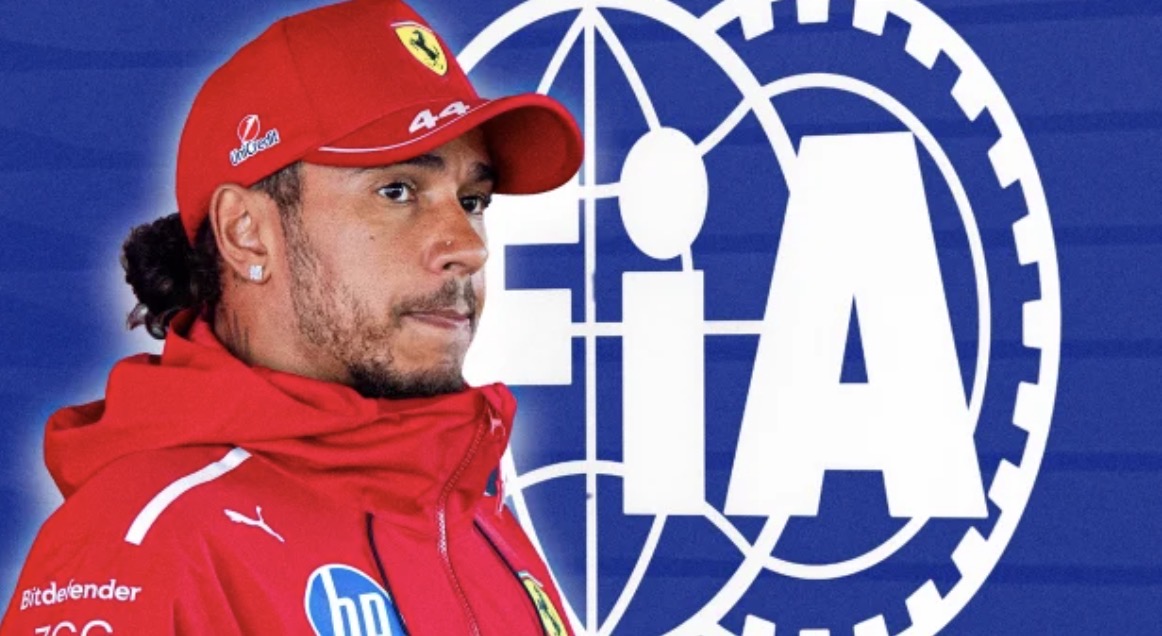
The challenges currently facing Ferrari in Formula 1 have been brought into sharp focus following comments made by Charles Leclerc, who highlighted a key weakness that appears to be costing the team valuable performance—particularly in qualifying sessions. His observations come at a time when the FIA is also actively examining the situation, suggesting that broader regulatory or technical adjustments could be considered in the near future.
Leclerc explained that Ferrari’s struggles are tied to how their car behaves under the unique demands of modern F1 qualifying, especially during the final and most crucial phase, Q3. In this decisive segment, drivers typically push beyond their previous limits in an attempt to extract maximum performance from the car. However, for Ferrari, this approach appears to expose a significant compromise in the car’s overall balance and energy deployment.
According to Leclerc, when he attempts to push harder on his final flying lap, the car’s systems are forced to readjust in real time. This process, rather than enhancing performance, ends up creating an imbalance. While he may gain time in certain areas—particularly through corners—this advantage is offset by losses elsewhere, especially on the straights. The result is a lap that never quite comes together in a cohesive or optimal way.
This issue is particularly frustrating because it prevents Ferrari drivers from fully maximizing their potential during the most critical moments of qualifying. Instead of producing a clean, competitive lap, they are forced into a trade-off situation where improving one aspect of performance inevitably harms another. As Leclerc described, it becomes impossible to achieve the ideal combination of speed and efficiency across the entire lap.
A key part of the problem appears to be related to the power unit and how it interacts with the car’s systems under these conditions. Leclerc suggested that Ferrari’s engine package is more vulnerable to these effects compared to rival manufacturers, particularly Mercedes. Cars powered by Mercedes engines seem to handle the same qualifying demands with fewer drawbacks, allowing drivers to maintain stronger performance on straights without sacrificing cornering ability.
This comparative disadvantage leaves Ferrari “more exposed,” in Leclerc’s words, meaning that the team is more susceptible to the negative side effects of the current system behavior. While all teams are dealing with similar underlying challenges due to the regulations, Ferrari appears to be suffering more significantly from them.
The issue is not limited to driver technique or isolated incidents—it reflects a deeper technical limitation that affects how the car performs under peak conditions. Even when Leclerc is satisfied with parts of his lap, such as his cornering performance, the persistent loss of time on straights undermines his overall competitiveness. This imbalance ultimately translates into weaker grid positions, which can have a major impact on race outcomes.
Compounding the problem is the evolving regulatory environment in Formula 1. Ahead of the Japanese Grand Prix weekend, the FIA introduced a change to the energy management rules, specifically reducing the energy recharge limit from 9.0 megajoules to 8.0 megajoules. This adjustment was intended to address some of the quirks associated with energy deployment during qualifying.
However, changes like this can have unintended consequences, particularly for teams like Ferrari that are already struggling to optimize their systems. By altering the parameters within which teams must operate, the FIA may inadvertently amplify existing weaknesses in certain car designs.
Leclerc acknowledged that the FIA is aware of the broader issue and is actively investigating possible solutions. The governing body is exploring what additional measures could be implemented to reduce or eliminate the inconsistencies that drivers are experiencing. This indicates that the problem is not unique to Ferrari, even if the team is currently one of the most affected.
The fact that the FIA is involved suggests that this is not merely a team-specific technical flaw but a wider challenge linked to the current generation of F1 cars and their hybrid power units. Energy deployment, system optimization, and real-time adjustments have become increasingly complex under modern regulations, and even small inefficiencies can have a significant impact on performance.
Despite these difficulties, Leclerc remained somewhat positive about his own performance, noting that aside from the technical limitations, he was satisfied with his lap. He mentioned a minor moment during the session but clarified that it did not influence the power unit behavior or contribute to the broader issue he described. This reinforces the idea that the problem lies primarily within the car’s systems rather than driver error.
Ferrari’s situation highlights the fine margins that define success in Formula 1. In a sport where hundredths of a second can determine grid positions, even a small inefficiency can have major consequences. Being unable to fully optimize a qualifying lap not only affects starting position but also compromises race strategy and overall competitiveness.
Meanwhile, rival teams appear to be better equipped to handle the same challenges, giving them a crucial advantage. Mercedes-powered cars, in particular, seem less affected by the energy management quirks that are troubling Ferrari. This disparity raises important questions about how different engine manufacturers interpret and adapt to the regulations.
Looking ahead, the outcome of the FIA’s investigation could play a significant role in shaping the competitive landscape. If changes are introduced to address the issue, they could help level the playing field and reduce the disadvantages currently faced by teams like Ferrari. On the other hand, if no substantial adjustments are made, Ferrari may need to find its own technical solutions to remain competitive.
Ultimately, the situation underscores the complexity of modern Formula 1 and the challenges teams face in extracting maximum performance from highly sophisticated machinery. Ferrari’s struggles serve as a reminder that success in the sport depends not only on raw speed but also on the ability to manage intricate systems under extreme conditions.
As the season progresses, all eyes will be on how Ferrari responds to this setback and whether the FIA’s efforts lead to meaningful improvements. For now, the team remains in a position where its potential is being limited by factors that are not entirely within its control—a costly disadvantage in one of the most competitive environments in motorsport.