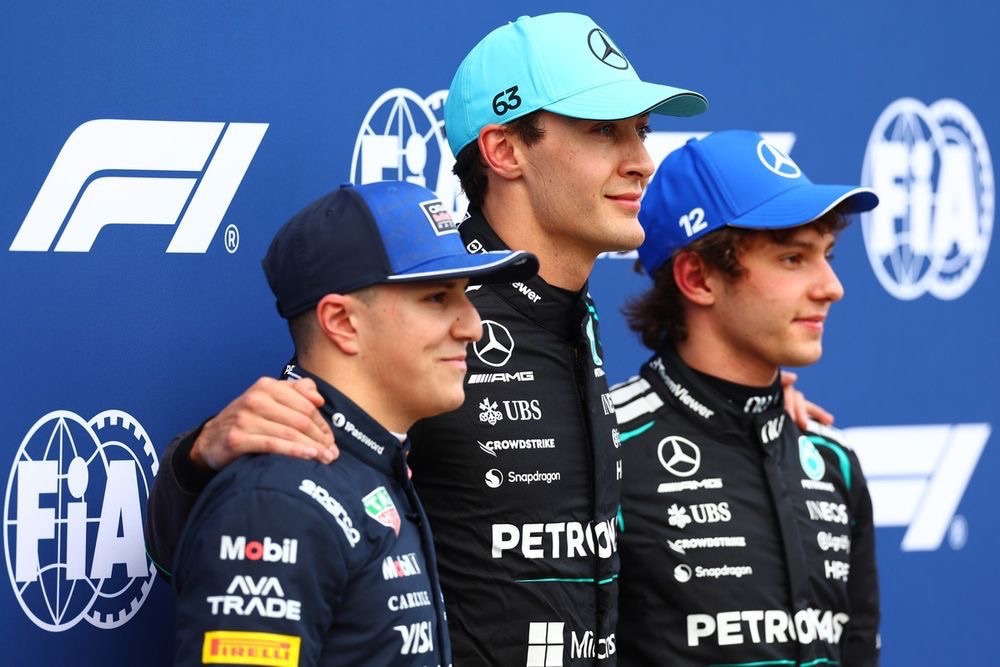
The governing body of Formula One, the FIA (Fédération Internationale de l’Automobile), has confirmed that the Mercedes Formula One team received a late penalty following incidents that occurred during the qualifying session of the Australian Grand Prix weekend. The decision came after the stewards carefully reviewed several events involving Mercedes driver Kimi Antonelli and the team during the session at the Albert Park Circuit in Melbourne.
The Australian Grand Prix marked the opening race weekend of the 2026 Formula One season, and expectations were extremely high for the Mercedes team. The squad arrived in Melbourne with optimism after being widely tipped to perform strongly under the new regulations introduced for the 2026 championship. Many analysts and fans believed the team had done an impressive job adapting to the updated chassis and power unit rules, which could potentially give them a competitive advantage over rival teams.
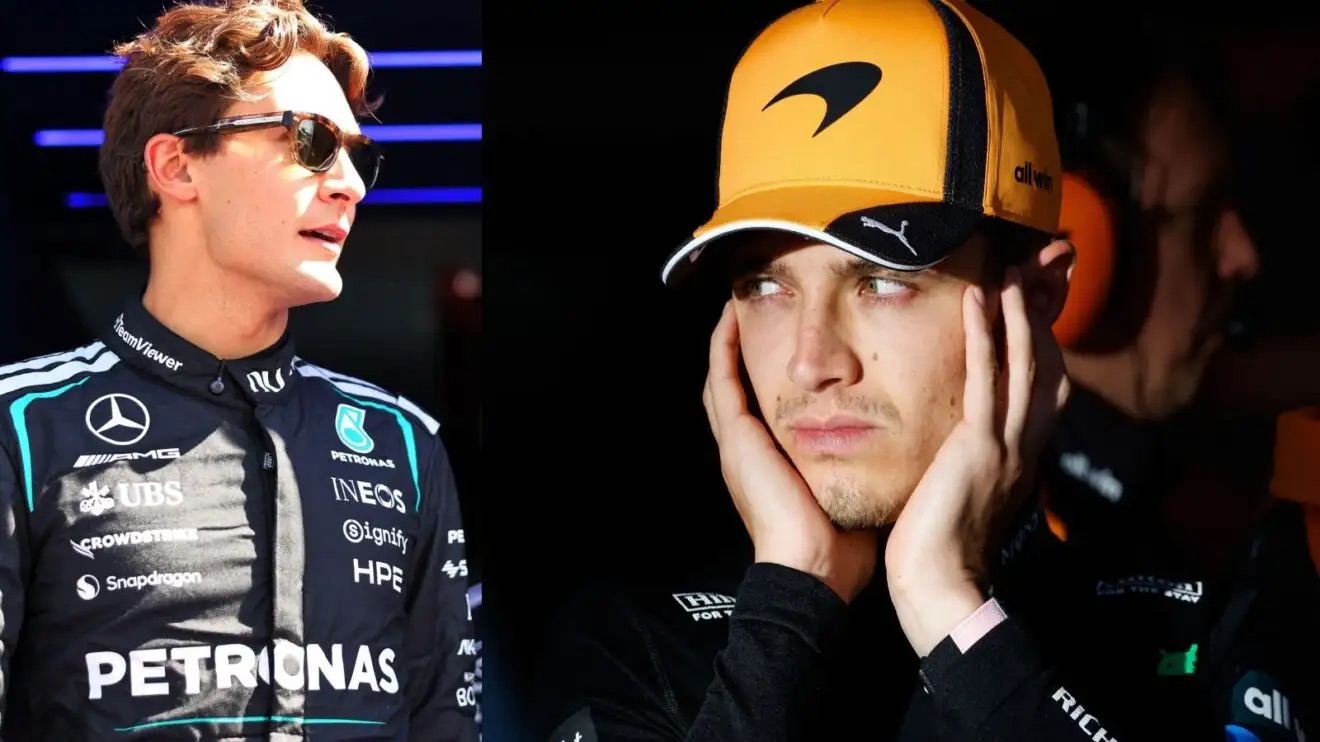
One of Mercedes’ main hopes this season is British driver George Russell, who entered the race weekend as one of the early favourites to compete for the drivers’ championship title. During qualifying in Melbourne, Russell demonstrated the pace and potential of the new Mercedes car by delivering a brilliant performance. He managed to secure pole position in the first qualifying session of the new Formula One era, showcasing the speed and competitiveness of the team’s machinery.
The positive news for Mercedes did not end there. Their rookie driver, Kimi Antonelli, also produced an impressive display during the same session. Antonelli finished the qualifying round in second place, meaning both Mercedes drivers would start the race from the front row of the grid. This result was a major boost for the team and suggested that Mercedes could dominate the early stages of the season if their pace remained consistent.
However, the celebrations within the Mercedes camp were short-lived. Shortly after the session ended, Antonelli and a representative from the Mercedes team were summoned by race stewards to explain two separate incidents that occurred during qualifying. These incidents triggered an investigation by the FIA, which is responsible for enforcing the sport’s regulations and ensuring safety standards are upheld throughout race weekends.
One of the main issues involved a piece of equipment from Antonelli’s car. During the qualifying session, a cooling fan duct attached to the car became detached while he was on track. The component broke away as the car navigated through Turn 1 of the Albert Park circuit. Once it came loose, parts of the device scattered onto the circuit, creating debris that posed a potential hazard for other drivers.
The situation became even more concerning when another driver, McLaren’s Lando Norris, ran over part of the debris that had fallen onto the track. This incident forced race officials to delay the session briefly in order to ensure the circuit was safe for all competitors. Any loose object on a Formula One circuit is considered a serious safety risk because of the extreme speeds at which the cars travel.
Following the incident, the FIA investigated whether Mercedes had released Antonelli’s car from the garage in an unsafe condition. According to the regulations governing Formula One, teams must ensure that all components are securely fitted before sending a car out onto the track. If a car is released with a loose or improperly attached component, it can lead to penalties because it endangers both the driver and other competitors.
The stewards carefully reviewed a variety of evidence during their investigation. This included team radio communications, in-car video footage, and other technical data related to the car’s preparation before it left the garage. After evaluating the evidence, they concluded that the cooling fan assembly had indeed remained attached to the car when it was released, but subsequently detached during the lap, scattering pieces onto the track.
The official statement from the stewards explained that the fan assembly had split apart after detaching from the duct as the car negotiated the corner. One section of the component bounced across the track and eventually landed in the gravel trap at the exit of Turn 1. Because the car had been released while still carrying the attached fan, the FIA determined that Mercedes had breached the relevant sporting regulation governing safe car release.
As a result, the FIA confirmed that Mercedes would receive a penalty related to the incident. The ruling was described as a “late penalty” because it was announced after the qualifying session had concluded and after the stewards had finished reviewing all the available evidence.
The decision served as a reminder of the strict safety standards enforced in Formula One. Teams are required to ensure that every element of their cars is properly secured before entering the track. Even a small oversight can create dangerous situations during high-speed sessions such as qualifying or the race itself.
Despite the penalty, Mercedes still demonstrated impressive pace during the session, with both drivers performing strongly compared to their competitors. Russell’s pole position highlighted the potential of the team’s new car, while Antonelli’s performance confirmed that the rookie driver could be a serious contender in the championship if he continues to deliver strong results.
For fans and analysts, the incident added a dramatic twist to the start of the 2026 Formula One season. While Mercedes showed clear speed and competitiveness, the penalty situation reminded everyone that even the most successful teams must strictly follow the sport’s technical and sporting regulations.
As the race weekend progressed, attention shifted to whether Mercedes could convert their front-row qualifying result into a strong finish during the race itself. The early pace suggested that the team could be a major force in the championship battle, but incidents such as this also demonstrated how quickly fortunes can change in the highly competitive world of Formula One.
Ultimately, the FIA’s confirmation of the late penalty highlighted the importance of safety and compliance within the sport. Even during moments of excitement and success, teams must remain vigilant in ensuring that their cars meet all technical requirements before entering the track. The decision reinforced the governing body’s commitment to maintaining fairness and safety across the Formula One grid.