FIA Delivers Verdict on Ferrari’s Radical Rear-Wing as Hamilton Trials Bold Innovation
The FIA has issued its first ruling on the legality of Ferrari’s eye-catching new rear-wing concept after the Scuderia unveiled the design during Formula 1 pre-season testing.
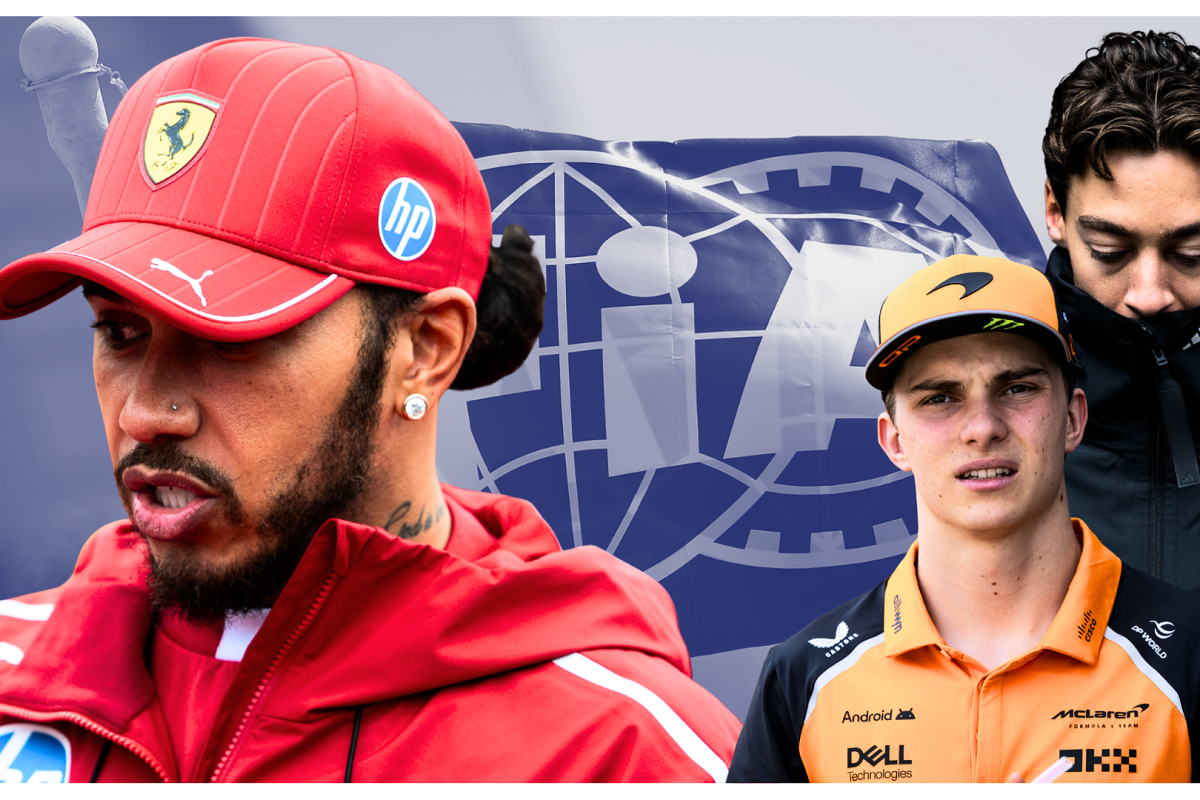
The radical solution made its debut on Thursday when Lewis Hamilton briefly took to the track before technical issues curtailed his running. In just a handful of laps, however, the seven-time world champion managed to showcase a rear-wing configuration that immediately sparked intrigue across the paddock.
Unlike a conventional DRS-style system, Ferrari’s new design features an innovative slot-gap mechanism that rotates dramatically when activated. Instead of simply opening in a hinged motion, the upper element flips upward and rotates through roughly 270 degrees, significantly altering the aerodynamic profile of the wing. The transformation is so extreme that, when deployed, the wing effectively produces lift in a manner similar to an aircraft wing — a counterintuitive approach aimed at minimizing drag and maximizing straight-line speed.
Earlier in the week, Ferrari had run a more traditional DRS-style rear wing during Wednesday’s session. That configuration resembled the standard drag reduction systems seen in recent seasons. However, Thursday’s trial of the alternative layout confirmed that the team is actively exploring multiple aerodynamic pathways ahead of the new campaign.
When Hamilton returned to the circuit later in the day, the SF-26 was once again fitted with the more conventional version of the rear wing. Nevertheless, Ferrari team principal Frédéric Vasseur made it clear that the radical concept has not been shelved. He refused to rule out the possibility of the new wing appearing at grands prix later in the season, indicating that Ferrari remains confident in its potential performance gains.
The concept has generated significant debate because of its unconventional approach. Traditionally, rear wings are designed primarily to generate downforce, pressing the car onto the track for improved grip. Ferrari’s rotating-slot design, however, appears to temporarily reverse that philosophy when activated. By creating a lift effect at high speed, the wing reduces aerodynamic resistance more aggressively than a standard DRS opening would allow. The result could be a notable boost in top speed — a potentially decisive advantage on circuits with long straights.
With innovation often walking a fine line in Formula 1, questions quickly arose over whether the concept complied with the sport’s technical regulations. The governing body wasted little time in clarifying its stance.
Speaking to reporters, FIA single-seater technical director Nikolas Tombazis explained that the governing body has intentionally provided teams with increased flexibility in this area of car design. According to Tombazis, recent regulatory adjustments were specifically intended to encourage creative solutions aimed at reducing drag.
“We have, generally speaking, encouraged solutions that reduce drag,” Tombazis said. He highlighted that previous restrictions limiting the maximum slot-gap opening — introduced in earlier seasons — have not been carried over into the current regulations.
“That is to give more freedom,” he added, before confirming that the Ferrari interpretation falls within the rules as they stand. “The Ferrari solution, we believe, is okay.”
The FIA’s approval will come as a major boost for Ferrari, who are seeking every possible edge in what is shaping up to be a fiercely competitive season. With regulation stability encouraging marginal gains rather than wholesale design overhauls, inventive aerodynamic tweaks such as this could prove crucial in the development race.
Of course, legality does not automatically guarantee long-term viability. Rival teams are expected to study Ferrari’s approach closely, both to understand its benefits and to evaluate whether similar concepts can be integrated into their own designs. If the performance gains are significant, the paddock could soon see variations of the idea emerging elsewhere.
For now, though, Ferrari have secured an early psychological win. In a sport where innovation often triggers protests and post-session scrutiny, receiving a positive verdict from the FIA at this stage allows the team to continue refining the concept without regulatory uncertainty hanging over them.
Whether the radical rear wing becomes a regular feature on Ferrari’s car during race weekends remains to be seen. But one thing is certain: the Scuderia have once again demonstrated that bold thinking remains alive and well in Formula 1’s relentless pursuit of speed.