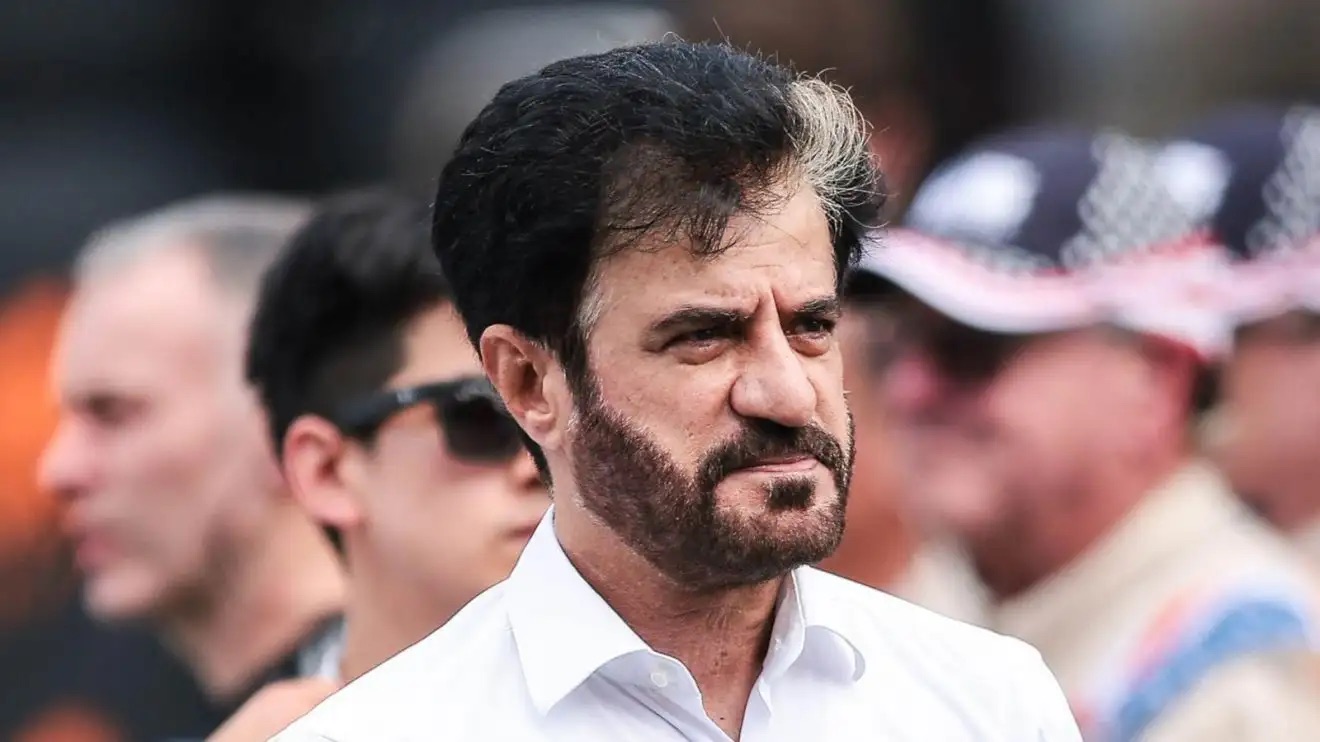
In December 2025, the Fédération Internationale de l’Automobile (FIA) — the global governing authority for motorsport and a worldwide federation of mobility organizations — confirmed the outcome of its presidential election at its Annual General Assembly in Tashkent, Uzbekistan. At that meeting, the FIA announced that Mohammed Ben Sulayem has been elected to serve a second term as President of the federation, marking another four years in the organization’s top role after his first term began in 2021.
Ben Sulayem, a former rally driver from the United Arab Emirates and the first non-European to hold the FIA presidency, received the majority support of Member Clubs and was formally declared the winner of the December vote. His re-election was confirmed at the assembly, where members of the Presidential List — including key leadership figures who will serve alongside him throughout his new term — were also approved for the coming four years.
The coverage of this announcement highlights that although this election cycle initially included multiple individuals expressing interest in challenging the incumbent, by the time of the vote only Ben Sulayem remained on the official ballot. Early in the process, several prominent motor sport figures had stepped forward with intentions to contest the presidency. Among them were Tim Mayer, a former FIA steward based in North America, and Laura Villars, a Swiss-French racing driver. Another name mentioned was Virginie Philippot, who also declared her intention to join the presidential race.
Despite these initial candidacies, all of Ben Sulayem’s rivals ultimately saw their presidential bids collapse before the General Assembly vote. Mayer, in particular, withdrew from the process several weeks earlier, expressing concerns about the FIA’s election rules and suggesting that they placed unnecessary barriers in the way of challengers — criticism that sparked debate in motorsport circles about how democratic the federation’s procedures truly are. Villars pursued legal action in French courts in an attempt to challenge aspects of the electoral framework, but a judge allowed the FIA’s process to go ahead as scheduled.
The result was effectively a single-candidate election, with Ben Sulayem standing unopposed and his leadership team forming the sole Presidential List presented to Member Clubs for approval at the general assembly. This phenomenon of uncontested elections in international federations is not entirely unprecedented, but it drew criticism and questions from observers about the ability of external candidates to build the necessary support and meet requirements in order to stand.
Once the electoral process concluded in Tashkent, Ben Sulayem thanked FIA Member Clubs for their robust turnout and assigned confidence, emphasizing a message of unity and continued progress. In his remarks he underscored how the organization had undergone significant transformation during his first four years in the role, and outlined his focus on strengthening the federation’s global mission — spanning both the world of motor sport and broader mobility initiatives worldwide.
Observers have noted that Ben Sulayem’s administration has placed a strong emphasis on institutional reform within the FIA, from enhancing governance and transparency to stabilizing finances and improving operational effectiveness. Official reports released by the federation showed that the organization returned to financial health over the course of his first term, reversing a substantial operating deficit and generating a positive operating result in recent fiscal years. These developments were presented as evidence of strategic progress under his stewardship.
While these elements formed the positive backdrop to Ben Sulayem’s re-election, the campaign and election period were not without contention. Mayer’s exit from the race and Villars’ court action both amplified discussion over the structure of candidate requirements and the internal dynamics of the FIA’s membership system. Critics argued that stringent nomination criteria and the need to build a supporting team — including representatives from various regional blocs within the federation — created a de facto advantage for the incumbent. Supporters of Ben Sulayem countered that all procedures were applied fairly and in line with the FIA’s statutes.
The decision of the Paris court to allow the election to proceed as planned was a key moment in that dispute: it affirmed that the scheduled General Assembly vote could take place, even amid ongoing legal debate. Villars and her legal team, however, did not abandon their challenge, indicating that further proceedings are expected in early 2026 to examine the legality of the election rules themselves.
In addition to reconfirming Ben Sulayem as President, the FIA’s general assembly in Tashkent also ratified leadership positions throughout the federation’s broader governance structure. Roles such as Deputy President for Sport, Deputy President for Automobile Mobility and Tourism, and President of the Senate were all filled by supporters aligned with the President’s leadership list. These appointments mean that the organization’s leadership team will remain largely consistent in the years ahead.
Ben Sulayem’s re-election roundly positions him to guide the FIA through the next four years — a period that will include further work on global motorsport regulation, safety initiatives, mobility advocacy, and engagement with national automobile clubs representing millions of road-users and sport officials around the world. His second term is set to extend to the end of 2029, continuing his influence on high-profile areas such as world championship governance, regulatory evolution, and institutional strategy.
In summary, the FIA’s announcement of the 2025 presidential election result confirmed that Mohammed Ben Sulayem will remain at the helm of the federation after being re-elected at the body’s annual general assembly in Tashkent. While the race had the potential for lively competition with several would-be challengers early on, those campaigns faltered and left the incumbent on the ballot alone. His supporters welcomed the continuity of leadership, pointing to significant financial and managerial improvements during his first term, while some critics questioned how open the electoral process truly was. With his tenure now extended through another four-year cycle, Ben Sulayem’s approach to governance and reform will continue to shape the FIA’s role in world motorsport and mobility.