When the 2025 season of Formula 1 came to a close, teams, drivers and rookies didn’t immediately leave Abu Dhabi. Instead, a final post-season test took place at the Yas Marina Circuit — bringing the season to an official end while also beginning preparations for 2026.
The Setup: tyres, “mule” cars and a big test session
On the final Tuesday after the Grand Prix, all ten F1 teams remained at the track to take part in a combination of two major endeavours. First, many of the cars on track were “mule” cars: 2025 chassis modified to mimic next year’s expected characteristics — lower downforce, altered aerodynamics — thus giving a first preview of what F1 machines might drive like in 2026.
Second — and perhaps most crucial — tyre testing was the main focus. The purpose was to give tyre supplier Pirelli real-world feedback on the new 2026 compounds. These tyres are narrower (front tyres 25 mm narrower, rear ones 30 mm narrower compared to current rubber) and overall lighter by around 2.1 kg per set.
Because of the many variables (fuel loads, number of laps, different tyre compounds, run plans varying between teams), actual lap times were never meant to reflect comparative speed or qualifying potential. Instead the session was all about gathering data — tyre wear, performance over longer stints, how the new aero/tyre/car combination behaves.
Who drove — and who made their mark
In total, 25 different drivers took part in the test and collectively exceeded 2,500 laps at Yas Marina.
Some of the highlights:
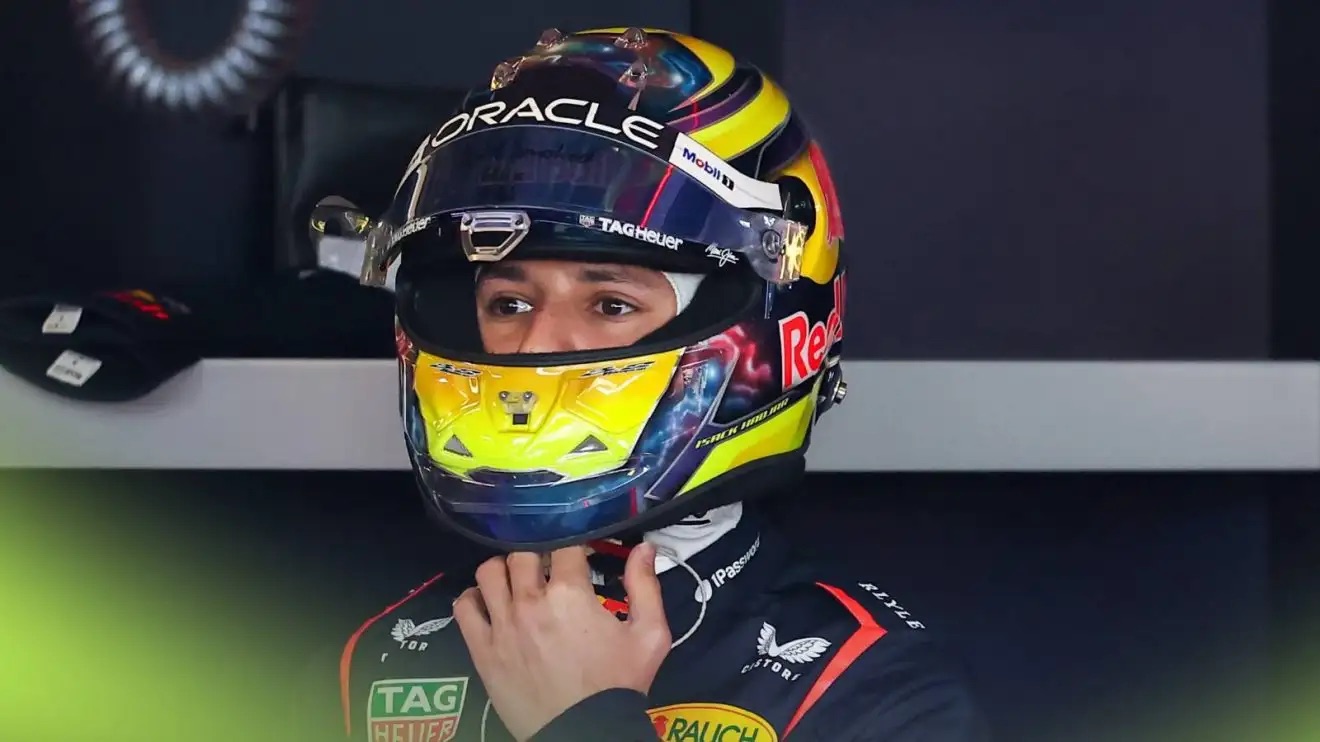
The newly crowned 2025 world champion, Lando Norris, who had spent the night celebrating, returned to track in a special gold-helmet edition for McLaren’s tyre test. Alongside him, teammate Oscar Piastri also took part. Their on-track work was primarily about tyre evaluation, not speed runs. Some drivers got their first taste of new roles. The Frenchman Isack Hadjar made his debut appearance in Red Bull Racing clothing — a sign he has stepped up to the team. He shared the day’s testing with Red Bull reserve Ayumu Iwasa. Another newcomer was Arvid Lindblad, who got behind the wheel for Racing Bulls for the first time — another indicator of drivers being promoted for 2026.
Meanwhile, some established drivers were also on track — and one case was particularly unfortunate. Full-time driver Esteban Ocon managed only four laps during his afternoon run; Haas later confirmed the cause was an engine issue.
Lap-counts and times — but with caveats
Even though times aren’t strictly meaningful at a post-season testing session, there was still a published leaderboard with lap counts and “best” times for the day. According to that ranking:
On top of the sheets was rookie Jak Crawford (Aston Martin) — 119 laps, fastest time 1:23.766. Second was Paul Aron (Sauber), third was Luke Browning (Williams). Next came reserve driver Frederik Vesti (Mercedes), then Ayumu Iwasa (Red Bull), and then full-time driver Kimi Antonelli (Mercedes), who actually logged the most laps of any driver that day — 157 laps. Together, Vesti and Antonelli covered 312 laps between them.
Further down the list were other regulars: Pato O’Ward (McLaren), Ryo Hirakawa (Haas), Dino Beganovic (Ferrari), alongside Piastri, Lewis Hamilton, Norris, and more. At the very bottom was Esteban Ocon, whose day was essentially wiped out.
But once again: because of the nature of the test — varying loads, different run plans, different tyres — these numbers shouldn’t be taken as a predictor for performance next season. Teams weren’t chasing fastest laps; they were collecting data for tyres and handling.
Bigger picture — what this test means for F1’s future
This post-season test wasn’t just about wrapping up 2025. It was also the first real taste of what 2026 could look like — both in terms of equipment and driver lineups. The use of mule cars and narrowed tyres is already a glimpse of the technical shift coming next year: lighter cars, different aero regimes, maybe altered driving characteristics.
From a driver perspective, the test provided valuable seat time for rookies and stepping-up drivers. For those who will be full-time in 2026 — like Isack Hadjar at Red Bull, or Arvid Lindblad at Racing Bulls — this test served as a first real exposure to the current cars, giving them data to compare when next season’s machinery arrives.
Meanwhile, established names used the test for tyre feedback and early development work. For example, teams like Mercedes AMG Petronas F1 Team ran modified front-wing designs in the morning — hinting at aerodynamic experiments under the “active aero” regulations expected next year.
What happened next — and what’s ahead
According to PlanetF1, after the conclusion of the Abu Dhabi test, teams will go through their winter shutdown and preparation. Then, in about seven weeks’ time, there will be a private five-day test at Circuit de Barcelona-Catalunya — representing the next big on-track debut for 2026 machinery.
This test — and its data — will help shape car designs, tyre strategies, and driver lineups going into 2026. It marks the closing of the 2025 chapter and the opening of a fresh one: different tyres, possibly different aerodynamics philosophy, new drivers in new seats, and a sport evolving as it continues to push forward.