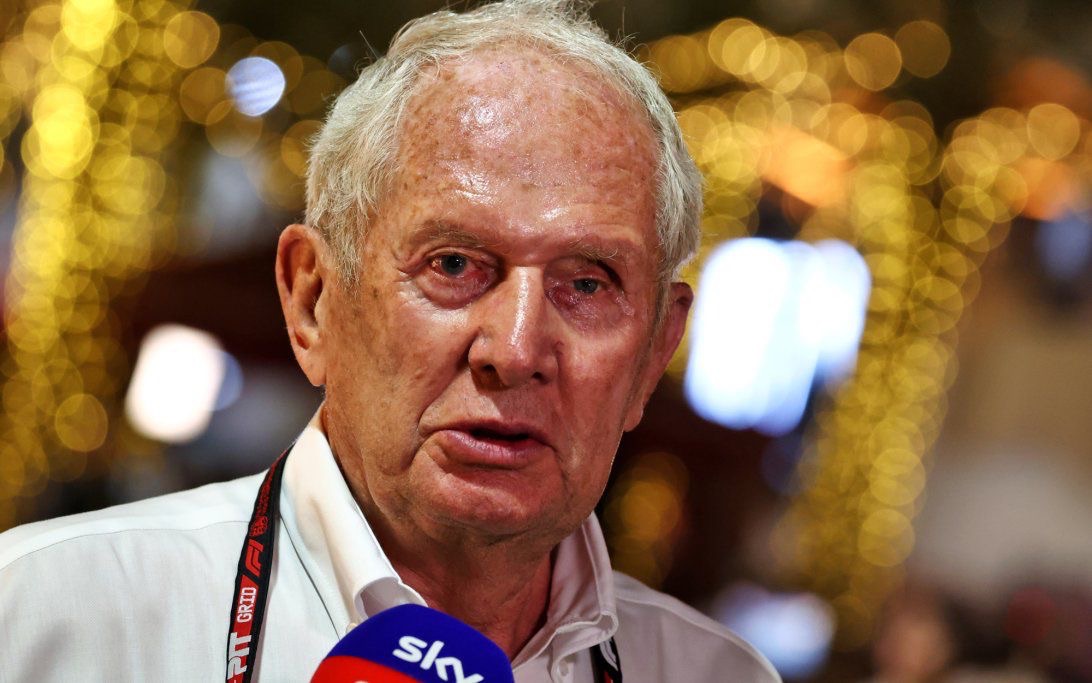
Helmut Marko has officially brought the curtain down on his long-standing involvement in Formula 1, confirming that his departure from Red Bull Racing at the conclusion of the 2025 season is permanent. The 82-year-old Austrian has categorically ruled out any possibility of returning to the paddock, ending months of speculation that he might resurface with another team in an advisory or executive capacity.
Marko’s announcement signals the definitive end of one of the most influential and polarising careers in modern Formula 1 management. For more than two decades, he was a central architect of Red Bull’s transformation from ambitious newcomers into a dominant powerhouse capable of shaping entire championship eras. His sharp talent-spotting instincts and uncompromising philosophy left a lasting imprint not only on Red Bull but across the entire grid.
Despite reported interest from rival outfits eager to benefit from his vast experience, Marko has made it clear that his future lies outside the sport’s operational sphere. His decision closes a chapter that began long before Red Bull’s arrival in Formula 1 and evolved into one of the most successful talent development programmes the championship has ever witnessed.
Marko’s journey in motorsport management stretches back to 1984, when he founded RSM Marko. Through that initiative, he cultivated young racing prospects and built a reputation for demanding excellence and mental toughness. Those principles later became the backbone of Red Bull’s junior driver programme after the energy drink company entered Formula 1 in 2005 and adopted a similar development model.
Under Marko’s leadership, Red Bull’s junior system became renowned for its aggressive approach. Drivers were promoted quickly, often under intense pressure, and removed just as swiftly if they failed to deliver results. Critics labelled the structure ruthless, but its effectiveness was undeniable. The programme consistently produced Formula 1 drivers, race winners, and world champions, giving Red Bull a competitive edge that few teams could match.
No individual embodies Marko’s legacy more than Max Verstappen. Marko identified Verstappen’s extraordinary potential while he was still in his teens and played a decisive role in fast-tracking him to Formula 1. In 2016, Marko championed the bold and controversial decision to promote Verstappen mid-season from Toro Rosso to the senior Red Bull team. The gamble paid off instantly, as Verstappen won on his Red Bull debut, immediately justifying the faith placed in him.
That moment marked the beginning of a new era. Verstappen would go on to become the focal point of Red Bull’s sustained success, equalling Sebastian Vettel’s achievement of four consecutive world championships with the team. Throughout that period, Marko remained a powerful and protective figure behind the scenes, consistently backing Verstappen and defending him amid intense scrutiny and rivalry.
However, the 2026 season will represent a dramatic shift for Red Bull. For the first time in Verstappen’s Formula 1 career, Marko will not be part of the team’s inner circle. Following the 2025 finale, Red Bull confirmed that Marko had permanently stepped aside, ending a partnership that defined the most successful period in the organisation’s history.
Even after vacating his official role, Marko acknowledged that he would continue to follow the sport closely. He admitted he intends to stay informed about developments and maintain contact with Verstappen, prompting speculation that he could eventually return in some informal advisory role. Those rumours have now been firmly dismissed.
In an interview with Austrian broadcaster ORF, Marko stated unequivocally that retirement is final. While he conceded that he remains well-informed about the sport’s developments, he emphasised that he no longer carries the burden of responsibility that once defined his daily life.
He explained that stepping away has brought a sense of relief, as he no longer loses sleep over mechanical failures, strategic dilemmas, or championship pressure. Observing from a distance, he said, allows him to enjoy the competition without the intense stress that accompanied his previous position.
When pressed on whether there was any scenario that could tempt him back to Formula 1, Marko was definitive: there is “100 per cent” no chance of a return.
Interestingly, he revealed that multiple teams have contacted him since his departure, describing some of the proposals as both intriguing and unusual. Nevertheless, he stressed that his identity in Formula 1 is inseparable from Red Bull. He insisted that his achievements were built alongside the Milton Keynes-based squad and that nothing could replicate that bond elsewhere.
Marko’s final exit comes during a broader period of transformation for Red Bull Racing. As Formula 1 prepares for sweeping regulation changes in 2026, several of the team’s most influential figures have moved on in recent years, including Christian Horner, Adrian Newey, and Jonathan Wheatley. Together with Marko’s retirement, their departures mark the end of an era that delivered multiple championships and redefined Red Bull’s place in the sport.
While others have chosen to continue their careers elsewhere in the paddock, Marko’s decision to step away entirely underlines his belief that his story in Formula 1 is complete. His legacy—defined by bold decisions, fierce loyalty, and an unrelenting pursuit of success—will remain permanently intertwined with Red Bull’s ascent to the summit of Grand Prix racing.